
Every manufacturing unit that generates wastewater eventually faces a strategic question: is it enough to treat effluent to discharge standards and send it out, or should the plant recover almost all of that water and leave nothing but dry solids behind? The first path is conventional effluent treatment. The second is zero liquid discharge. Both can be the right answer, depending on the industry, the location, the effluent and the business plan.
This article compares ZLD vs conventional effluent treatment on the factors that matter to plant heads, finance teams and environmental managers: capital cost, operating cost, water recovery, compliance risk, complexity and long-term value. The goal is not to declare a universal winner but to give you a clear framework for deciding which approach, or which combination, fits your site.
What Conventional Effluent Treatment Involves
A conventional effluent treatment plant (ETP) treats wastewater until it meets the discharge limits set in the unit's consent conditions, then releases it to a sewer, a common effluent treatment plant, land or a surface water body as permitted. A typical ETP has three tiers:
- Primary treatment: Screening, oil and grease removal, equalization, neutralization and settling of suspended solids, often with chemical coagulation.
- Secondary treatment: Biological processes such as activated sludge, extended aeration or anaerobic reactors that break down organic matter and reduce BOD and COD.
- Tertiary treatment: Filtration, activated carbon, disinfection and sometimes membranes to polish the treated water.
The defining feature is that dissolved salts largely pass through. A conventional ETP reduces organic load and suspended solids, but most of the TDS leaves with the treated water.
What a Zero Liquid Discharge System Involves
A ZLD system goes further. After pretreatment, it recovers water using membranes and thermal processes until the dissolved solids are left as a dry residue. The typical sequence is pretreatment, reverse osmosis, thermal evaporation using multiple effect or MVR evaporators, and a final crystallizer, thin film dryer or spray dryer. No liquid effluent leaves the site; recovered water returns to process, cooling tower or boiler use.
For a visual walkthrough of each stage, see our interactive ZLD guide. AKSH's ZLD plants integrate pretreatment, high-recovery RO, MEE or MVR evaporation and crystallization, and are designed to recover up to 95 to 98 percent of wastewater as reusable water depending on effluent characteristics.
Side-by-Side Comparison
| Factor | Conventional ETP | ZLD System |
|---|---|---|
| Main objective | Meet discharge limits | Eliminate liquid discharge and recover water |
| Dissolved salts (TDS) | Largely discharged with treated water | Recovered as solid residue |
| Water recovery | Limited unless tertiary reuse is added | Most of the water recovered for reuse |
| Capital cost | Lower | Substantially higher, mainly due to RO and thermal stages |
| Energy use | Mainly aeration and pumping | High, especially steam or power for evaporation |
| Chemical use | Moderate | Moderate to high, including antiscalants and cleaning chemicals |
| Solid waste | Biological and chemical sludge | Sludge plus salts or crystallized solids |
| Operating skill required | Moderate | Higher, with multiple interacting process stages |
| Dependence on discharge route | Complete | None for liquid effluent |
| Regulatory risk from tightening norms | Higher | Lower |
| Freshwater demand of the factory | Unchanged | Reduced through reuse |
The Cost Side of the Equation
Capital Cost
ZLD almost always requires more capital than a conventional ETP of similar capacity. The extra investment is concentrated in the membrane stage and, above all, in the thermal evaporation and crystallization stages, which need large heat transfer areas, corrosion-resistant materials and sophisticated controls. In most ZLD schemes, the ETP is not replaced; it becomes the pretreatment stage. So the real comparison is often the ETP alone versus the ETP plus a ZLD train.
The capital cost of the ZLD train depends on capacity, effluent chemistry, materials, technology choice and scope. We explain each driver in detail in our article on what affects ZLD plant cost in India.
Operating Cost
Operating cost is where the two approaches differ most. A conventional ETP spends mainly on aeration power, chemicals, sludge disposal and labor. A ZLD plant adds high-pressure pumping for RO, membrane replacement, antiscalants, cleaning chemicals, salt disposal and, most significantly, thermal energy to evaporate water.
Thermal evaporation is usually the largest single running cost in ZLD, which is why technology choice matters so much. A multiple effect evaporator reuses vapor across several stages to cut steam demand, while a mechanical vapor recompression evaporator recycles its own vapor using a compressor and can reduce live steam use much further. Maximizing economical RO recovery before evaporation also lowers thermal load.
Costs That Conventional Treatment Can Hide
A conventional ETP may look cheaper on paper, but some costs are easy to overlook:
- Charges for discharge: Discharge to a common effluent treatment plant or municipal system may carry fees that rise over time.
- Freshwater purchase: Without reuse, the factory continues to buy and treat all its intake water.
- Compliance upgrades: Tightening norms can force repeated retrofits to the ETP.
- Production risk: If discharge is restricted or a consent is not renewed, production may be curtailed.
The Benefit Side of the Equation
1. Water Security
In water-stressed industrial regions, the cost and reliability of freshwater supply can be a serious constraint. A ZLD plant turns wastewater into a dependable internal water source. That recovered water offsets purchase cost and reduces exposure to supply restrictions during droughts or seasonal shortages.
2. Compliance Certainty
Where there is no liquid discharge, there is no discharge quality to fail. In India, the Central Pollution Control Board and State Pollution Control Boards set the framework for effluent management, and for certain sectors and locations, consent conditions may require ZLD or very strict limits. Requirements vary by industry and state, so each unit should confirm its own conditions with the relevant authority.
3. Freedom to Expand
Plants planning capacity expansion may find that additional discharge is difficult to obtain. Managing effluent internally through ZLD can make expansion planning more straightforward, subject to the applicable approvals.
4. Resource Recovery
Some effluents contain salts or products worth recovering. With appropriate purification, sodium sulfate, sodium chloride or process materials can sometimes be reclaimed, offsetting part of the operating cost. In other cases, valuable product lost to effluent can be captured earlier in the process.
5. Sustainability and Customer Expectations
Large buyers in textiles, pharmaceuticals, chemicals and food increasingly assess suppliers on water stewardship. A credible ZLD system supports sustainability reporting and can strengthen a manufacturer's position with such customers.
An Illustrative Water Balance
Numbers make the water benefit easier to see. The figures below are purely illustrative and assume that the recovered water is of suitable quality for the intended reuse.
- A factory draws 500 KLD of freshwater and generates 300 KLD of effluent.
- With a conventional ETP and discharge, all 300 KLD leaves the site, and the factory continues to draw 500 KLD.
- With a ZLD system recovering about 95 percent of the effluent, roughly 300 x 0.95 = 285 KLD returns to use.
- Freshwater intake could then fall to about 500 - 285 = 215 KLD, a reduction of around 57 percent.
In practice, the achievable reduction depends on where recovered water can be used, evaporation losses in cooling towers and the quality demanded by each user. The illustration still shows why plants in water-scarce areas often find ZLD more attractive than a simple comparison of treatment cost suggests.
Operational Realities to Plan For
A cost-benefit study should look beyond equipment and utilities. ZLD changes how the environmental function of a plant operates day to day.
Skills and Staffing
A ZLD train involves membranes, evaporators, crystallizers or dryers, and extensive instrumentation. Operators need training across all of them, and someone must own routine performance monitoring. Many plants find that well-designed automation reduces the burden, but it does not remove the need for capable people.
Availability and Redundancy
If there is no discharge route, the ZLD plant must keep up with production. Buffer storage, standby pumps and a cleaning strategy that does not stop the whole plant are essential. A conventional ETP with a discharge permit has more flexibility during upsets.
Solid Residue Management
ZLD converts a liquid problem into a solid one. The salts and residues must be stored, packed and sent for authorized disposal or recovery. Planning storage space, handling and disposal arrangements early avoids bottlenecks after commissioning.
Fouling and Scaling
Concentrating effluent to saturation means scaling and fouling are constant risks in the membrane and thermal stages. Proper pretreatment, suitable evaporator types and disciplined cleaning protect both capacity and energy efficiency.
When Conventional Treatment Is Still Appropriate
- Effluent has low TDS and is mainly organic, so biological treatment meets the applicable norms.
- A suitable, reliable discharge route exists and is expected to remain available.
- Local regulations do not require ZLD for the sector or location.
- Water is plentiful and inexpensive, so recovery adds little value.
- Effluent volume is small and the business cannot justify thermal treatment.
Middle Paths: Partial ZLD and Reuse
The choice is not always all or nothing. Many plants adopt intermediate strategies:
- Tertiary treatment with reuse: Adding RO to an ETP recovers a large share of water for cooling towers or utilities while a smaller reject stream is managed separately.
- Stream segregation: High-TDS streams are sent to evaporation while low-TDS streams go through conventional treatment and reuse.
- Phased ZLD: A plant installs RO now and adds evaporation and crystallization later as regulations or water costs change.
Segregation in particular can make a big difference, because it avoids sending dilute water through the most expensive thermal stage.
A Practical Decision Framework
- Check the regulatory position: Confirm whether ZLD is required or likely to be required for your sector and location.
- Characterize the effluent: Measure flow, TDS, COD, hardness, silica and other key parameters across normal and peak operations.
- Map water costs: Calculate what you spend on intake water, treatment and any discharge charges today, and how those may change.
- Evaluate options: Compare conventional ETP, ETP with reuse, partial ZLD and full ZLD.
- Compare lifecycle cost: Include capital, energy, chemicals, membranes, maintenance, solid disposal, water savings and risk over at least ten years.
- Consider strategic value: Weigh expansion plans, customer requirements and sustainability goals alongside direct cost.
Common Mistakes in the Comparison
- Comparing capital cost alone and ignoring ten or more years of operating cost and water savings
- Designing on average effluent data while ignoring peaks and seasonal variation
- Leaving solid residue disposal out of the operating budget
- Assuming every recovered liter can be reused without checking quality requirements
- Overlooking the cost of production losses if discharge is restricted in future
The Role of Thermal Equipment in ZLD Economics
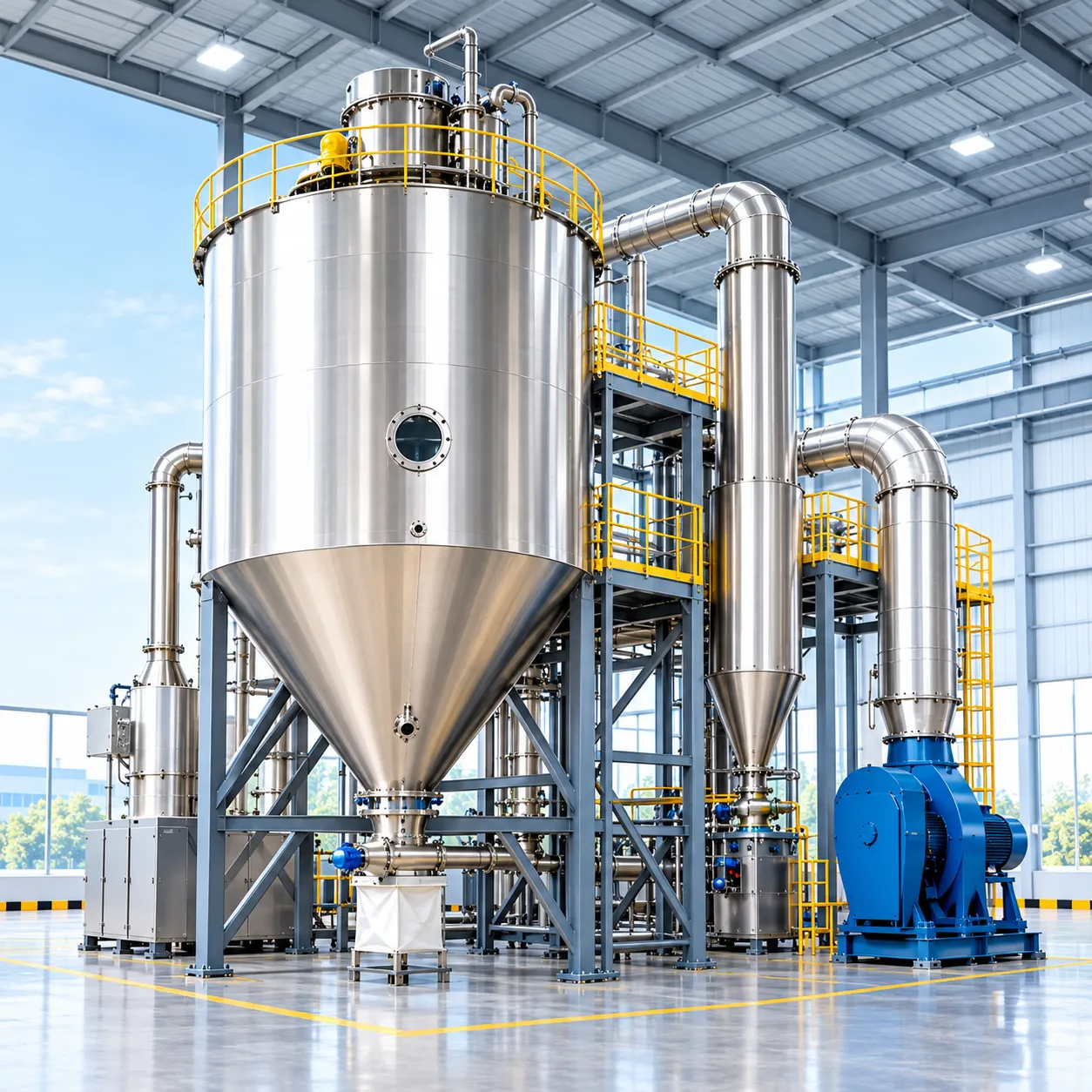
Because the thermal stage drives so much of the cost, the evaporator and final dryer deserve careful engineering. AKSH's industrial evaporators are available in multiple effect, MVR, falling film and forced circulation designs, with materials up to duplex steel, titanium and Hastelloy for corrosive brines. For the final solids step, effluent and ZLD versions of our industrial spray dryers can convert high-TDS concentrate into dry powder. Reliable automation is equally important; our instrumentation, automation and controls systems tie the stages together with PLC and SCADA control and data logging. Our white paper on why evaporation and spray drying are the final frontiers for chemical plant compliance explores this further.
Why Choose AKSH Engineering
AKSH Engineering Systems Pvt. Ltd., based in Ahmedabad, Gujarat, has been designing and manufacturing evaporation, drying and turnkey process plants since 2013, with more than 100 installations. Our team of technocrats brings over 100 years of combined experience. We design and fabricate in-house, which allows us to tailor each scheme to your effluent and utilities and to support you from process design to commissioning. Explore our wider range of sustainability solutions.
Conclusion
Conventional effluent treatment costs less to build and run, and it remains a sound choice where effluent is mainly organic, discharge routes are reliable and regulations permit it. ZLD demands higher investment and energy, but it delivers water security, compliance certainty, freedom to expand and, in some cases, recovered resources. For many plants, the most economical answer lies in between, using segregation, reuse and phased investment.
If you are weighing ZLD against conventional treatment, share your effluent data and site conditions with the AKSH Engineering team. We will help you compare the options on a lifecycle basis and recommend a scheme that fits your compliance needs and your budget.