
Ask three suppliers to price a zero liquid discharge plant for the same factory, and you may receive three very different numbers. That spread often frustrates plant heads and purchase teams, but it is rarely a sign that someone is being unreasonable. It usually means each supplier has made different assumptions about the effluent, the treatment scheme, the scope of supply and the energy source. A ZLD plant is not an off-the-shelf machine; it is a process plant built around one specific wastewater.
This guide explains what actually drives ZLD plant cost in India, both the upfront capital cost and the running cost over the plant's life. Rather than quote figures that would be misleading without your data, we focus on the variables that move a quotation up or down, so you can prepare a better enquiry, compare proposals on equal terms and avoid surprises after commissioning.
What a ZLD Plant Includes
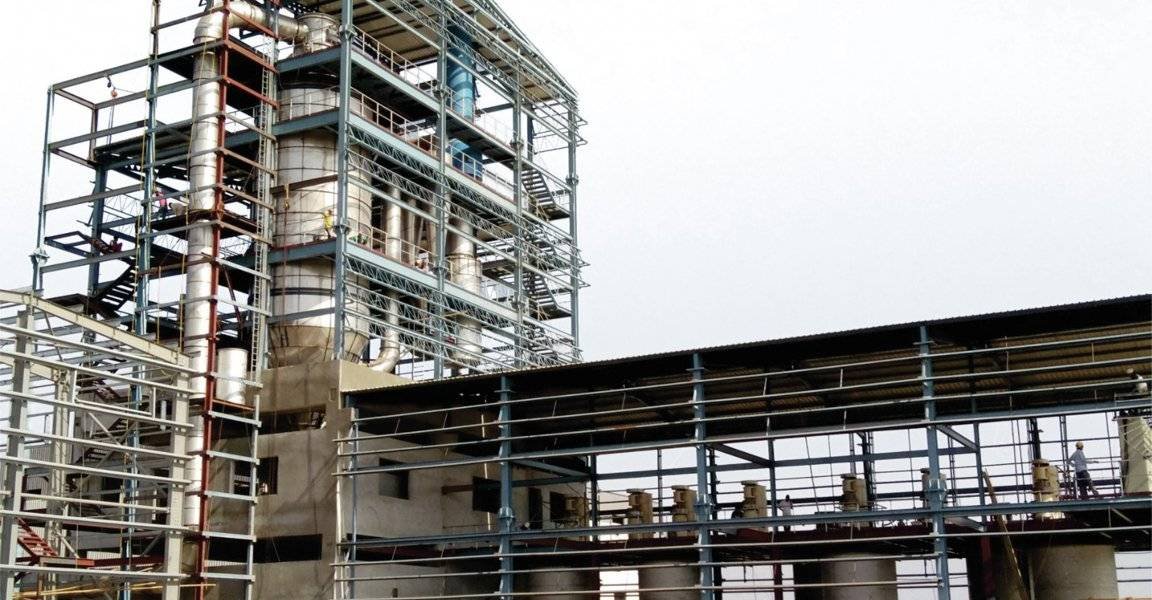
A zero liquid discharge plant treats industrial wastewater so that no liquid effluent leaves the site. Clean water is recovered for reuse, and dissolved solids are converted into a dry salt or solid residue for disposal or recovery. Most Indian ZLD schemes combine four building blocks:
- Pretreatment: Removal of suspended solids, oil, hardness, organics and other components that would damage membranes or foul evaporators.
- Membrane concentration: Reverse osmosis, sometimes in several stages or with high-pressure designs, recovers a large part of the water at relatively low energy cost.
- Thermal evaporation: Multiple effect evaporators or mechanical vapor recompression systems concentrate the RO reject into a near-saturated liquid.
- Final solids recovery: Crystallizers, agitated thin film dryers, spray dryers, centrifuges or filter presses turn the concentrate into solids and recover the last condensate.
AKSH's ZLD plants integrate all four stages and are custom-sized from about 10 KLD to more than 5,000 KLD, designed to recover up to 95 to 98 percent of wastewater as reusable water depending on effluent characteristics. If you are new to the concept, our interactive ZLD guide walks through each stage visually.
Capital Cost vs Operating Cost
The price on a quotation is only part of the story. Over a typical plant life, operating expenses such as steam, electricity, chemicals, membrane replacement, labor, maintenance and solid waste disposal can add up to more than the original investment. Two plants with similar capital cost can have very different running costs, and a cheaper plant that consumes more steam may end up more expensive within a few years.
When evaluating proposals, ask each supplier for guaranteed or expected utility consumption figures per cubic meter of effluent treated, so that lifecycle cost can be compared, not just purchase price.
The Main Factors That Affect ZLD Plant Pricing
1. Plant Capacity
Capacity, usually expressed in kiloliters per day (KLD), is the most obvious cost driver. Larger plants need bigger equipment, more heat transfer area and more membranes. However, cost does not rise in direct proportion to capacity. Engineering, controls and some auxiliary systems are needed regardless of size, so cost per KLD generally falls as capacity grows. Very small plants can therefore look expensive per unit of capacity.
Capacity should reflect realistic peak flows, planned expansion and operating hours. A plant that runs 24 hours a day can be smaller than one that must treat the same daily volume in fewer hours.
2. Effluent Characteristics
The chemistry of your wastewater has more influence on cost than almost any other factor. Key parameters include:
- Total dissolved solids (TDS): Higher TDS limits RO recovery and pushes more load onto the thermal stage, which is the most energy-intensive part of the plant.
- COD and BOD: High organic loads may need biological or advanced oxidation pretreatment, and organics can cause foaming and fouling in evaporators.
- Hardness, sulfate and silica: These form scale on membranes and heat transfer surfaces, requiring softening, antiscalants or specific evaporator designs.
- Chlorides and pH: Corrosive streams demand higher-grade materials.
- Volatile components: Ammonia, solvents and volatile organics can carry over into condensate and may need stripping or condensate polishing.
- Variability: Effluent that changes widely from day to day needs equalization capacity and more flexible design.
This is why credible suppliers ask for a detailed effluent analysis, ideally from several samples, before they quote.
3. Treatment Scheme and Technology Choice
The configuration selected for your effluent shapes both capital and operating cost. Key choices include:
- How much RO before evaporation: Every cubic meter recovered by RO is a cubic meter the evaporator does not have to boil. High-recovery RO increases membrane cost but can reduce the size and energy use of the thermal stage.
- MEE or MVR: A mechanical vapor recompression evaporator usually costs more to buy but can use far less steam. A multiple effect evaporator is often cheaper upfront and suits sites with inexpensive steam.
- Final solids step: A forced circulation crystallizer, an agitated thin film dryer and a spray dryer each have different capital, energy and operating profiles, and the right choice depends on the salts present.
4. Materials of Construction
As effluent is concentrated, chlorides and other aggressive species reach levels that attack standard stainless steel. Evaporator tubes, separators and crystallizers may need SS316L, duplex stainless steel, titanium or nickel alloys such as Hastelloy. Higher-grade materials raise capital cost but prevent premature corrosion failures that would cost far more to fix. AKSH's industrial evaporators are available in this full range of materials, selected according to the liquid chemistry.
5. Water Recovery and Product Quality Targets
Recovering the last few percent of water is disproportionately expensive, because it must be done thermally from the most concentrated, difficult liquid. The required quality of recovered water also matters. Water for cooling tower make-up may need less polishing than water for boiler feed or process use.
6. Available Utilities
Existing boiler capacity, steam pressure, power availability, cooling water and space all influence design and cost. If the site has spare steam, an MEE may be economical. If boiler capacity is limited or fuel is costly, MVR may be preferable even with its higher capital cost. If no steam is available at all, a new boiler or a fully electric solution may be needed and must be included in the comparison.
7. Fouling and Scaling Control
Effluents prone to scaling need forced circulation evaporators, antiscalant systems, cleaning provisions and sometimes extra standby equipment so the plant can be cleaned without stopping production. These features add cost but protect availability. Our guide to evaporator fouling problems explains why they matter.
8. Automation Level
ZLD plants involve many interacting stages. A basic plant may rely heavily on operators, while a fully automated plant with PLC and SCADA control, online analyzers and remote monitoring costs more upfront but often reduces manpower, improves consistency and helps maintain compliance records. AKSH's instrumentation, automation and controls systems provide this level of integration.
9. Scope of Supply
One of the biggest reasons quotations differ is that they cover different scopes. Check whether each proposal includes:
- Pretreatment, equalization and sludge handling
- Civil works, foundations and buildings
- Structural steel, platforms and piping
- Electrical panels, cabling and motor control centers
- Cooling tower, boiler or steam connection
- Installation, commissioning and performance trials
- Operator training, spares and annual maintenance support
An equipment-only offer and a turnkey offer cannot be compared directly. Watch also for items that are easy to overlook in the first comparison: condensate polishing if recovered water must meet strict quality, storage tanks for reject and recovered water, standby pumps, laboratory equipment for routine monitoring, and the first set of cleaning chemicals and membrane spares. Each one is modest on its own, but together they can change the ranking of two otherwise similar proposals.
10. Solid Waste Handling and Disposal
The salts and solids left at the end of a ZLD process must be stored, packed and sent to an authorized disposal facility, or in some cases recovered as a saleable byproduct. Disposal cost depends on quantity and classification, and it is a recurring expense that belongs in the lifecycle comparison. Where salt recovery is feasible, additional purification stages may be required.
Summary of Cost Drivers
| Factor | Mainly Affects | What Tends to Increase Cost |
|---|---|---|
| Capacity | Capital and operating cost | Higher flow, peaks, fewer operating hours |
| Effluent chemistry | Scheme design and both costs | High TDS, high COD, scaling salts, volatiles, variability |
| Thermal technology | Balance of capital vs energy | MVR raises capital; MEE raises steam use |
| Materials | Capital cost and plant life | High chlorides, low pH, high temperatures |
| Recovery targets | Thermal stage size and energy | Very high recovery, strict reuse water quality |
| Utilities | Technology choice | Limited steam, high fuel cost, space constraints |
| Automation | Capital and manpower cost | Higher automation raises capital but can lower labor |
| Scope of supply | Quoted price | Turnkey scope with civil, electrical and utilities |
| Solids handling | Operating cost | Large salt quantities, hazardous classification |
The Regulatory Context
In India, the Central Pollution Control Board and State Pollution Control Boards set the framework for industrial effluent management. For certain industrial sectors and locations, consent conditions may require zero liquid discharge or very strict discharge limits. Requirements vary by industry, state and site, so it is important to confirm the conditions that apply to your unit with the relevant authority and your environmental consultant before finalizing the scheme. Our article on ZLD vs conventional effluent treatment discusses how regulatory risk factors into the overall decision.
How to Get an Accurate ZLD Quotation
- Collect representative effluent data: Analyze several samples covering normal and peak operations for TDS, COD, BOD, hardness, sulfate, chloride, silica, oil, pH and any specific contaminants.
- Define flows clearly: State average and peak daily volumes, operating hours and expected growth.
- List available utilities: Note steam availability and pressure, power, cooling water and space.
- Set recovery and reuse goals: Explain where recovered water will be used and what quality it needs.
- Clarify scope: Decide whether you need equipment only or a turnkey plant including civil and electrical work.
- Ask for utility consumption figures: Request steam, power and chemical consumption per cubic meter so you can compare running costs.
- Consider treatability trials: For complex effluents, laboratory evaporation and crystallization tests reduce design risk.
Sizing the thermal stage correctly is central to both cost and performance. Our evaporator capacity calculation guide explains the mass and energy balance behind it.
Ways to Reduce ZLD Lifecycle Cost
- Reduce effluent at source: Water conservation, segregation of streams and process changes reduce the volume and load reaching the ZLD plant.
- Segregate high- and low-TDS streams: Treating them separately can avoid sending dilute water to the expensive thermal stage.
- Maximize economical RO recovery: Within scaling limits, more membrane recovery means less evaporation.
- Choose the right thermal technology: Compare MEE and MVR on lifecycle cost using your actual utility prices.
- Recover heat: Use condensate and concentrate to preheat feed.
- Plan maintenance: Planned cleaning and spares reduce unplanned shutdowns.
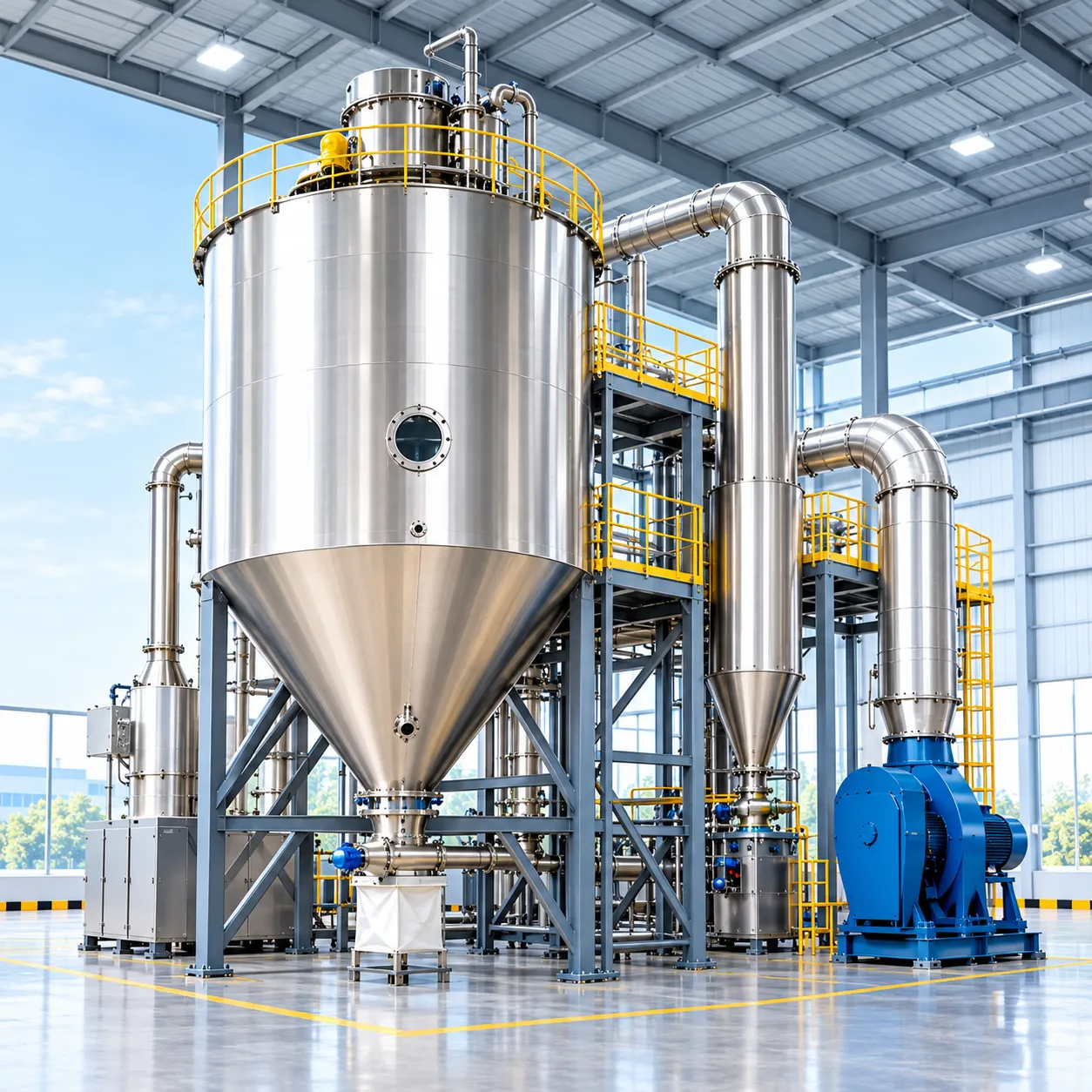
For some effluents, a spray dryer can serve as the final solids step, converting concentrate directly into powder. AKSH's industrial spray dryers include heavy-duty effluent and ZLD configurations for high-TDS wastewater.
Why Choose AKSH Engineering
AKSH Engineering Systems Pvt. Ltd., based in Ahmedabad, Gujarat, has designed and manufactured evaporation, drying and turnkey process plants since 2013, with more than 100 installations. Our team of technocrats brings over 100 years of combined experience. Because we design and fabricate evaporators, dryers and controls in-house, we can tailor each ZLD scheme to your effluent and utilities rather than offering a one-size-fits-all package. Explore our full range of sustainability solutions.
Conclusion
There is no single price for a ZLD plant in India because no two effluents, sites or scopes are the same. Capacity, effluent chemistry, technology choice, materials, recovery targets, utilities, automation, scope and solid waste handling all shape the final number. The best way to control cost is to provide good data upfront and to compare proposals on lifecycle cost and scope, not just on the headline figure.
If you are planning a ZLD project, share your effluent analysis and site details with the AKSH Engineering team. We will recommend a suitable treatment scheme and prepare a detailed quotation based on your actual requirements.