
Flash Dryer Working Principle: How Flash Drying Works, Step by Step
Many industrial products leave the process not as a liquid, but as a wet cake, filter cake or damp powder. Starch from a centrifuge, gypsum from a filter, pigments from a press, or chemical crystals from a separator all need their moisture removed before packing or further processing. For a large share of these materials, the fastest and most economical solution is a flash dryer.
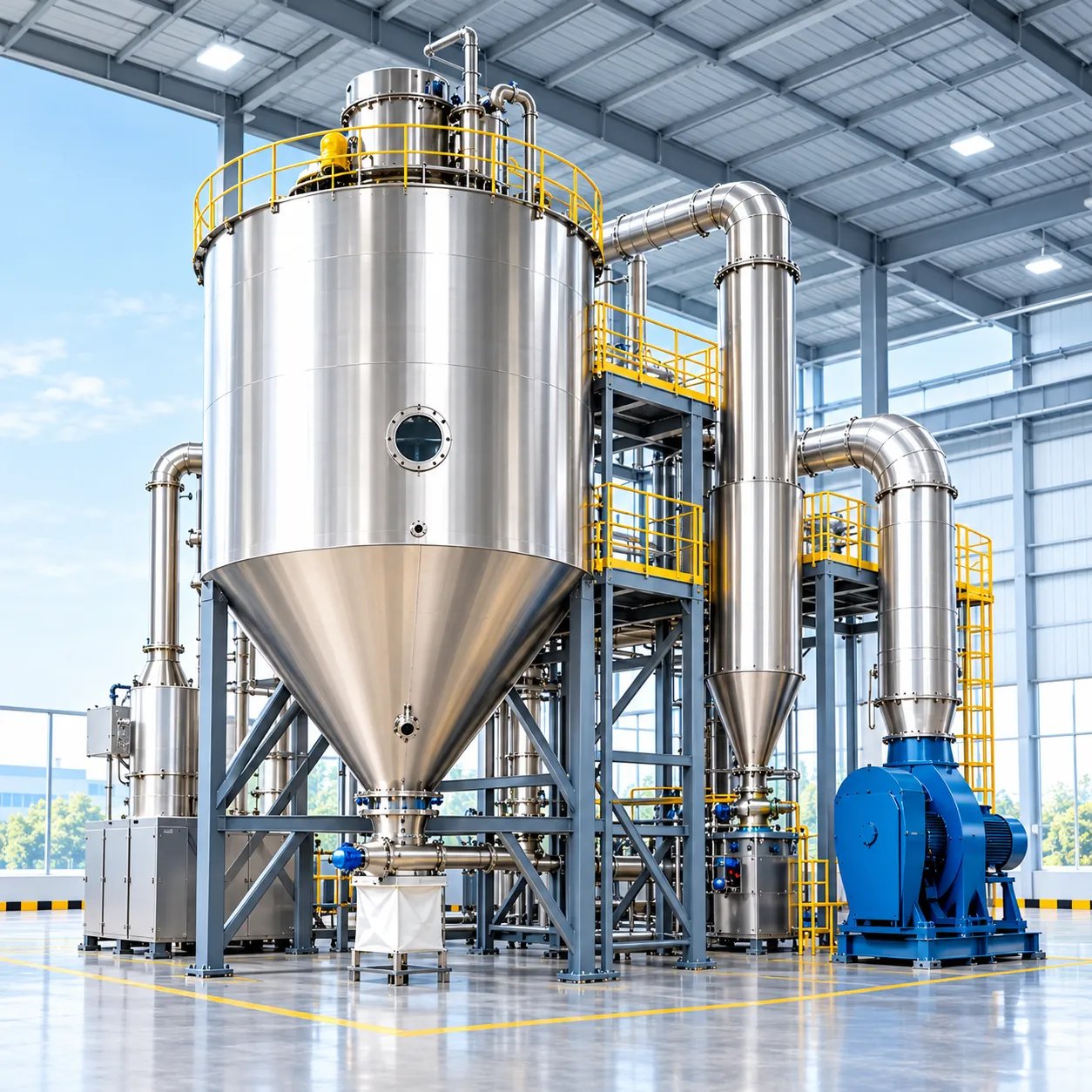
A flash dryer, also called a pneumatic dryer, dries wet particles while they are carried in a stream of hot air. The whole drying process takes only a few seconds, which is where the word "flash" comes from.
In this guide, Aksh Engineering Systems Pvt. Ltd. explains the flash dryer working principle in clear steps: how the material moves through the system, which components do the work, which process variables control product quality, and where flash drying fits best.
The Basic Principle of Flash Drying
The idea behind flash drying is simple:
Wet particles are dispersed into a fast-moving stream of hot gas. The gas heats the particles and carries away their moisture while also transporting them through a drying duct. Within seconds, the dried particles are separated from the gas and collected.
Three things make this process so effective:
- Complete dispersion. Each particle is separated from its neighbours and surrounded by hot gas, so its entire surface is exposed.
- High relative velocity. The gas moves fast relative to the particles, which keeps heat transfer and moisture removal rates high.
- Evaporative cooling. While the particle surface is wet, evaporation keeps its temperature close to the wet-bulb temperature of the gas, far below the inlet gas temperature. This allows high inlet temperatures without overheating many products.
Because the particles are in the dryer for such a short time, flash dryers are best suited to removing surface or loosely bound moisture. Materials with moisture trapped deep inside the particle may need a longer-residence dryer or a second drying stage.
Aksh Engineering designs and manufactures industrial flash dryers built on this principle for chemical, food, mineral and pharmaceutical applications.
Step-by-Step: How a Flash Dryer Works
Let us follow the material from wet cake to dry powder.
Step 1: Hot Air Generation
Ambient air is drawn through a filter and heated by an air heater. Depending on the plant and the product, the heat source can be:
- Steam coil or thermic fluid heat exchanger.
- Indirect oil, gas or biomass-fired hot air generator.
- Direct gas or oil burner, where combustion gases mix with the drying air.
Flash dryers can often work with fairly high inlet temperatures, because the very short contact time and evaporative cooling protect the product. The correct inlet temperature always depends on the heat sensitivity of the material.
Step 2: Feeding the Wet Material
The wet material is fed into the hot gas stream at the bottom of the drying column using a screw feeder, rotary valve or similar device. The feeder must deliver a steady, controlled rate, because sudden changes in feed affect outlet temperature and final moisture.
Many wet cakes are sticky or lumpy and will not disperse easily. To handle these, flash dryer systems often use backmixing: a portion of the dry product is mixed with the wet feed in a paddle mixer before it enters the dryer. This lowers the overall moisture of the feed, turning a sticky paste into a crumbly, free-flowing mix that disperses well in the gas stream.
Step 3: Dispersion and Disintegration
As the feed enters the hot gas, it must be broken into individual particles. This happens in one of several ways:
- Venturi section: The gas accelerates through a narrow throat, creating turbulence that breaks up and disperses the feed.
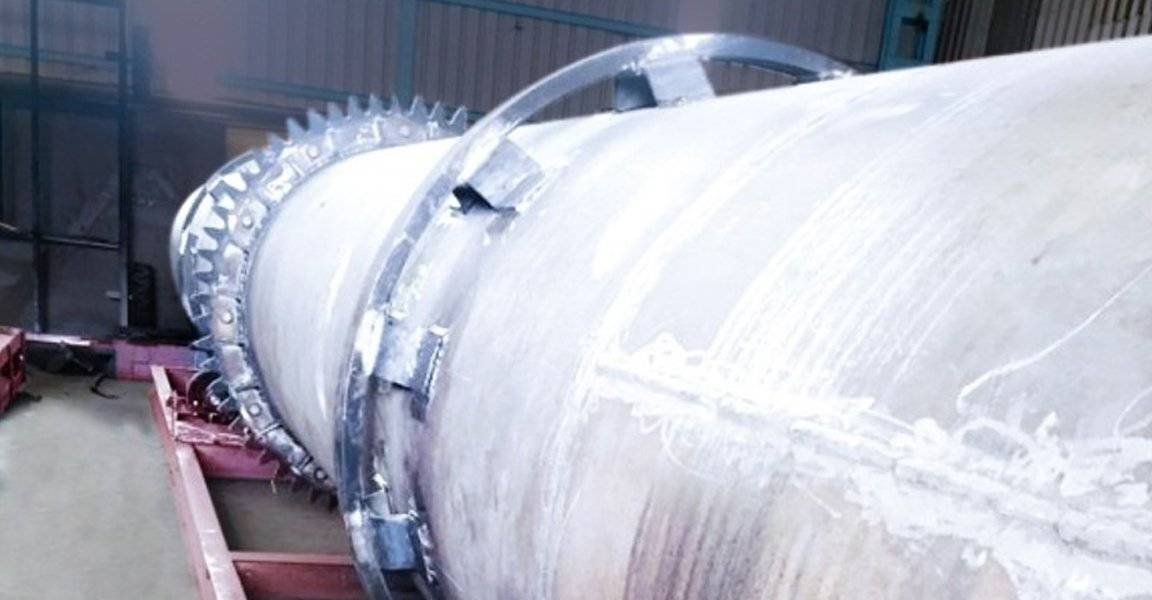
- Disintegrator or cage mill: A high-speed rotor at the base of the dryer breaks lumps and agglomerates while mixing them with hot gas. This combines drying with size reduction in one step. Our cage mill flash dryer is designed for exactly this kind of duty.
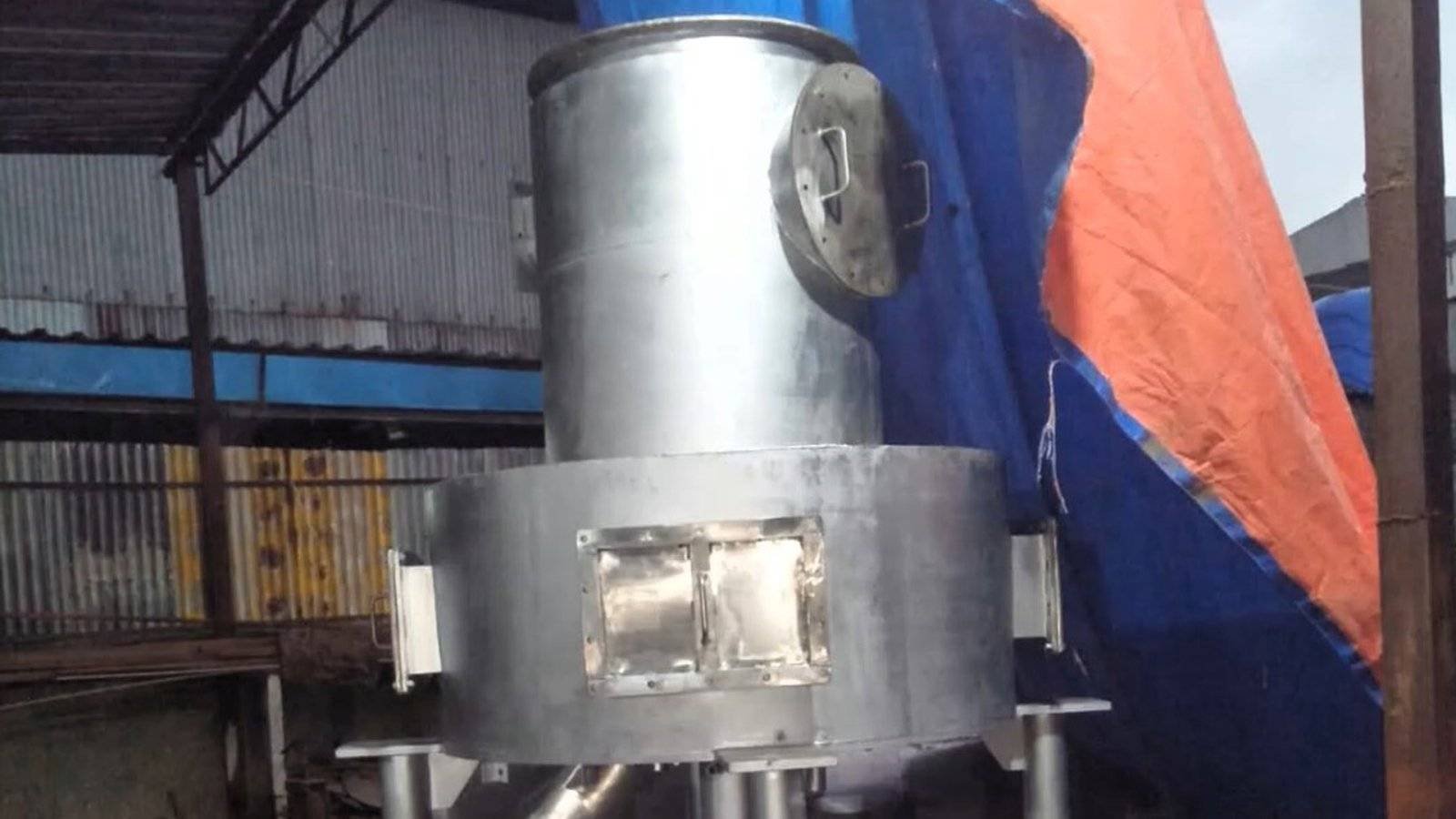
- Agitated drying chamber: In a spin flash dryer, a rotor at the base of a cylindrical chamber keeps the wet material in motion, breaking it up as it dries. This approach handles pasty and highly cohesive materials that a standard flash dryer cannot.
Good dispersion is critical. Lumps that are not broken up will leave the dryer wet in the middle, even if the surface feels dry.
Step 4: Pneumatic Drying in the Drying Column
Once dispersed, the particles are carried upward through a vertical drying duct, often called the drying column or riser. Gas velocity in the duct is high enough to lift and convey the particles.
Drying happens very quickly in this stage:
- Initial phase: The particle surface is wet. Heat from the gas evaporates surface moisture rapidly while the particle stays cool due to evaporation.
- Later phase: As surface moisture disappears, the remaining moisture has to move out from inside the particle, so the drying rate slows and the particle temperature rises toward the gas temperature.
Total residence time in the duct is usually just a few seconds. The length and diameter of the duct are designed to give enough time for the material to reach target moisture, while keeping gas velocity high enough to avoid particles dropping out.
Some designs include bends, expansions or classifiers in the duct to give heavier, wetter particles more time in the hot zone. In ring dryer configurations, a manifold classifier at the top of a loop returns wet or oversized particles for further drying while letting dry, fine particles move on.
Step 5: Separation of Product from Gas
At the top of the drying duct, the dried product and moist gas enter a cyclone separator. The gas spins inside the cyclone, throwing particles against the wall where they slide down to a rotary valve and are discharged as dry product.
The gas leaves through the top of the cyclone, still carrying some fine particles. It then passes through a bag filter or wet scrubber to capture these fines, both to improve product recovery and to meet emission norms.
Step 6: Exhaust and Product Handling
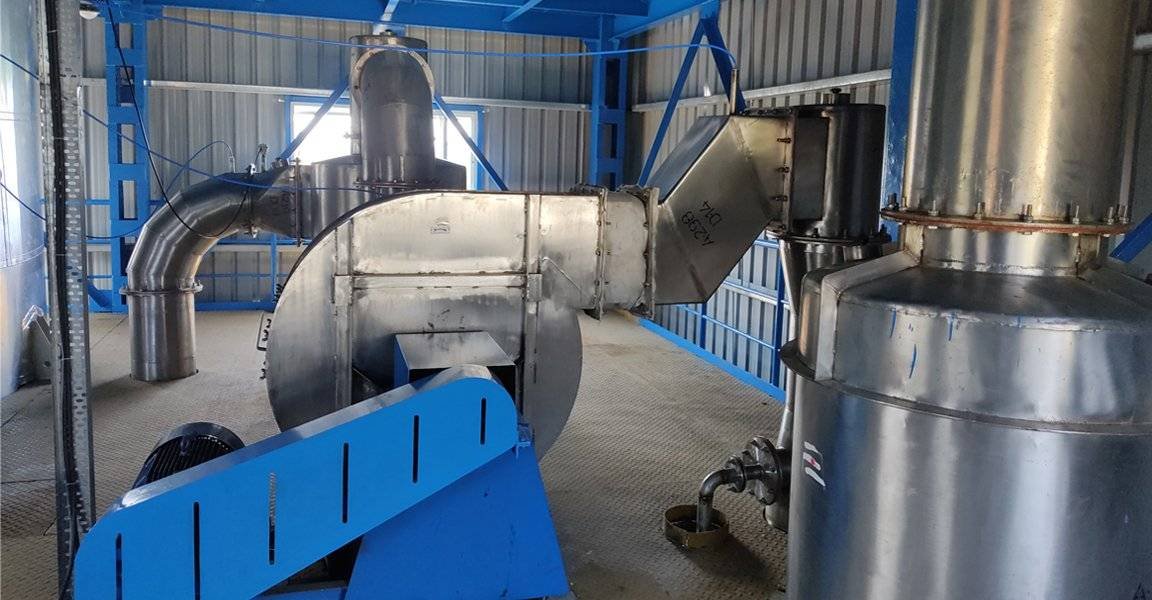
An exhaust fan at the end of the system pulls gas through the entire dryer, keeping it under slight negative pressure so that dust does not escape. The cleaned gas is released through a stack.
The dry product from the cyclone and filter is conveyed to a sieve, cooler, storage silo or packing station. If the product needs cooling before packing, an additional cooling cyclone or fluid bed cooler may be included.
To see how these steps fit together on a single drawing, read our flash dryer diagram article.
Main Components of a Flash Dryer
| Component | Function |
|---|---|
| Air filter | Cleans incoming air |
| Air heater / hot air generator | Raises air to drying temperature |
| Wet feed hopper and screw feeder | Stores and doses wet material |
| Backmix mixer (optional) | Blends dry product with wet feed to improve handling |
| Venturi, disintegrator or cage mill | Breaks up and disperses the feed in the hot gas |
| Drying duct (riser) | Provides residence time for pneumatic drying |
| Cyclone separator | Separates dry product from exhaust gas |
| Bag filter or wet scrubber | Captures fine dust and controls emissions |
| Rotary airlock valves | Discharge product while keeping system sealed |
| Exhaust fan | Moves gas through the system under negative pressure |
| Control panel | Controls temperatures, feed rate and safety interlocks |
Key Process Variables in Flash Drying
Understanding the working principle also means knowing which variables control the result.
Inlet gas temperature. Higher inlet temperatures increase evaporation capacity and reduce gas volume, but must stay within what the product can tolerate.
Outlet gas temperature. This is the main control parameter. As with spray drying, the outlet temperature is usually controlled by adjusting the feed rate. A higher outlet temperature generally means lower product moisture.
Feed moisture and consistency. Wetter or stickier feeds need more energy and may need backmixing or a disintegrator.
Particle size. Smaller particles dry faster and are easier to convey. Larger particles need more residence time or a longer duct.
Gas velocity. Must be high enough to convey particles and keep them dispersed, but not so high that residence time becomes too short.
Duct length and design. Determines how long particles stay in the hot gas.
Types of Flash Dryers
Different materials and processes call for different flash dryer configurations.
Standard (single-pass) flash dryer. Material passes through the drying duct once. Simple, compact and economical for free-flowing materials with mostly surface moisture.
Flash dryer with disintegrator or cage mill. Combines drying and size reduction for lumpy cakes and agglomerated feeds.
Ring flash dryer. Includes a recirculation loop and classifier, giving more residence time to wetter or larger particles. Useful for products with a wide particle size range or higher internal moisture.
Spin flash dryer. Uses an agitated drying chamber to handle pastes, filter cakes and highly viscous materials directly, often without backmixing. Our swirl agitated spin flash dryer is designed for these demanding feeds. Learn more in the spin flash guide: high-throughput drying mechanics explained.
Open-loop vs closed-loop flash dryers. Open-loop systems use fresh air once and release it. Closed-loop systems recirculate an inert gas, usually nitrogen, and recover solvent through a condenser, making them suitable for solvent-wet or explosive materials. We compare both in open loop vs closed loop flash dryers.
Applications of Flash Dryers
Thanks to their speed and simplicity, flash dryers are used across many industries:
- Food and starch: Native and modified starches, gluten, fibres, protein concentrates and food by-products. See our article on flash dryers for starch manufacturing.
- Chemicals: Inorganic salts, sodium sulphate, calcium carbonate, silica, pigments, catalysts and polymers.
- Minerals: Gypsum, clays, kaolin, bentonite, coal fines and mineral concentrates.
- Pharmaceuticals: Excipients, intermediates and some APIs that tolerate short contact times.
- Environmental: Sludges and process residues, often with backmixing.
For help matching flash dryer types to your material, read our flash dryer selection guide.
Advantages of Flash Dryers
- Very short drying time, typically a few seconds, protecting many heat-sensitive products.
- High throughput in a compact footprint.
- Continuous operation with consistent product quality.
- Combined drying and conveying, and in some designs, combined drying and milling.
- Relatively low capital cost compared with many other dryer types for suitable materials.
- Simple construction with few moving parts in the drying zone.
- Good thermal efficiency when operated at suitable inlet temperatures.
Limitations to Keep in Mind
Flash dryers are not suitable for every material:
- They are best for surface moisture. Products with a lot of internally bound moisture may not dry fully in the short residence time.
- Very sticky or pasty feeds need backmixing, a disintegrator or a spin flash design.
- Large or dense particles may be difficult to convey and dry evenly.
- Fine dust in the gas stream requires efficient separation and, for combustible materials, explosion protection.
- Some fragile crystals may break down due to high gas velocity and impact.
When a material does not suit flash drying, alternatives include fluid bed, rotary or spray dryers. For a comparison with one of the most common alternatives, see flash dryer vs rotary dryer.
Why Choose Aksh Engineering for Flash Drying?
Aksh Engineering Systems Pvt. Ltd., based in Ahmedabad, Gujarat, offers a complete range of flash drying equipment within our wider drying systems portfolio. We design each system around your material's moisture, particle size, stickiness and heat sensitivity.
Our support includes:
- Process evaluation to confirm flash drying is the right choice for your product.
- Custom design of feeding, dispersion, drying duct and separation systems.
- Choice of heating source to match your plant utilities and running costs.
- Dust collection and pollution control to meet emission norms.
- Automation for stable outlet temperature and consistent product moisture.
- Installation, commissioning and after-sales service.
Conclusion
The flash dryer working principle is based on fast, intimate contact between dispersed wet particles and a moving stream of hot gas. Within seconds, surface moisture evaporates, the particles are conveyed to a cyclone, and dry product is collected. With the right feeding, dispersion and separation design, a flash dryer delivers high throughput, low residence time and consistent quality in a compact, continuous system.
If you are drying filter cakes, wet powders or crystals and want a faster, more efficient process, contact Aksh Engineering Systems to discuss whether a flash dryer is the right fit for your material.