
Starch is one of the most widely used ingredients in industry. It thickens soups and sauces, sizes paper and textiles, binds tablets, forms adhesives and serves as the raw material for glucose syrups, sorbitol and fermentation products. Whether it comes from maize, cassava, potato, wheat or rice, the refined starch leaving the wet-milling plant is still a damp cake. The last major step before packing, drying, has a direct effect on whiteness, viscosity, microbial quality, energy cost and plant safety.
For native starch, pneumatic flash drying has long been the most common industrial choice. This article explains why flash dryers for starch manufacturing fit the material so well, how a typical starch drying line is laid out, which design details matter most and how producers can control operating costs. It is written for starch plant managers, process engineers and project teams planning a new line or an upgrade.
The Starch Drying Challenge
After refining, starch slurry is dewatered mechanically, usually on vacuum drum filters, peeler centrifuges or similar equipment. The resulting wet cake commonly contains in the region of 35 to 40 percent moisture, depending on the starch source and the dewatering equipment. The dryer must bring this down to a commercial moisture level, which for many native starches is around 12 to 14 percent. Starch is naturally hygroscopic and stays in balance with ambient air at roughly that level, so over-drying wastes energy and offers little benefit.
The difficulty is that starch granules are sensitive to heat while wet. If wet starch is held at temperatures above its gelatinization range, often somewhere between about 55°C and 80°C depending on the botanical source, the granules swell and lose their native structure. Partly gelatinized starch shows up as specks, lumps, altered viscosity and poor performance in the customer's process. A starch dryer therefore has to remove a large amount of water quickly while keeping the product itself relatively cool. That is exactly the situation flash drying handles best.
Why Flash Drying Suits Starch
Very Short Residence Time
In a flash dryer, wet starch is dispersed into a stream of hot air and conveyed through a drying duct in a matter of seconds. AKSH flash dryers typically operate with residence times of 1 to 5 seconds. The starch spends so little time in the hot zone that there is no opportunity for prolonged heating.
Evaporative Cooling
While surface moisture is evaporating, the starch particle temperature stays close to the wet-bulb temperature of the air, which is far below the inlet temperature. By the time the particle is dry enough to warm up, it has already left the hot inlet zone and the air around it has cooled. This is why flash dryers can use fairly high inlet air temperatures without gelatinizing the product, provided the system is designed correctly.
Ideal Particle Characteristics
Starch granules are small, typically a few microns to several tens of microns, and the moisture in a well-dewatered cake is largely held on and between the granules. Once the cake is broken up, the fine particles disperse easily and give up their moisture quickly, which is the ideal profile for pneumatic drying.
High Capacity in a Compact Footprint
Starch plants process large tonnages, and a vertical flash dryer handles high throughput in a relatively small floor area. Capacities can be scaled from small units to very large lines; AKSH custom-sizes flash dryers from about 50 kg/hr to more than 10,000 kg/hr of evaporation.
Continuous, Automated Operation
Flash drying is continuous, with low product hold-up. Once stable, the process can run for long periods with minimal operator intervention, which suits the round-the-clock nature of most starch plants.
Starch Sources and Their Drying Notes
| Starch Source | Typical Characteristics | Drying Notes |
|---|---|---|
| Maize (corn) | Small, polygonal granules; large-scale wet milling | Well suited to high-capacity flash drying; whiteness and protein residue are key quality measures |
| Cassava (tapioca) | Important in India and Southeast Asia; seasonal raw material supply | Plants often run hard during the crushing season, so reliability and capacity margins matter |
| Potato | Large granules; relatively low gelatinization temperature | Temperature control is especially important to avoid partial gelatinization |
| Wheat | Often produced alongside gluten | Gluten is frequently dried on separate equipment such as ring or spin flash dryers |
| Modified starches | Chemically or physically modified for specific functions | Drying conditions depend on the modification; some are more heat or moisture sensitive than native starch |
Anatomy of a Starch Flash Drying Line
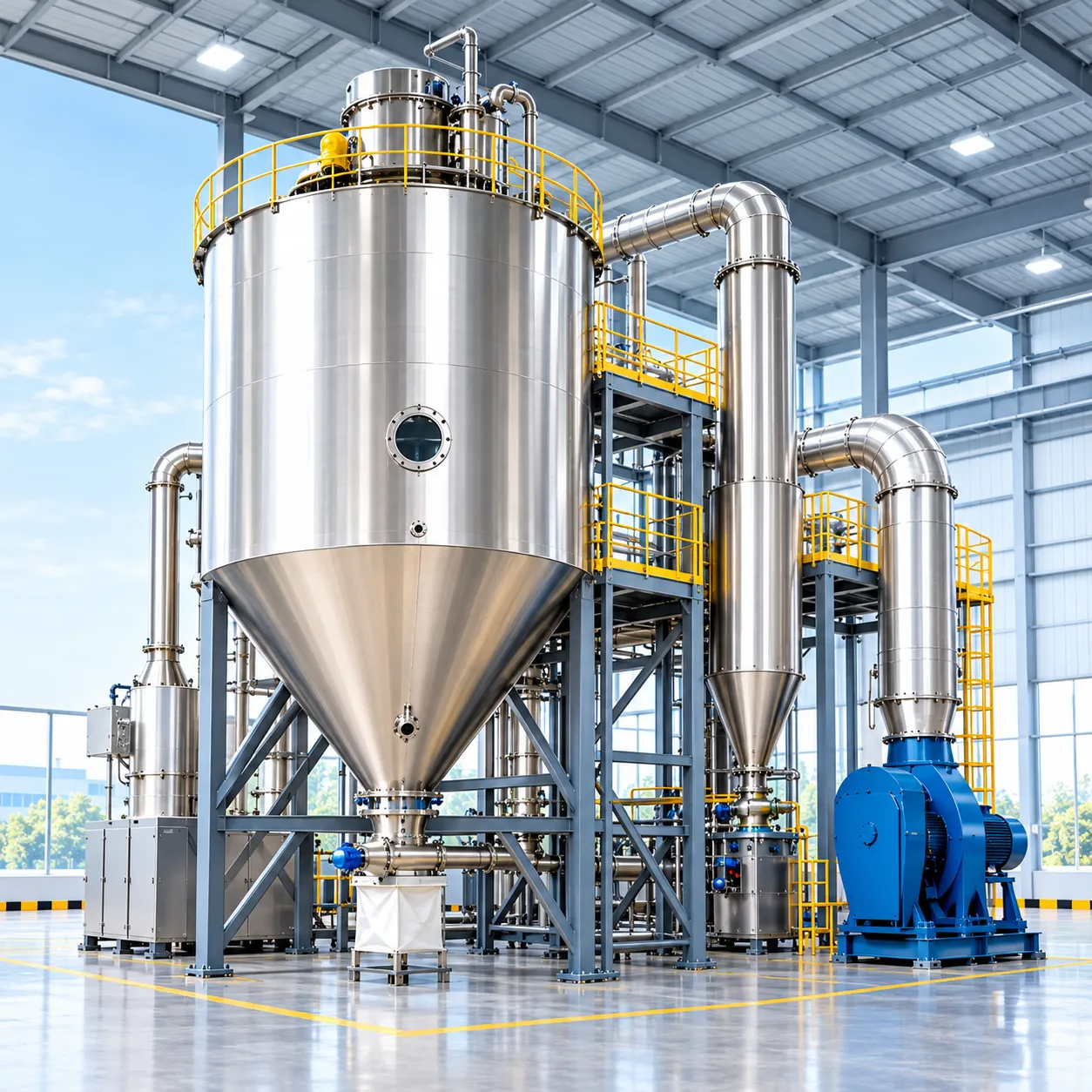
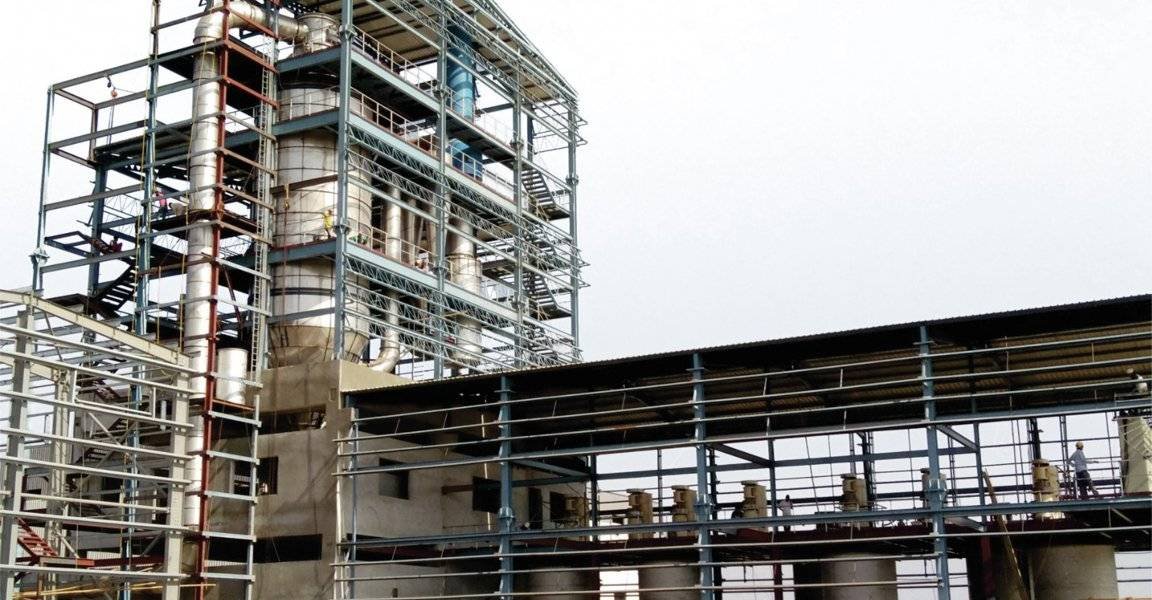
A typical starch flash drying system includes the following stages. Our flash dryer diagram article shows how these components connect.
- Wet cake reception: Cake from the dewatering equipment drops into a hopper, often with a screw conveyor that delivers it at a steady rate.
- Feeding and dispersion: A feeder and disperser break up the cake and introduce it into the hot air stream at the base of the drying duct. Even dispersion is essential for uniform drying.
- Air heating: Filtered ambient air is heated, commonly by steam air radiators, thermic fluid heaters or a suitable hot air generator, depending on fuel availability and hygiene requirements.
- Pneumatic drying: Starch particles travel up the drying duct with the hot air and release their moisture within seconds.
- Product separation: Cyclones separate the dry starch from the air. Fines that pass the cyclones are captured by a bag filter or scrubber.
- Cooling and sifting: Starch is cooled if required and passed through a sifter to remove any lumps or foreign particles.
- Conveying and packing: Dry starch is conveyed to storage silos or directly to packing lines.
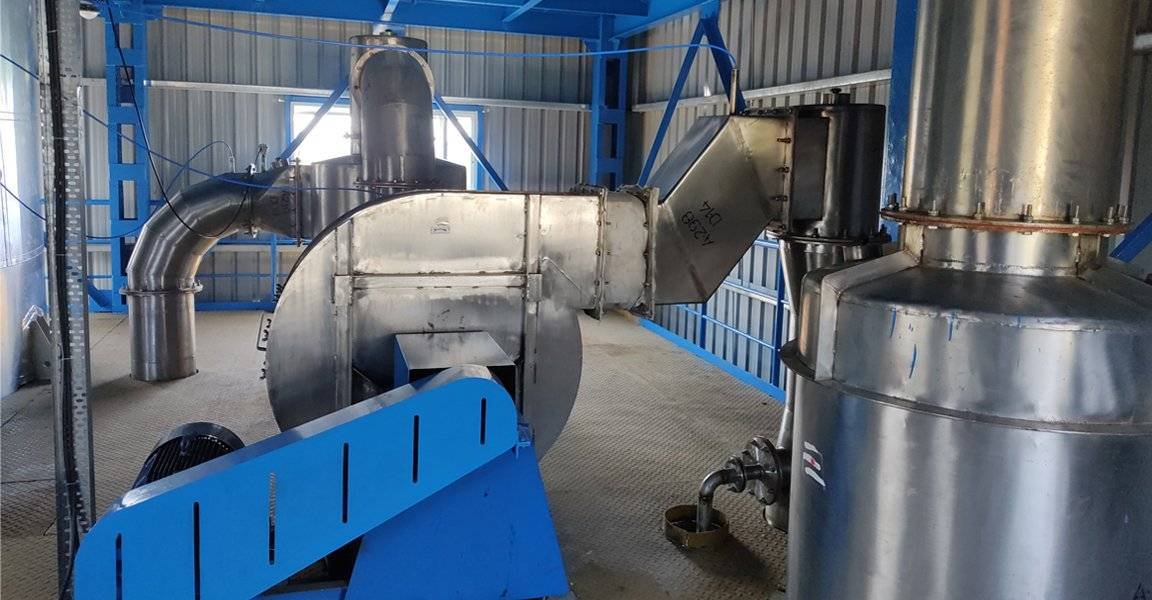
- Exhaust handling: Cleaned air is exhausted through the main fan and stack.
Design Details That Matter
Feed Consistency
Most flash dryer upsets start at the feed point. If the cake arrives too wet or in surges, the outlet temperature falls, product moisture rises and wet starch can stick in the duct. Good starch lines pay attention to stable dewatering upstream, a feeder sized for the real cake texture and controls that hold feed rate steady.
Handling Sticky or Variable Cakes
Well-dewatered native starch is usually crumbly and easy to disperse. Cakes that are wetter or contain more fiber or protein can be stickier. In such cases, back-mixing a portion of dry starch with wet cake, or using a mechanical disintegrator at the feed point, improves dispersion. For starch cake and related products that are harder to break up, a cage mill flash dryer or a swirl agitated spin flash dryer can be considered. Both are listed by AKSH for starch cake applications. Our guide to spin flash drying mechanics explains how agitation and swirl handle cohesive feeds.
Temperature Control
The outlet air temperature is the key control parameter, because it reflects how dry the product is. The control system normally trims feed rate or heat input to hold the outlet temperature at its set point. Inlet temperature is chosen to give good capacity while keeping the product safely below its gelatinization range during the wet phase.
Hygienic Construction
Food and pharmaceutical starch grades require stainless steel product-contact parts, smooth welds and designs that avoid dead zones where starch can accumulate and spoil. Inspection doors in ducts and cyclones help with cleaning. Filtered intake air prevents dust and insects from contaminating the product.
Explosion Safety
Dry starch dust is combustible, and starch plants have a well-documented history of dust explosion incidents. Flash dryers handling starch should be assessed for explosion risk and protected appropriately, for example with explosion vents, suppression systems or isolation devices on cyclones and filters, together with grounding and good housekeeping throughout the plant.
Dust Recovery and Emissions
Starch fines that escape the cyclones represent lost product and can create emission problems. A well-sized bag filter or scrubber, designed together with the dryer, improves yield and keeps the plant compliant. An integrated pollution control system helps handle the large air volumes typical of starch dryers.
Process Benefits for Starch Producers
- Preserved native quality: Short contact time and evaporative cooling protect viscosity, whiteness and granule structure.
- Uniform moisture: Fine, dispersed particles dry evenly, giving consistent moisture from bag to bag.
- High throughput: Continuous operation and fast drying support large daily outputs.
- Compact layout: Vertical design uses less floor space than long tunnel or rotary dryers.
- Low labor demand: Automated operation and continuous discharge reduce manual handling.
- Flexibility: The same basic design can be adapted for native and some modified starches by adjusting operating conditions.
How Flash Drying Compares With Other Starch Drying Methods
Small and traditional starch units, especially in the cassava sector, have historically used sun drying on open yards or simple tray and tunnel dryers. These methods need little capital, but they depend on the weather, take hours or days, require a great deal of labor and expose the product to dust, insects and microbial contamination. Moisture and whiteness also vary from batch to batch, which limits access to food, pharmaceutical and export markets.
Rotary dryers are robust and handle coarse or lumpy materials well, but their long residence time means wet starch spends much longer in contact with hot surfaces and air, increasing the risk of partial gelatinization and discoloration. They also occupy more floor space for the same capacity. Fluid bed dryers can work for some granular products, but fine, cohesive wet starch does not fluidize easily without pre-drying.
Flash drying combines the short contact time needed to protect quality with the capacity and automation that modern plants require. This is why it remains the usual choice for native starch, while other dryer types are typically reserved for specific by-products such as fiber, gluten or pulp.
Controlling Energy Cost
Energy is often the largest operating cost in starch drying. Practical ways to reduce it include:
- Improve dewatering: Each percentage point of moisture removed mechanically before the dryer reduces the evaporation load. Mechanical dewatering is far cheaper than thermal drying.
- Avoid over-drying: Drying below the commercial moisture target wastes heat, and the starch will reabsorb moisture from air anyway.
- Use the highest safe inlet temperature: Higher inlet temperatures reduce air volume and fan power for the same evaporation.
- Recover heat: Exhaust heat can sometimes be used to preheat intake air or other plant streams.
- Maintain the system: Insulation, seals, steam traps and filters all affect efficiency.
Our articles on reducing energy costs in industrial drying and moisture reduction strategies for bulk solids offer more ideas that apply directly to starch.
Common Operating Issues
High Product Moisture
This is usually caused by wetter cake from the dewatering stage, feed surges, a lower inlet temperature or reduced airflow from blocked filters. Checking upstream dewatering is often the first step.
Deposits in the Duct or Cyclone
Wet starch sticking to surfaces suggests poor dispersion or an outlet temperature that is too low. Improving the feeder, adding back-mixing or adjusting feed rate generally resolves it.
Specks or Viscosity Changes
These can indicate localized overheating, often from product hold-up in a hot area, or contamination. Inspecting the feed point and inlet area and reviewing temperature settings helps identify the cause.
Why AKSH Engineering
AKSH Engineering Systems Pvt. Ltd., based in Ahmedabad, Gujarat, has designed and manufactured industrial drying and evaporation systems since 2013, with more than 100 installations. Our team of technocrats brings over 100 years of combined experience, and we design and manufacture in-house. For starch, we offer standard flash, cage mill flash and spin flash dryers, with heating by steam, thermic fluid or direct firing and PLC and SCADA automation. You can compare these with other technologies across our drying systems range, and our flash dryer selection guide explains how to match a configuration to your feed. We supply plants in India and for export.
Conclusion
Starch needs a dryer that removes a large amount of water quickly while keeping the granules cool enough to preserve their native properties. Pneumatic flash drying does exactly that, with short residence times, evaporative cooling, high capacity and continuous operation. The results depend on good design details: stable feeding, appropriate dispersion, accurate temperature control, hygienic construction, explosion protection and efficient dust recovery.
If you are planning a new starch drying line or want to improve capacity, quality or energy use on an existing one, contact the AKSH Engineering team. We will review your starch source, cake moisture and capacity targets and recommend a flash drying configuration that fits your plant.