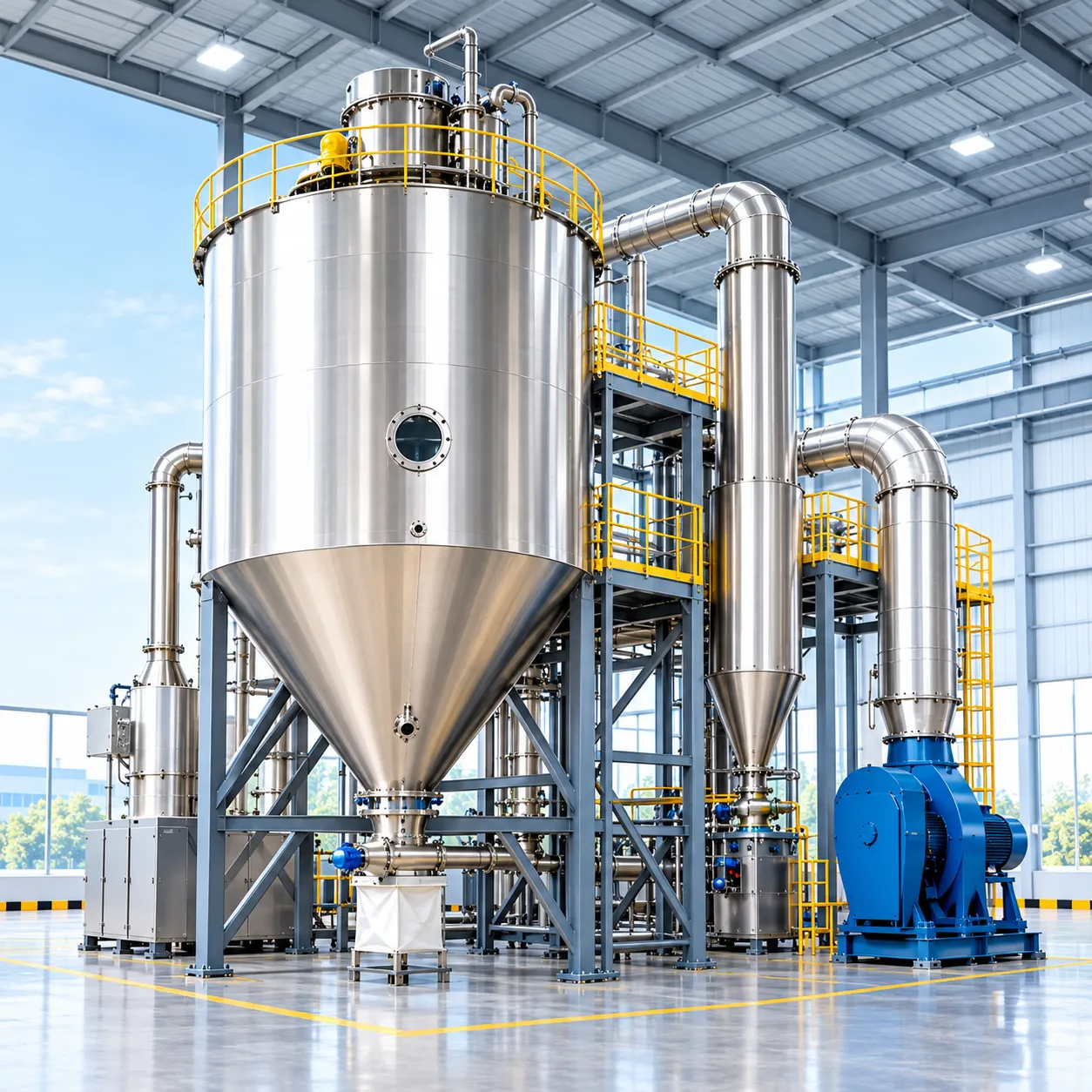
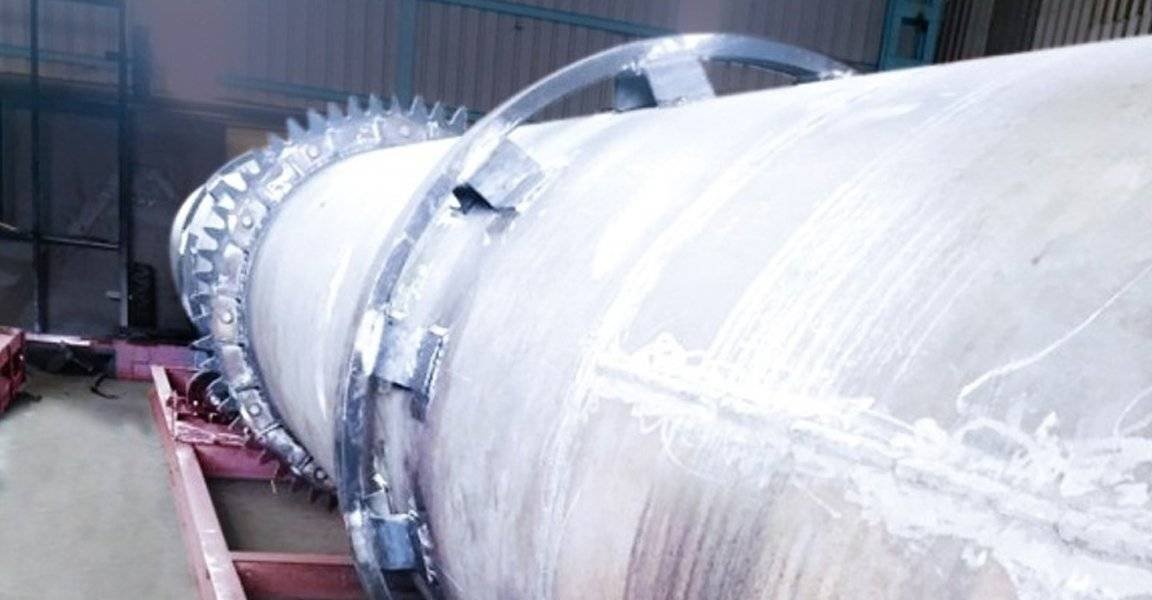
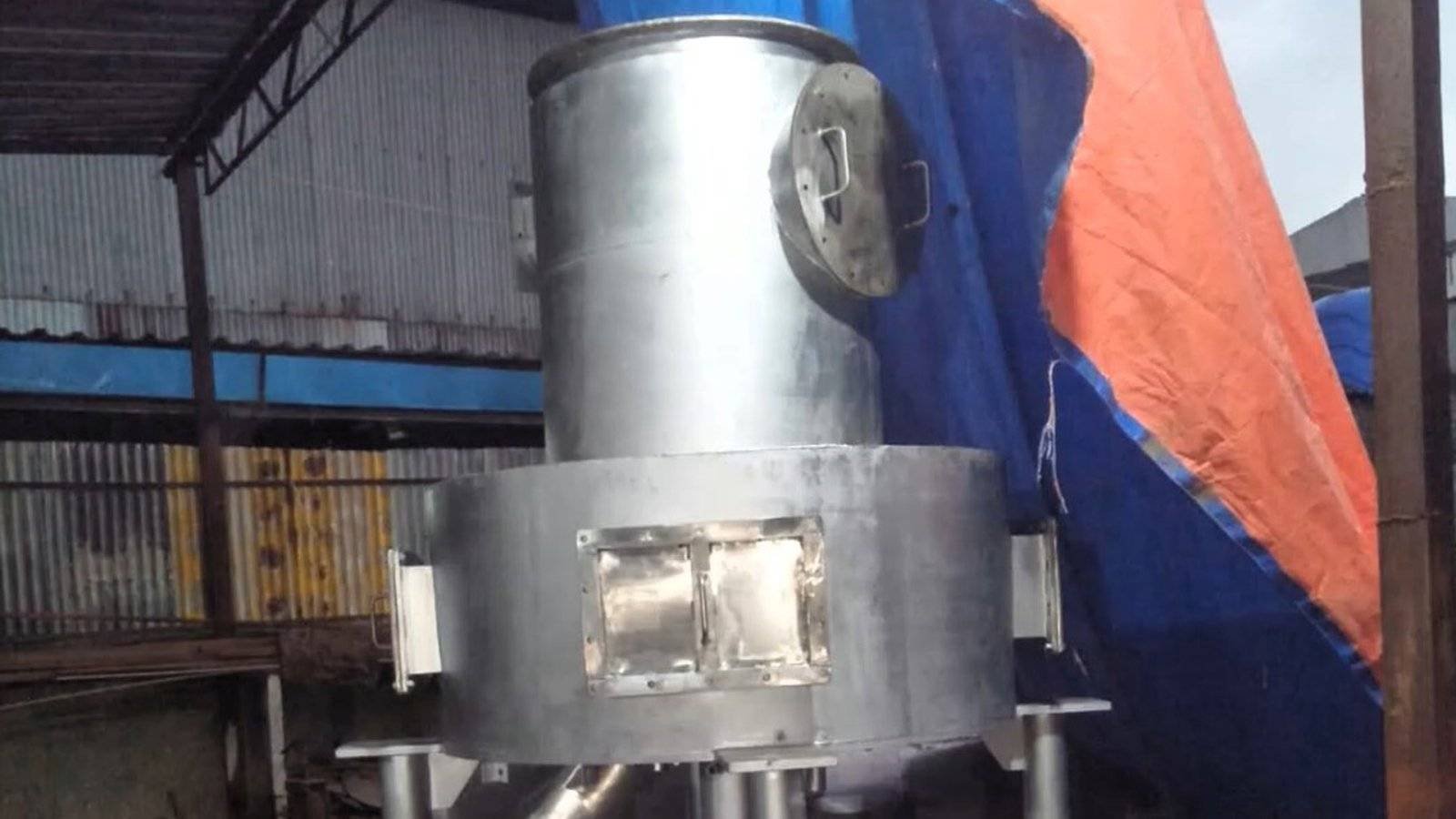
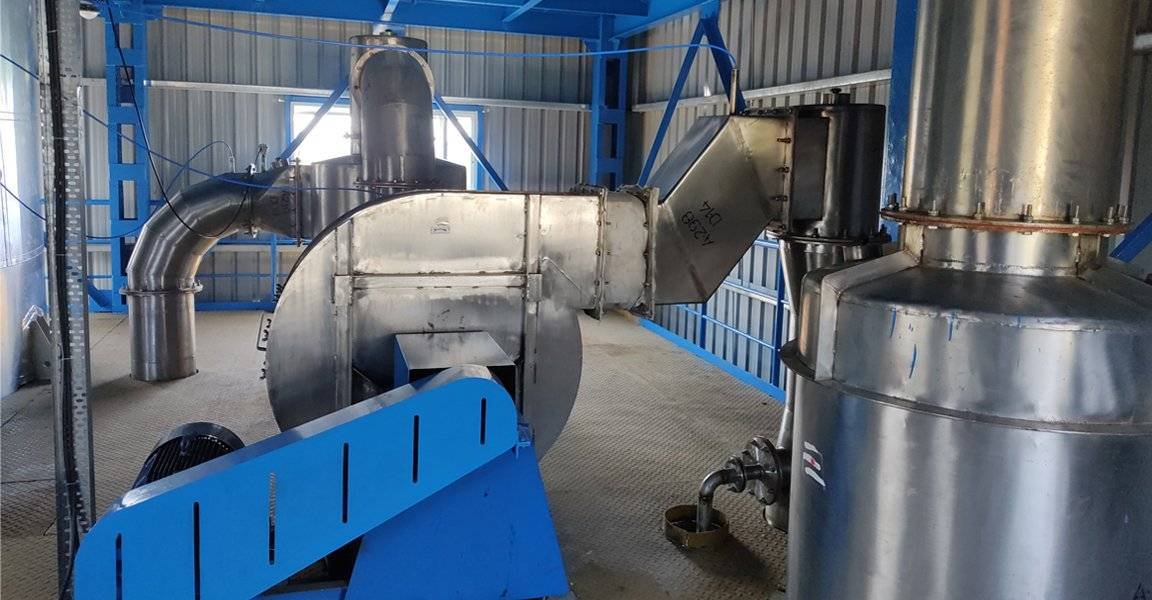

Once a team has decided that flash drying suits its wet cake or powder, a second and equally important question follows: should the drying gas pass through the system once and leave, or should it be recirculated in a sealed loop? The answer shapes the dryer's capital cost, energy use, safety concept, emissions, footprint and day-to-day operation. Choosing wrongly can mean either paying for complexity that adds nothing, or running a plant that is unsafe or non-compliant with the materials it handles.
This article compares open-loop vs closed-loop flash dryers in practical terms. It explains how each configuration works, where each one fits, what the main design and cost differences are, and how to decide between them. It also looks at semi-closed, partially recycled systems, which sit between the two and are sometimes the most sensible option.
A Quick Reminder: How Flash Drying Works
In any flash dryer, wet particles are dispersed into a stream of hot gas, carried through a drying duct and dried within seconds. The dry product is then separated from the gas, usually in cyclones followed by filters. On AKSH flash dryers, residence time is typically 1 to 5 seconds. The loop question concerns only what happens to the gas after the product has been separated. For a full walkthrough of the stages, see our article on the flash dryer working principle.
Open-Loop Flash Dryers
How They Work
An open-loop flash dryer uses ambient air as the drying medium. Air is drawn in through a filter, heated, mixed with the wet feed, passed through the drying duct and separators, and then discharged to atmosphere. Each portion of air makes a single pass through the system. The evaporated moisture leaves with the exhaust.
Typical Applications
Open-loop systems are the default choice for products where the liquid being removed is water and the dry powder does not present an unmanageable fire or explosion risk in air. Examples include starch, many mineral fillers such as calcium carbonate and kaolin, gypsum, many inorganic pigments, crystalline salts and a wide range of food and chemical powders.
Advantages
- Simpler design: No condenser, gas cleaning loop, inert gas supply or oxygen monitoring is needed.
- Lower capital cost: Fewer components and simpler controls generally make open-loop systems less expensive to build.
- Flexible heating: Direct gas or oil firing, steam air radiators or thermic fluid heaters can all be used, depending on the product.
- Easier operation and maintenance: Operators work with familiar air-based systems, and start-up and shutdown are straightforward.
- Easy scaling: Very large evaporation capacities are practical.
Limitations
- Heat leaves with the exhaust: Unless heat recovery is added, the energy in the warm, humid exhaust is lost.
- Emissions: Any fines that pass the filters, and any volatile components released from the product, go to atmosphere, so exhaust cleaning must be effective.
- Not suitable for flammable solvents: Evaporating organic solvents into hot air can create explosive mixtures and releases solvent vapor to the environment.
- Oxygen exposure: Products that oxidize or discolor in hot air may suffer quality losses.
Closed-Loop Flash Dryers
How They Work
In a closed-loop flash dryer, the drying gas, usually nitrogen, circulates continuously in a sealed circuit. After the product is separated, the gas carrying the evaporated liquid passes through a scrubber-condenser or similar unit, where it is cooled so that the vapor condenses and can be drained off. The cleaned, cooled gas is then reheated, normally by an indirect heater, and returned to the dryer. A small bleed and make-up of nitrogen keeps pressure and oxygen concentration under control.
The same principle is well established in spray drying. In an AKSH closed-loop spray dryer, for example, nitrogen is recirculated, oxygen is monitored by sensors and the evaporated solvent is condensed using chilled water or brine for reuse. Closed-loop flash drying applies these same ideas to wet cakes and powders rather than liquid feeds.
Typical Applications
- Cakes wet with flammable organic solvents such as ethanol, methanol, acetone or isopropanol.
- Products that are prone to dust explosion in air at drying temperatures.
- Oxygen-sensitive materials that oxidize or discolor in hot air.
- Toxic or potent compounds where emissions must be minimized.
- Processes where the recovered solvent has significant value.
Advantages
- Inherent explosion protection: Low oxygen in the loop removes one side of the fire triangle.
- Solvent recovery: Condensed solvent can often be reused, cutting raw material cost.
- Minimal emissions: Only a small bleed stream leaves the system, and it can be treated.
- Product protection: Inert gas prevents oxidation and related color or quality changes.
Limitations
- Higher capital cost: Condensers, chillers, gas-tight construction, oxygen analyzers and more complex controls add cost.
- Nitrogen supply: Make-up nitrogen must be supplied reliably, either from cylinders, bulk storage or an on-site generator.
- Indirect heating only: Direct combustion cannot be used inside an inert loop, so heat is supplied through steam, thermic fluid or electric heaters.
- Cooling load: Condensing the vapor requires chilled water or brine, which adds utility demand.
- Greater operating discipline: Purging, oxygen monitoring and leak management must be followed carefully.
The Middle Ground: Semi-Closed and Partially Recycled Systems
Between fully open and fully closed designs are systems that recycle part of the exhaust gas back to the heater. Recycling raises the humidity and lowers the oxygen content of the drying gas, and in direct-fired designs the combustion gases themselves reduce oxygen further, which is sometimes called a self-inertizing arrangement. Partial recycling can also recover some of the exhaust heat.
This approach can suit products that need reduced oxygen for safety but do not involve solvent recovery. It is not a substitute for a true closed loop when flammable solvents are present, and it must be engineered and verified carefully, because oxygen levels depend on operating conditions.
Side-by-Side Comparison
| Factor | Open Loop | Closed Loop |
|---|---|---|
| Drying medium | Ambient air, single pass | Nitrogen or other inert gas, recirculated |
| Liquid removed | Water | Organic solvents, or water where inert gas is needed |
| Explosion protection | Vents, suppression, isolation as required | Inert atmosphere plus monitoring |
| Heating options | Direct or indirect | Indirect only |
| Solvent or vapor recovery | Not usually | Yes, via condenser |
| Emissions | Full exhaust volume, cleaned before discharge | Small bleed stream |
| Capital cost | Lower | Higher |
| Utilities | Heat and power | Heat, power, nitrogen and chilled water or brine |
| Operating complexity | Lower | Higher |
How to Decide: A Step-by-Step Approach
- Identify the liquid: If the cake is wet with a flammable organic solvent, a closed loop is almost always required.
- Assess the dust: Determine whether the dry powder is combustible and how severe an explosion could be. Test data on explosibility and minimum ignition energy support this decision.
- Check oxygen sensitivity: If hot air damages the product, inert or reduced-oxygen drying may be justified even for water-wet cakes.
- Review emission limits: Toxic, odorous or potent compounds may push the design toward a closed loop.
- Calculate solvent value: The value of recovered solvent can offset part of the extra capital cost.
- Confirm utilities: Check availability of nitrogen, chilled water or brine, steam or thermic fluid.
- Compare lifecycle cost: Look at capital, energy, utilities, maintenance and compliance costs over the plant's life, not just the purchase price.
How the Choice Plays Out Across Industries
Minerals and Inorganic Chemicals
Calcium carbonate, kaolin, gypsum, silica and most inorganic salts are water-wet and non-combustible. Open-loop flash dryers, frequently with direct firing for high inlet temperatures, are the norm. The engineering focus is on capacity, fuel economy, abrasion resistance and dust collection rather than inerting.
Food and Starch
Starch, gluten, fibers and proteins are also water-wet, so open-loop systems are standard. However, many of these dusts are combustible, so the open-loop design must include appropriate explosion protection on the dryer, cyclones and filters, along with hygienic construction and filtered intake air.
Pharmaceuticals and Fine Chemicals
APIs and intermediates are often isolated from organic solvents by filtration or centrifugation, leaving cakes wet with ethanol, methanol, acetone, isopropanol or other solvents. These usually require closed-loop inert drying, both for safety and to recover solvent. Potent compounds may also need closed systems to protect operators and the environment.
Agrochemicals, Dyes and Specialty Organics
This group sits in the middle. Water-wet dye or agrochemical cakes are commonly dried in open-loop systems with explosion protection, while solvent-wet grades or highly explosible powders may need inert or semi-closed designs. Each product should be assessed individually rather than by category.
Common Misconceptions
- "Closed loop is always safer, so it is always better." For non-combustible, water-wet products, a closed loop adds cost and complexity without a meaningful safety benefit.
- "Explosion vents make an open-loop dryer suitable for solvents." Vents limit damage after an explosion; they do not prevent the explosive atmosphere created by evaporating flammable solvent into air.
- "Nitrogen consumption will be enormous." In a well-sealed closed loop, nitrogen is only needed for initial purging and to make up for small leaks and the bleed stream.
- "A closed loop cannot handle water." Closed loops can remove water too, which is useful for oxygen-sensitive products, although the condensing load must be designed accordingly.
Energy and Efficiency Considerations
It is sometimes assumed that closed-loop systems are always more energy efficient. The reality is more nuanced. A closed loop retains the sensible heat of the gas, but it also has to remove the latent heat of the evaporated liquid in the condenser, often with refrigeration, and then reheat the gas. Open-loop systems lose exhaust heat but avoid condensing and chilling costs. Which uses less energy overall depends on the liquid, temperatures, heat recovery and local utility costs.
Open-loop dryers can be made considerably more efficient with exhaust heat recovery, careful insulation and optimized airflow. Our article on reducing energy costs in industrial drying describes several approaches.
Emission Control in Open-Loop Systems
Because the full exhaust volume is discharged, the separation train matters a great deal in an open-loop flash dryer. High-efficiency cyclones remove most of the product, and bag filters or wet scrubbers clean the exhaust to meet stack limits. Our guide comparing cyclone separators, bag filters and scrubbers explains the trade-offs, and a dedicated pollution control system can be engineered together with the dryer.
Control and Safety Instrumentation
Both configurations depend on good automation, but closed-loop systems depend on it most. Oxygen analyzers, pressure control, interlocked purging sequences, temperature monitoring and alarm management are essential to keep the loop inert and safe. Open-loop systems still need reliable outlet temperature control, burner management and safety interlocks. Our article on how PLC and SCADA automation improves dryer consistency explains how modern control systems support stable, repeatable operation.
Configuration Choice for Sticky Cakes
The loop decision is separate from the question of how the dryer handles the feed. A sticky, solvent-wet cake may need both a closed loop and mechanical disintegration. A swirl agitated spin flash dryer, for instance, uses a bottom agitator and swirling air to break up cohesive feeds. Whether a particular dryer can be configured for closed-loop operation depends on the application, so it should be confirmed with the equipment supplier at the design stage. Our flash dryer selection guide covers how to choose the right dryer configuration for different industries.
Why AKSH Engineering
AKSH Engineering Systems Pvt. Ltd. has been designing and manufacturing drying and evaporation systems in Ahmedabad, Gujarat, since 2013, with more than 100 installations. Our team of technocrats brings over 100 years of combined experience, and all design and manufacturing is done in-house. We build flash, cage mill flash and spin flash dryers along with nitrogen closed-loop spray drying systems, so we understand both air-based and inert gas drying. Explore our full drying systems range to compare options. We serve customers in India and export markets.
Conclusion
For water-wet products that are safe to dry in air, an open-loop flash dryer is usually the simplest and most economical choice. When the cake carries flammable solvents, when the dust is highly explosive, when oxygen damages the product or when emissions must be minimized, a closed-loop design becomes necessary. Semi-closed systems can fill specific gaps, but they need careful engineering.
If you are deciding between open-loop and closed-loop flash drying, contact the AKSH Engineering team. Share your feed, solvent, safety data and capacity targets, and we will help you evaluate the right configuration for your process.