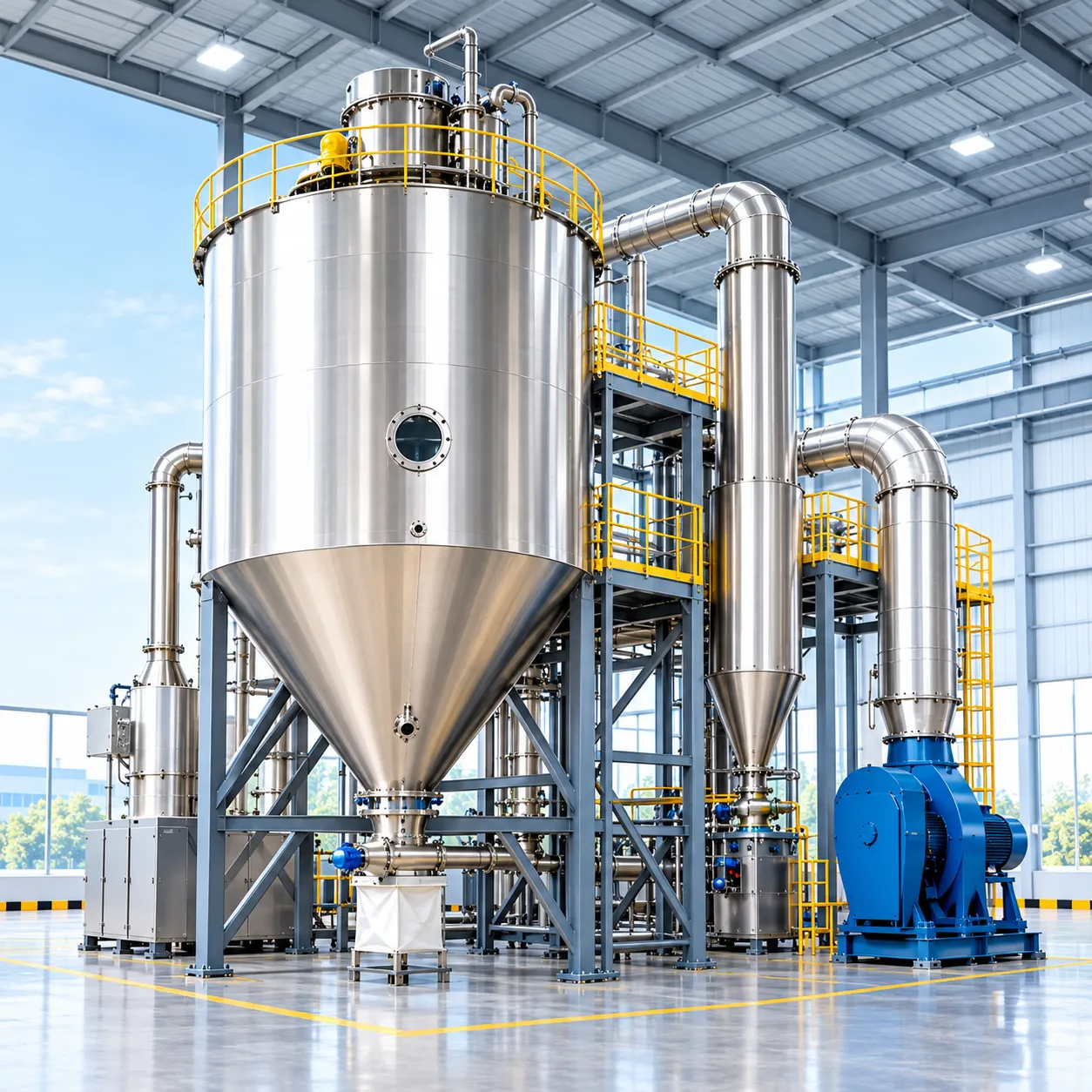
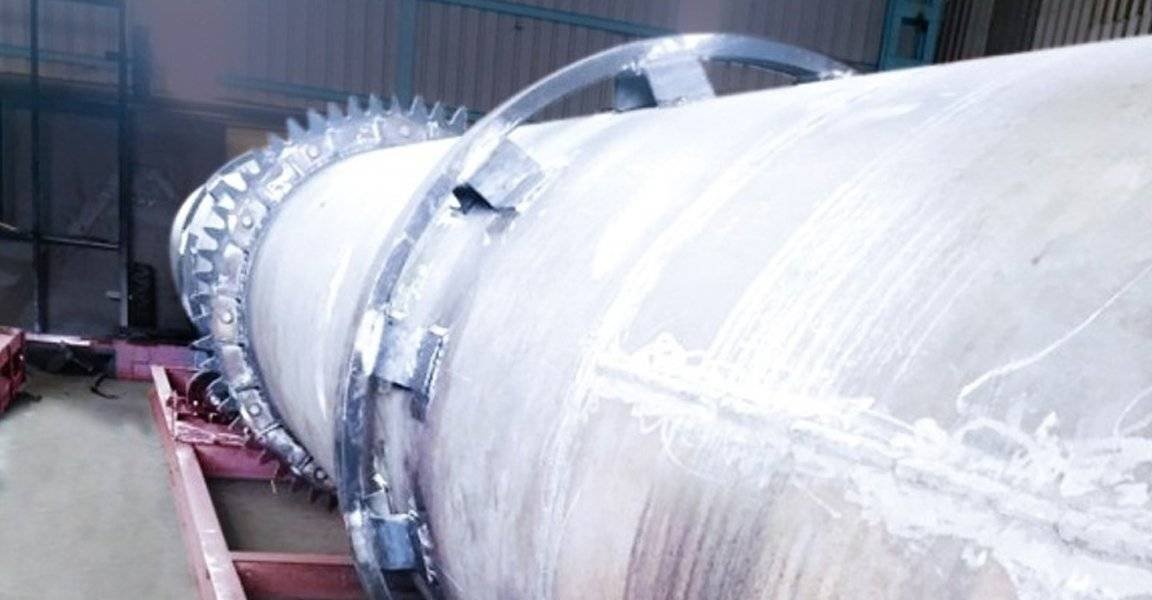
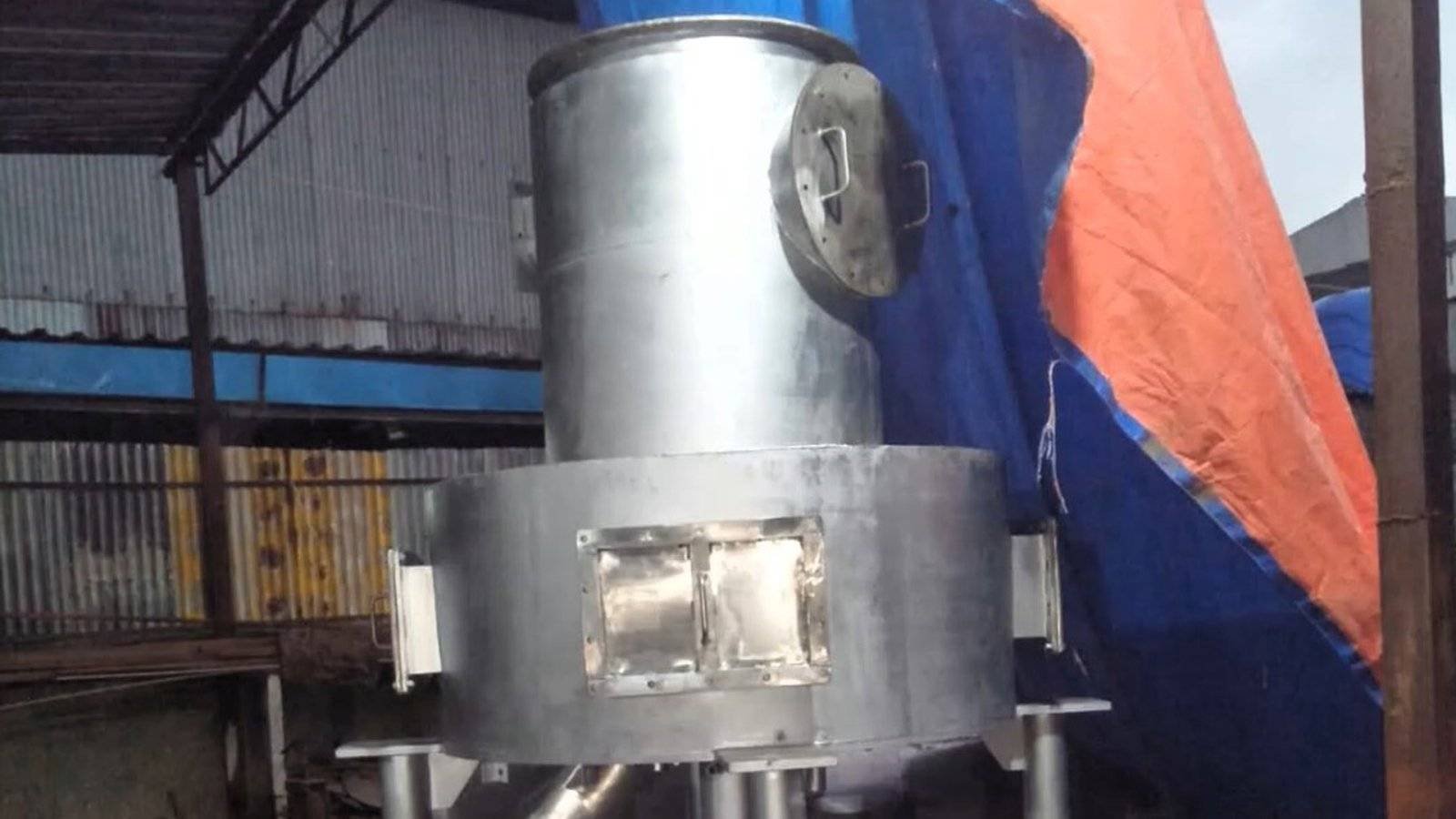
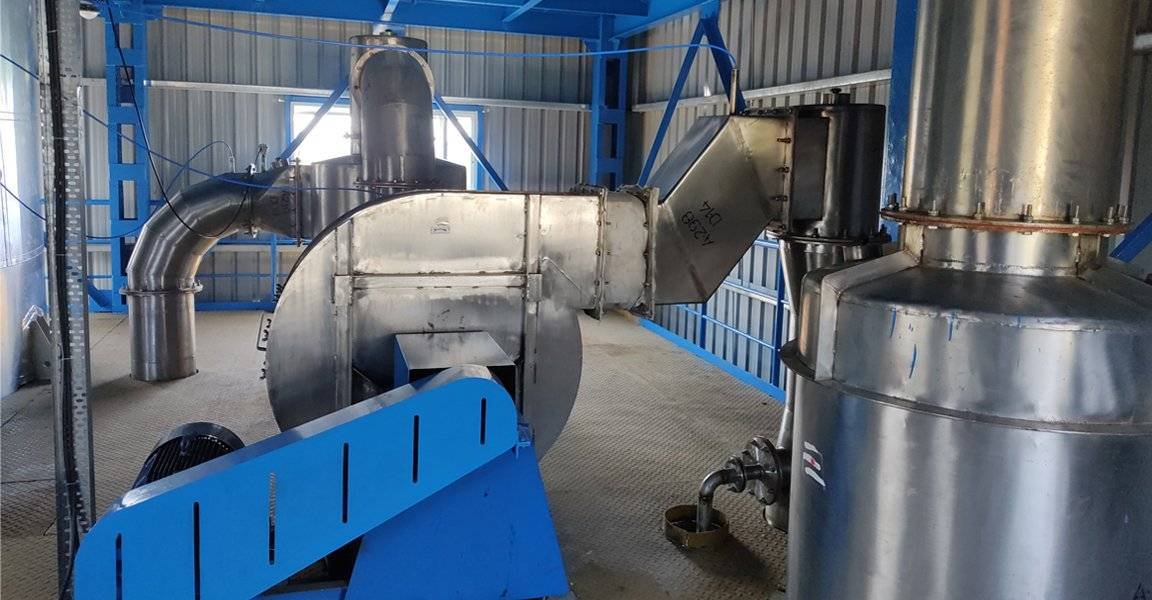

A flash dryer looks simple on a drawing: a hot air source, a feeder, a vertical duct, a cyclone and a fan. In practice, two flash dryers with the same nominal capacity can perform very differently depending on how well they were matched to the material. A starch plant, a dye intermediate unit, a pharmaceutical excipient line and a calcium carbonate operation all use flash drying, yet their feeds, quality targets, hygiene rules and safety risks have little in common. Buying on capacity alone is the most common route to a dryer that underperforms.
This flash dryer selection guide sets out the questions that should be answered before a purchase order is placed. It covers the material properties that decide whether flash drying is suitable at all, the main configuration choices, and the specific priorities of the chemical, food, pharmaceutical and mineral industries. It is intended for process engineers, plant heads and purchase managers comparing proposals from different suppliers.
How a Flash Dryer Works, in Brief
A flash dryer, also called a pneumatic dryer, disperses wet particles into a fast-moving stream of hot gas. The particles are carried up a drying duct and lose their moisture within seconds, after which they are separated from the gas in cyclones and filters. Because the water evaporates so quickly, the particles are cooled by evaporation and stay well below the inlet gas temperature during most of their short time in the dryer. On AKSH flash dryers, residence time is typically 1 to 5 seconds, and evaporation capacities are custom-sized from about 50 kg/hr to more than 10,000 kg/hr.
If you are new to the technology, our article on the flash dryer working principle walks through each component and stage in more detail.
Step One: Is Flash Drying Right for Your Material?
Flash drying excels at removing surface and loosely held moisture from particles that can be dispersed and conveyed in a gas stream. It is less suited to materials where moisture is locked deep inside large particles and must diffuse out slowly. Before comparing suppliers, check the following:
- Nature of the moisture: Mostly surface or free moisture is ideal. Strongly bound or internal moisture may need a longer residence time than a flash dryer provides, or a second drying stage.
- Particle size: Fine to medium particles disperse and dry quickly. Large granules or pellets may fall back in the duct rather than being conveyed.
- Feed form: Free-flowing wet powders and crumbly cakes can usually be fed directly. Sticky pastes and thixotropic cakes need back-mixing, mechanical disintegration or a spin flash design.
- Heat sensitivity: Short contact time and evaporative cooling make flash drying suitable for many heat-sensitive products, but the outlet temperature must be set carefully.
- Required final moisture: Very low final moisture in hygroscopic or porous materials may be difficult to reach in one pass.
If the answers point away from flash drying, other technologies may be better. Our comparison chart for spray, flash and fluid bed dryers and our article on the differences between flash and rotary dryers help narrow the choice.
Step Two: Choose the Right Flash Dryer Configuration
Flash drying covers a family of designs rather than a single machine. The main options are summarized below.
| Configuration | How It Handles the Feed | Best Suited To |
|---|---|---|
| Standard pneumatic flash dryer | Feed is dispersed directly into the hot gas at the base of a vertical duct | Free-flowing wet powders, crystals, centrifuge cakes and starch |
| Flash dryer with back-mixing | Part of the dry product is mixed with wet feed to make it crumbly and easier to disperse | Cakes that are slightly sticky but break up once conditioned |
| Cage mill flash dryer | A high-speed cage mill at the feed point breaks and disperses lumps while drying begins | Sticky filter cakes, dense lumps, fibrous materials and pastes |
| Swirl agitated spin flash dryer | A bottom agitator and tangential hot air create a swirling bed, with a classifier controlling outlet particle size | High-viscosity pastes, cohesive cakes and products needing controlled fineness |
| Closed-loop flash dryer | Drying gas, often nitrogen, is recirculated with solvent condensation | Solvent-wet cakes, oxygen-sensitive or combustible products |
When to Choose a Cage Mill Flash Dryer
When a filter cake arrives as dense, sticky lumps, a plain flash dryer struggles because large lumps drop out of the gas stream. A cage mill flash dryer combines mechanical disintegration with drying at the feed point. On AKSH units, residence time is typically 0.5 to 3 seconds, with capacities from about 100 kg/hr to more than 10,000 kg/hr and wear-resistant pins and liners for continuous duty.
When to Choose a Spin Flash Dryer
For pastes and very cohesive cakes, a swirl agitated spin flash dryer is often the most robust option. The agitator keeps breaking up wet material while a swirling air column lifts only dry, fine particles through a classifier. AKSH lists inlet temperatures from about 120°C to over 600°C depending on construction and heating source, and capacities from about 50 kg/hr to more than 5,000 kg/hr.
Open or Closed Loop?
Most water-wet products are dried in open-loop systems, where air passes through once and is exhausted after cleaning. Solvent-wet or explosive materials may need a closed loop with inert gas. The trade-offs are explained in our guide to open-loop vs closed-loop flash dryers.
Step Three: Match the Design to Your Industry
Chemical Industry
Chemical plants use flash dryers for dyes and dye intermediates, organic and inorganic pigments, agrochemical cakes, optical brighteners and crystalline salts. Typical priorities include:
- Corrosion resistance: Acidic or chloride-bearing cakes may require SS316, SS316L or higher alloys in contact areas.
- Dust and explosion safety: Organic powders can be combustible. Explosion vents, suppression, spark detection and inerting should be assessed during design.
- Shade and product consistency: For dyes and pigments, overheating can shift color, so outlet temperature control is critical.
- Emission control: Fine, colored dust must be captured to meet environmental norms and avoid product loss.
Food Industry
Starches, gluten, fibers, proteins and some flours are classic flash drying applications. Priorities include:
- Hygienic construction: Stainless steel contact parts, smooth internal finishes and designs that minimize product hold-up.
- Air quality: Filtered intake air and, where needed, indirect heating so that combustion gases do not contact the product.
- Thermal protection: Native starch can gelatinize if heated while wet, so temperatures must be matched to product moisture.
- Cleaning access: Inspection doors and cleanable cyclones and ducts.
Pharmaceutical Industry
Flash dryers are used for some APIs, intermediates and excipients. Requirements are stricter:
- Materials and finishes: SS316L contact parts with polished surfaces are commonly specified.
- Cross-contamination control: Designs that are easy to clean and inspect, with documented cleaning procedures.
- Documentation: Design, installation and operational qualification support, along with material certificates and calibration records.
- Data integrity: Automated control with recorded process data and access control.
- Solvent handling: Many pharmaceutical cakes are solvent-wet and may call for closed-loop inert drying.
Mineral Industry
Kaolin, calcium carbonate, gypsum, bentonite, precipitated silica and metal oxides are often flash dried in large tonnages. Here, the priorities are:
- Abrasion resistance: Wear liners at the feed point, duct bends and cyclone inlets.
- Fuel economy: High throughput makes energy the largest operating cost, so efficient burners, insulation and heat recovery matter.
- Combined drying and deagglomeration: Cage mill and spin flash designs can deliver a fine product without separate milling.
- Robust dust collection: Large air volumes laden with fine mineral dust need well-sized cyclones and filters.
Step Four: Specify the Supporting Systems
Heating Source
Direct gas or oil firing gives high inlet temperatures and good efficiency where product contact with combustion gases is acceptable. Steam air radiators and thermic fluid heaters provide indirect heating for food, pharmaceutical and sensitive chemical products. AKSH flash dryers can be configured with direct gas or oil firing, steam air radiators or thermic fluid systems.
Feeding
Steady feeding is essential, because surges in wet feed lower the outlet temperature and raise product moisture. Screw feeders, rotary valves and lump breakers should be selected for the actual cake texture, which often varies with upstream filtration.
Product Separation
Cyclones remove most of the product, and bag filters or wet scrubbers clean the exhaust. The choice affects recovery, emissions and maintenance. Our guide to cyclone separators, bag filters and scrubbers compares these options.
Controls
Outlet temperature is normally controlled by adjusting the feed rate or the heat input. A well-designed instrumentation, automation and control package adds interlocks for safe start-up and shutdown, alarms, trend recording and recipe management. AKSH flash dryers are available with semi-automatic or fully automatic PLC and SCADA control.
Sizing Basics: Start With the Evaporation Load
Flash dryers are sized on the amount of water they must evaporate, not on the amount of product they deliver. A simple mass balance shows why this matters. Suppose a plant needs 1,000 kg/hr of product at 1 percent moisture from a cake that arrives at 35 percent moisture. The dry solids flow is about 990 kg/hr. To carry that much solid at 35 percent moisture, the wet feed must be roughly 1,523 kg/hr, so the dryer has to evaporate around 523 kg/hr of water. If the upstream filter has a bad day and the cake arrives at 40 percent moisture, the evaporation load rises to about 650 kg/hr, an increase of nearly a quarter.
This is why the worst realistic feed moisture, not the average, should be used for sizing, and why improving mechanical dewatering upstream is often the cheapest way to raise dryer capacity. Removing water in a filter or centrifuge costs far less energy than evaporating it.
Questions to Ask Every Supplier
- What evaporation load and feed moisture range is the proposal designed for?
- Which configuration is offered, and why does it suit this particular cake?
- What outlet temperature is expected, and how is it controlled?
- What are the materials of construction for each contact part?
- How is the system protected against dust explosion or solvent hazards, where relevant?
- What product recovery and stack emission levels are expected?
- Can trials be run with our material before final design?
A Practical Selection Checklist
- Characterize the feed: Initial moisture, solids type, particle size, stickiness and whether the liquid is water or solvent.
- Define the product: Final moisture, particle size range, bulk density and quality limits such as color or purity.
- Set capacity: Evaporation load, product output and operating hours, including allowance for future growth.
- Confirm heat sensitivity: Maximum product and outlet temperatures.
- Assess safety: Dust explosibility, solvent flammability and toxicity.
- Choose the configuration: Standard, back-mixed, cage mill, spin flash, open loop or closed loop.
- Specify materials and hygiene: Carbon steel, SS304, SS316, SS316L or special alloys, and finish requirements.
- Select utilities: Heating source, power and compressed air availability.
- Plan emissions and recovery: Cyclones, filters, scrubbers and stack limits.
- Verify with trials: Where possible, test your actual material before final sizing.
Common Mistakes to Avoid
- Sizing on product output without confirming the evaporation load at worst-case feed moisture.
- Choosing a standard flash dryer for a sticky cake that needs disintegration.
- Ignoring dust explosion risk for organic powders.
- Selecting lower-grade materials to save capital cost, then facing corrosion or contamination problems.
- Under-sizing dust collection, which hurts both yield and compliance.
Why AKSH Engineering
AKSH Engineering Systems Pvt. Ltd. has designed and manufactured industrial drying and evaporation systems in Ahmedabad, Gujarat, since 2013, with more than 100 installations. Our team of technocrats brings over 100 years of combined experience. We design and build standard flash, cage mill flash and spin flash dryers in-house, and we can compare these with spray, rotary and fluid bed options across our complete range of drying systems. We serve customers across India and in export markets.
Conclusion
The right flash dryer is the one designed around your material and your industry's rules, not just your target capacity. Confirm that flash drying suits the moisture and particle characteristics, choose the configuration that can handle your feed, and then specify materials, heating, safety, separation and controls to match chemical, food, pharmaceutical or mineral requirements.
If you are evaluating flash drying for a new product or replacing an existing dryer, contact the AKSH Engineering team. Share your feed and product details, and we will recommend a configuration and help you plan trials where needed.