
Flash Dryer vs Rotary Dryer: Key Differences and How to Choose the Right One
When a plant needs to dry a wet solid such as a filter cake, crystals, granules, minerals or a by-product, two names come up again and again: the flash dryer and the rotary dryer. Both are continuous, both use hot gas, and both can handle large tonnages. Yet they work in very different ways and suit very different materials.
Choosing the wrong one can mean high energy bills, poor product quality, frequent blockages or a dryer that simply cannot reach the target moisture. Choosing the right one gives you reliable, efficient drying for years.
In this guide, Aksh Engineering Systems Pvt. Ltd. compares flash dryers and rotary dryers side by side. We look at how each works, compare them on the factors that matter most, match them to common materials and give you a practical checklist for making the decision.
The Quick Answer
If you only have a minute, here is the short version:
- Choose a flash dryer when your material is fine or easily dispersed, the moisture is mostly on the surface, you want very short contact time and you need high throughput in a compact space.
- Choose a rotary dryer when your material is coarse, granular, lumpy, heavy or abrasive, the moisture is held inside the particles, you need long residence time or your feed quality varies a lot.
The rest of this article explains why.
How a Flash Dryer Works
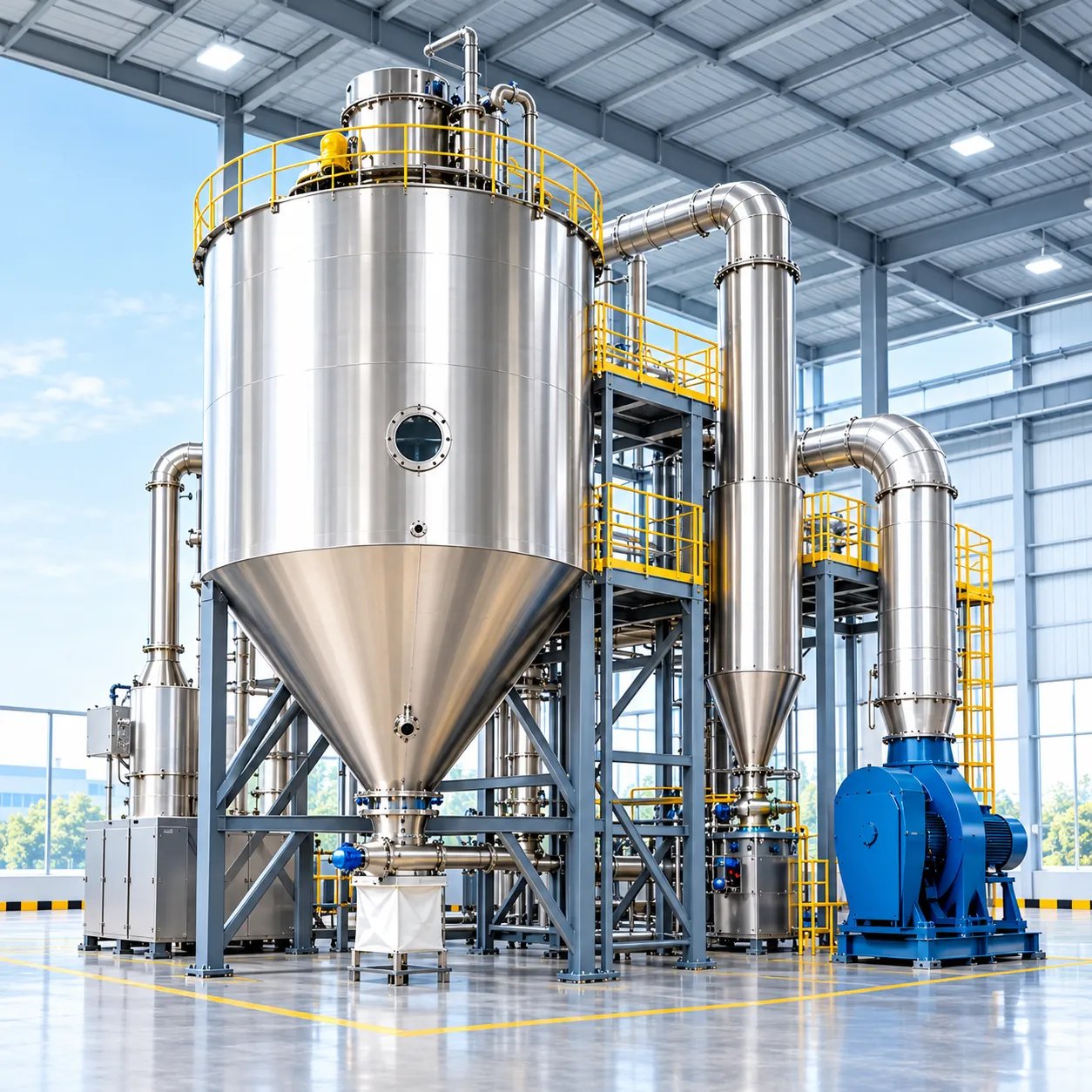
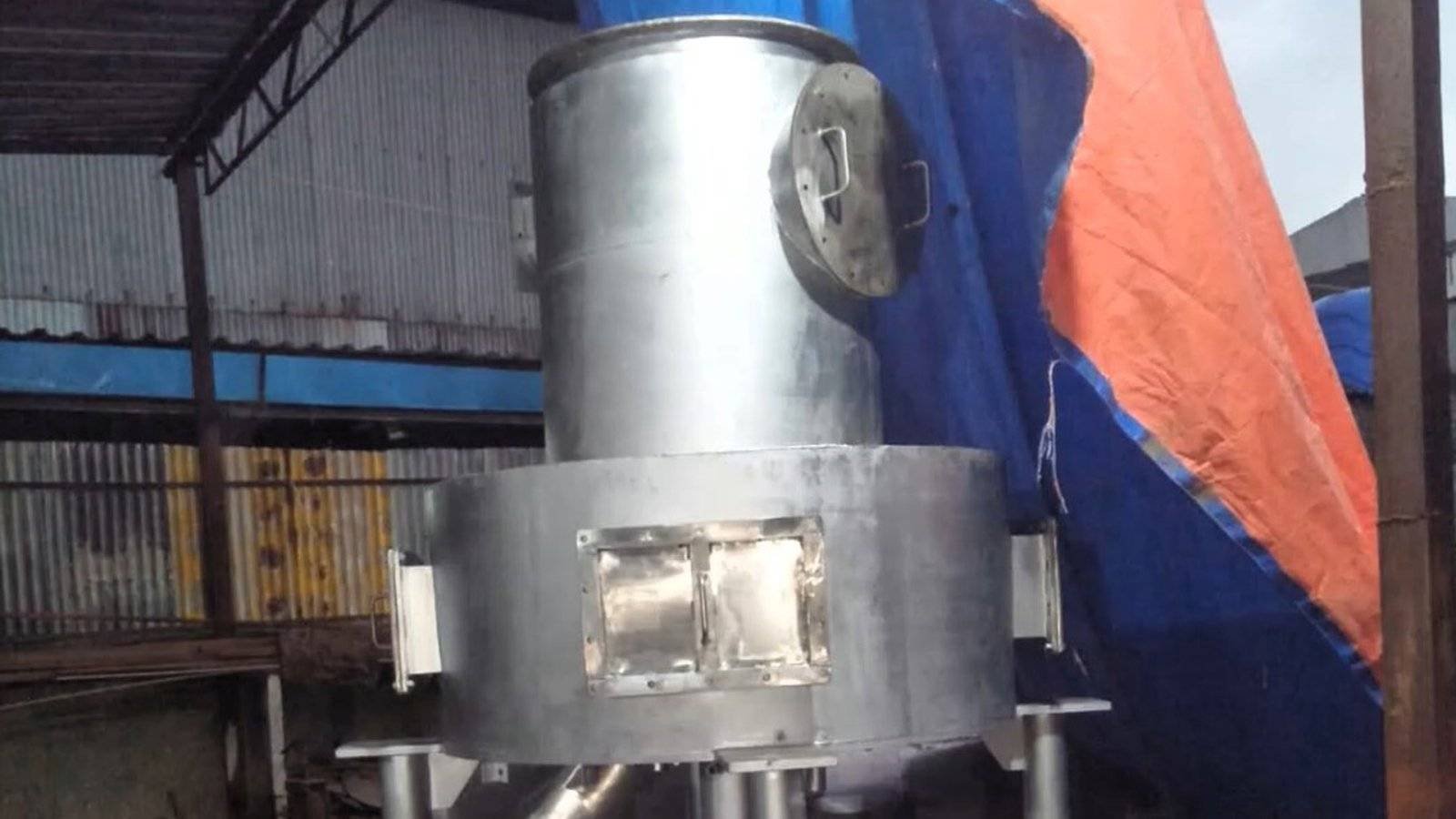
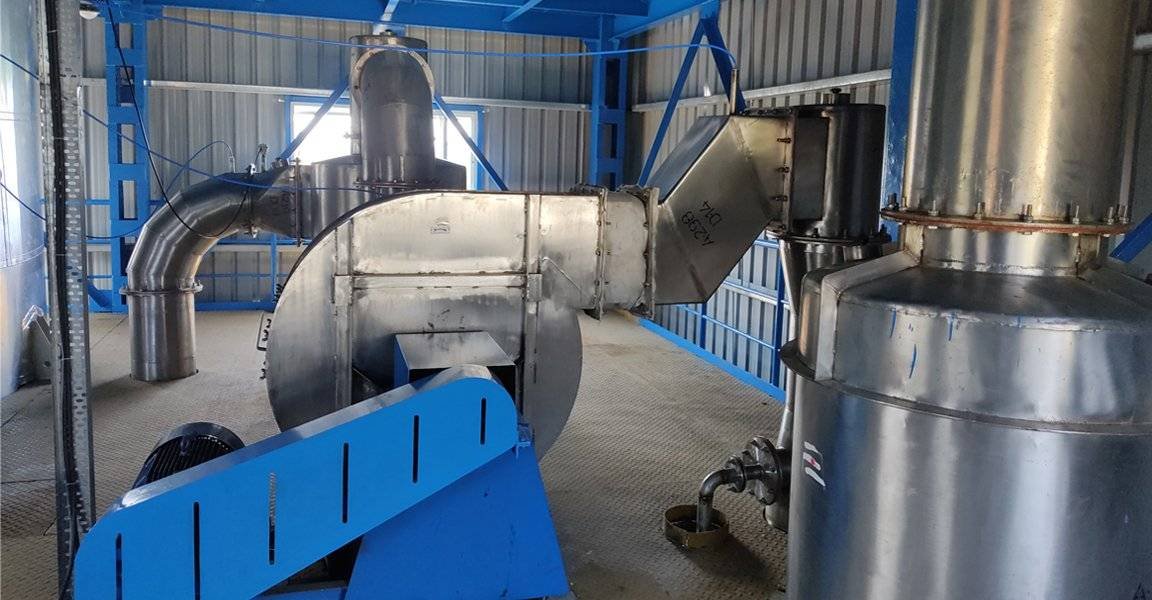
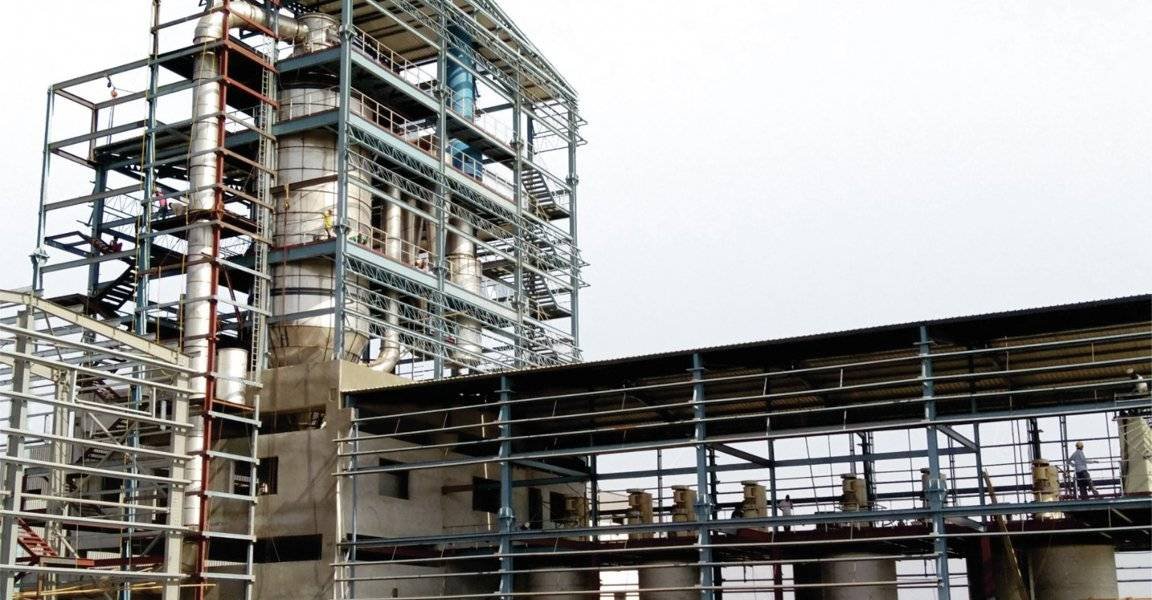
A flash dryer, also known as a pneumatic dryer, disperses wet particles into a fast-moving stream of hot gas. The gas carries the particles up a vertical drying duct while heating them and evaporating their moisture. Within a few seconds, the dried particles reach a cyclone, where they are separated from the gas and collected.
Key characteristics:
- Residence time of only a few seconds.
- Particles are fully dispersed, so the whole surface is exposed to hot gas.
- Drying and conveying happen together.
- Works best when moisture is on the surface of fine particles.
- Sticky feeds may need backmixing, a disintegrator or a spin flash chamber.
For a full explanation, read our article on the flash dryer working principle, or explore our industrial flash dryers.
How a Rotary Dryer Works
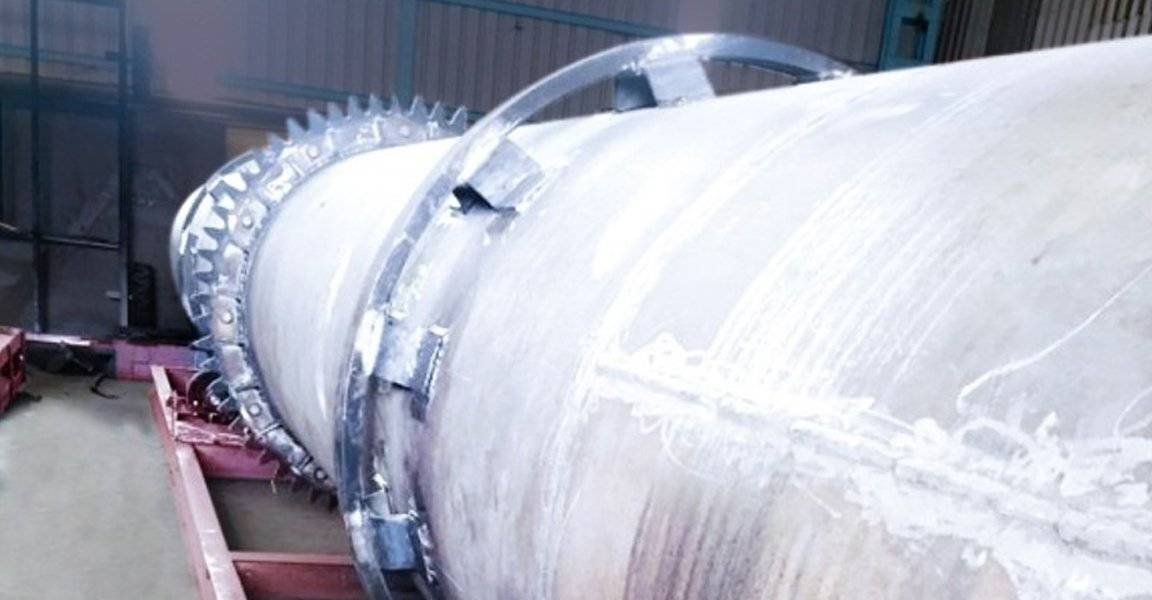
A rotary dryer is a long, slightly inclined drum that rotates slowly. Wet material enters at one end. Internal flights lift the material and drop it through a stream of hot gas, creating a falling curtain. The rotation and slope gradually move the material toward the discharge end, where it leaves dry.
Key characteristics:
- Residence time measured in minutes, often from several minutes to an hour or more.
- Material is tumbled and mixed continuously.
- Handles coarse, heavy, lumpy and abrasive materials.
- Can remove internal moisture thanks to long contact time.
- Available in direct and indirect heating versions.
For the full step-by-step explanation, see our article on the rotary dryer working principle, or explore our industrial rotary dryers.
Flash Dryer vs Rotary Dryer: Side-by-Side Comparison
| Factor | Flash Dryer | Rotary Dryer |
|---|---|---|
| Drying mechanism | Particles dispersed and conveyed in hot gas | Material tumbled and cascaded through hot gas in a rotating drum |
| Residence time | A few seconds | Several minutes to an hour or more |
| Ideal particle size | Fine to medium, easily dispersed | Medium to coarse, granular, lumpy |
| Moisture type | Mainly surface (unbound) moisture | Surface and internal (bound) moisture |
| Heat-sensitive products | Very good, due to short contact time | Moderate; co-current design helps |
| Sticky or pasty feeds | Needs backmixing, disintegrator or spin flash | Handles with backmixing or special flights |
| Abrasive materials | Can cause duct and cyclone wear | Generally well suited |
| Footprint | Compact, tall | Long, large floor area |
| Capital cost | Often lower for suitable materials | Often higher, with heavier foundations |
| Thermal efficiency | Good for surface moisture | Good, especially with counter-current flow |
| Moving parts | Few in drying zone (feeder, fan, optional mill) | Drum drive, tyres, rollers, gears, seals |
| Product attrition | High gas velocity may break fragile particles | Tumbling may cause some fines generation |
| Dust load | All product travels with gas, so high dust load to cyclone | Lower dust load; most product discharged directly |
| Feed variation tolerance | Moderate | High |
| Typical products | Starch, gluten, gypsum, pigments, salts, polymers, fibres | Sand, minerals, fertilizers, biomass, sludge, grains |
Detailed Comparison: The Factors That Matter Most
1. Particle Size and Form
This is often the deciding factor. A flash dryer relies on the gas stream to lift and convey particles, so the material must be fine enough and light enough to be carried. Fine powders, crystals, fibres and dispersed filter cakes are ideal.
A rotary dryer has no such limit. It handles granules, lumps, chips and coarse aggregates that would simply drop out of a flash dryer's gas stream.
2. Type of Moisture
Moisture sitting on the surface of particles evaporates in seconds, which is exactly what a flash dryer is designed for. Moisture locked inside porous particles or granules needs time to migrate to the surface. A flash dryer's few seconds may not be enough, while a rotary dryer's long residence time is well suited to this slower falling rate drying.
Understanding how moisture is held in your material is essential. Our article on drying dynamics and moisture reduction strategies for bulk solids explains this in more detail.
3. Heat Sensitivity
Because particles are exposed to hot gas for only seconds and are cooled by evaporation, flash dryers can often use high inlet temperatures without damaging the product. This makes them a strong choice for starches, food ingredients and many organic chemicals.
Rotary dryers expose material to heat for much longer. A co-current design helps protect heat-sensitive products, but very sensitive materials may still suffer discolouration or degradation.
4. Capacity and Throughput
Both dryer types can handle large capacities. Flash dryers achieve high throughput in a relatively compact unit, especially for fine materials with surface moisture. Rotary dryers are among the highest-capacity dryers available and are commonly used for very large tonnages of minerals, aggregates and fertilizers.
5. Footprint and Building Requirements
Flash dryers are tall but narrow, and can often fit into existing buildings or compact outdoor structures. Rotary dryers are long and need substantial floor space, heavy foundations and room for the drive, burner and dust collection.
6. Energy Consumption
Energy efficiency depends heavily on the material and design. For fine materials with surface moisture, flash dryers can be very efficient because heat transfer is fast and intense. For coarse materials or those with internal moisture, rotary dryers, particularly counter-current designs, use heat effectively over a longer time. In both cases, insulation, heat recovery and good control make a big difference to running costs.
7. Capital and Operating Cost
For materials that suit flash drying, a flash dryer is often the lower-cost option to purchase and install, thanks to its simpler structure and smaller footprint. Rotary dryers involve heavier mechanical construction and foundations. However, the right comparison is always the total cost over the life of the plant, including energy, maintenance, downtime and product quality.
8. Maintenance
Flash dryers have few moving parts in the drying zone: mainly the feeder, any disintegrator or rotor, rotary valves and the fan. Wear can occur in ducts and cyclones with abrasive materials.
Rotary dryers have more mechanical components, including the drum drive, girth gear, tyres, trunnion rollers, thrust rollers and seals, all of which need regular inspection and lubrication. In return, they are very robust and tolerate harsh materials.
9. Handling Sticky Materials
Neither dryer is naturally suited to very sticky feeds, but both have solutions:
- Flash dryers use backmixing with dry product, a disintegrator or cage mill, or a spin flash design. Our swirl agitated spin flash dryer is specifically built to process pastes and cohesive filter cakes.
- Rotary dryers use backmixing, special feed-end flights, chain curtains or knockers to reduce build-up on the drum wall.
10. Product Quality and Particle Integrity
Flash drying usually produces a fine, uniform, free-flowing powder. However, the high gas velocity can break fragile crystals. Rotary drying is gentler in terms of gas velocity, but tumbling can cause some attrition and dust generation in friable products. If particle integrity matters, trial testing is the best way to compare results.
11. Dust and Safety
In a flash dryer, all the product is carried by the gas, so the cyclone and filter handle a high dust load. For combustible powders, explosion protection is essential. In a rotary dryer, most product is discharged directly from the drum, so the dust load to the collection system is lower.
Matching Common Materials to the Right Dryer
| Material | Usually Better Suited To | Reason |
|---|---|---|
| Starch (native or modified) | Flash dryer | Fine particles, surface moisture, heat-sensitive |
| Gluten and protein concentrates | Flash dryer | Short contact time protects quality |
| Gypsum and calcium carbonate | Flash dryer | Fine, free-flowing, often combined with milling |
| Pigments and filter cakes | Flash or spin flash dryer | Dispersible after backmixing or agitation |
| Sand, limestone, aggregates | Rotary dryer | Coarse, heavy, abrasive |
| Granular fertilizers | Rotary dryer | Granules with internal moisture |
| Biomass, wood chips, bagasse | Rotary dryer | Large, irregular, variable particles |
| Sludge and food waste | Rotary dryer | Variable, sticky, long drying time needed |
| Inorganic salts | Either | Depends on crystal size and moisture type |
For a closer look at one of the most common flash drying applications, read our article on flash dryers for starch manufacturing.
A Practical Decision Checklist
Ask these questions about your material and process:
- What is the particle size after feeding? Fine and dispersible points to flash; coarse and granular points to rotary.
- Where is the moisture? Surface moisture suits flash; internal moisture suits rotary.
- How heat-sensitive is the product? Highly sensitive products favour flash drying.
- Is the feed sticky? Plan for backmixing, a disintegrator, spin flash or special rotary flights.
- How abrasive is the material? Highly abrasive materials generally favour rotary dryers.
- What capacity do you need? Both can be large; very high tonnages of coarse material often favour rotary.
- How much space is available? Limited floor space favours flash dryers.
- What final moisture is required? Very low final moisture from bound moisture may need a rotary dryer or a second drying stage.
- What utilities are available? Fuel, steam, thermic fluid or waste heat can influence the design.
- Do you need milling as well? A cage mill flash dryer can dry and reduce particle size in one step.
When Neither Is the Best Choice
Sometimes the right answer is a different dryer altogether:
- Spray dryers are used when the feed is a pumpable liquid or slurry rather than a wet solid.
- Fluid bed dryers suit free-flowing granular materials that need moderate residence time and gentle handling. Our continuous fluid bed dryers are often used for this, and also as coolers after other dryers.
- Spin flash dryers bridge the gap for pastes and cohesive cakes that a standard flash dryer cannot handle.
For a wider comparison, see our spray vs flash vs fluid bed comparison chart.
Why Testing Matters
Datasheets and tables are a good starting point, but every material behaves a little differently. Moisture distribution, particle shape, stickiness and heat sensitivity can all change how a product dries. The most reliable way to choose between a flash dryer and a rotary dryer is to evaluate your material with an experienced manufacturer, using lab analysis and, where possible, trial drying.
Why Choose Aksh Engineering?
Aksh Engineering Systems Pvt. Ltd., based in Ahmedabad, Gujarat, manufactures both flash dryers and rotary dryers, along with spin flash, fluid bed and spray drying systems in our complete drying systems range. Because we offer all of these technologies, our recommendation is based on your material, not on a single product line.
We offer:
- Material evaluation to identify the most suitable drying technology.
- Custom design of feeding, heating, drying and dust collection systems.
- Energy-efficient solutions using the right heat source for your plant.
- Complete turnkey supply, from design and fabrication to installation and commissioning.
- After-sales support for long, reliable operation.
Conclusion
Flash dryers and rotary dryers are both proven, continuous drying technologies, but they are built for different jobs. Flash dryers excel at fast, gentle drying of fine, dispersible materials with surface moisture in a compact space. Rotary dryers excel at handling coarse, heavy, abrasive or variable materials that need long residence time to remove internal moisture.
By looking carefully at particle size, moisture type, heat sensitivity, stickiness, capacity and space, you can narrow down the right choice quickly. If you are still unsure, contact Aksh Engineering Systems to discuss your material and get an expert recommendation.