
Almost every powder process, from spray drying and flash drying to grinding, conveying and calcination, sends a stream of dust-laden air toward the stack. What happens to that dust decides three things at once: how much saleable product you keep, whether the plant meets its emission consent, and how safe and clean the working environment is. Choose the wrong collector and you may lose valuable fines, struggle with blocked filters or end up treating a wastewater stream you never planned for.
The three technologies most widely used in process plants are cyclone separators, bag filters and wet scrubbers. Each works on a different principle and each has a natural place in a plant. This guide compares them in practical terms, explains how to match them to your dust and gas, and shows why the best answer is often a combination rather than a single device.
Why Dust Collection Deserves Careful Engineering
Dust collection is sometimes treated as an accessory added late in a project. In reality, it affects the core economics and compliance of the plant:
- Product recovery: in spray drying and many chemical processes, the "dust" is product. Better collection means higher yield.
- Emission compliance: pollution control boards set particulate limits for stack emissions, typically expressed in mg/Nm³. Limits vary by industry, location and consent conditions.
- Workplace health: fine airborne particles can harm respiratory health, and some powders are sensitizing or toxic.
- Safety: many organic, food and metal powders are combustible. Dust collectors must be designed with explosion risks in mind.
- Equipment protection: dust passing to fans, heat exchangers and ducts causes wear, imbalance and fouling.
How a Cyclone Separator Works
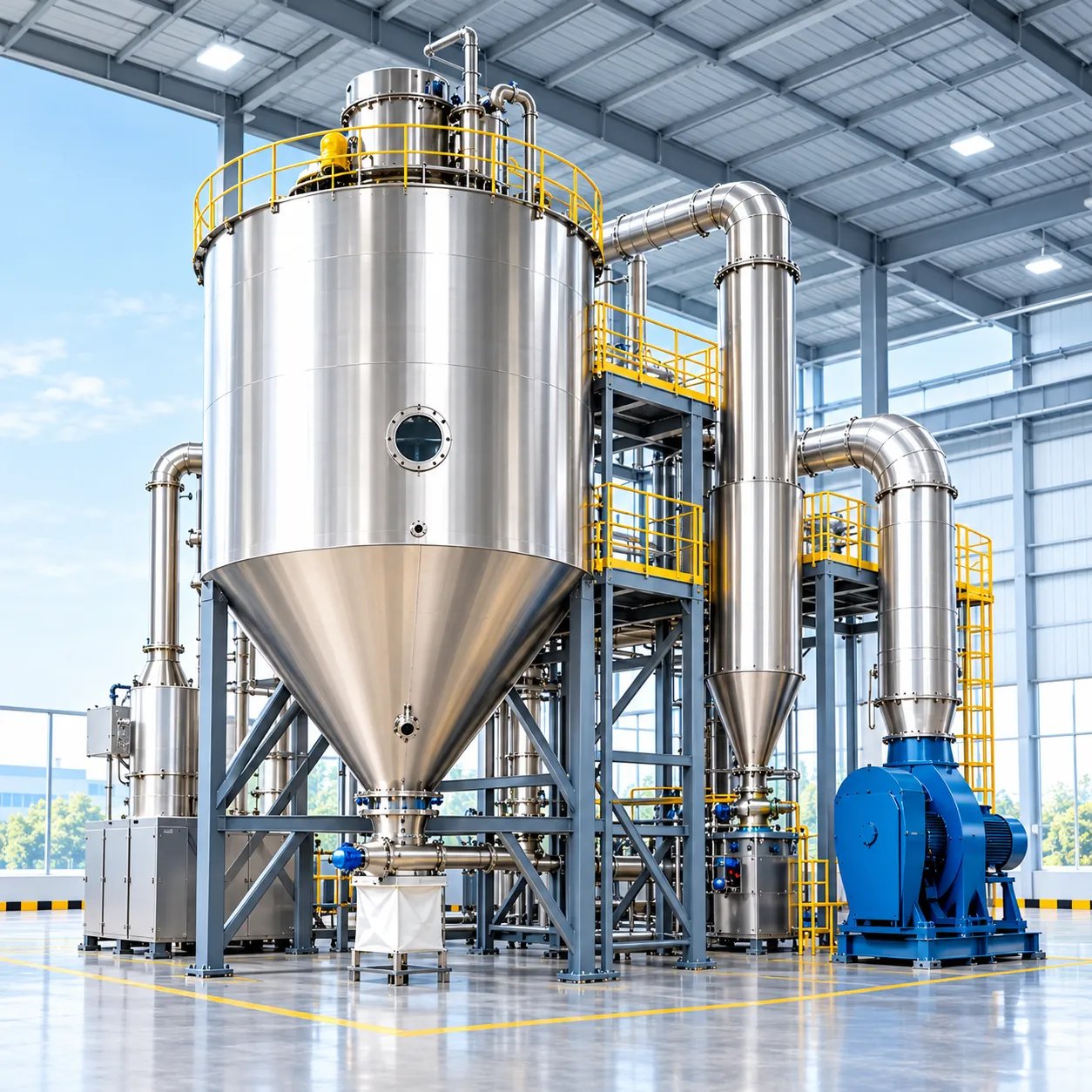
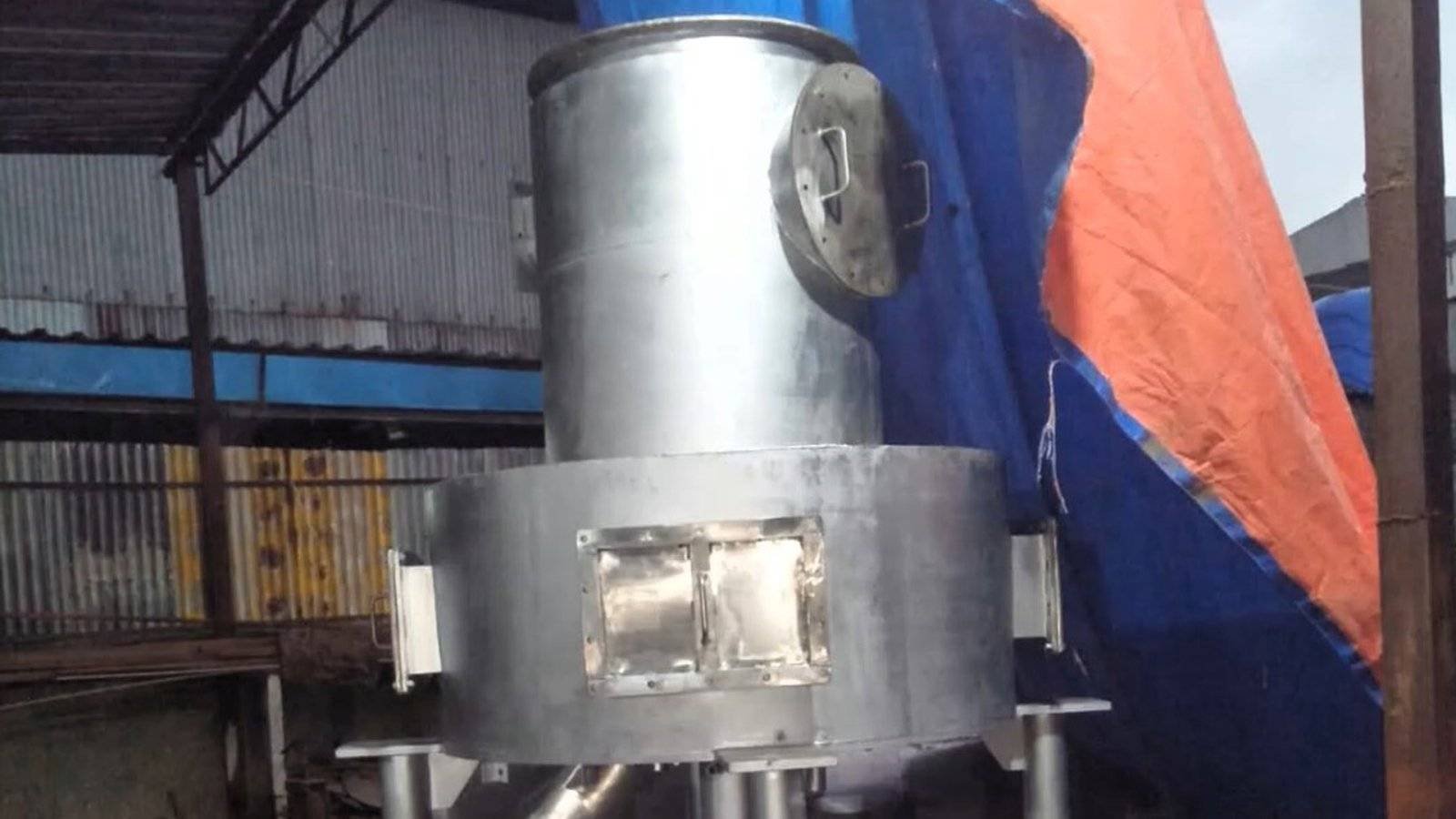
A cyclone is a cylindrical vessel with a conical bottom. Dusty gas enters tangentially near the top and spirals downward along the wall. Centrifugal force pushes particles outward to the wall, where they lose velocity and slide down into the cone and out through a discharge valve. The cleaned gas reverses direction in the center and leaves through a central outlet pipe at the top.
Strengths of Cyclones
- No moving parts in the separation zone, so they are simple and robust.
- Able to handle high dust loads and high temperatures.
- Collect dry product that can be returned directly to the process.
- Relatively modest capital and maintenance costs.
Limitations of Cyclones
Cyclone efficiency depends strongly on particle size and density. Coarse and dense particles are captured very efficiently, but efficiency drops for very fine or light particles, which tend to follow the gas out of the top. Performance also depends on maintaining the design inlet velocity; running at much lower airflow, or with a worn inlet or leaking discharge valve, reduces efficiency. For many fine powders, a cyclone alone will not meet modern emission limits. AKSH's high-efficiency cyclones are rated for 98%+ collection efficiency on particles above 10 microns, which illustrates both their strength on coarser material and the need for a second stage for very fine dust.
How a Bag Filter Works
A bag filter, also called a baghouse or fabric filter, passes dusty gas through rows of fabric bags supported on wire cages. Dust collects on the outside of the bags, forming a dust cake that itself improves filtration. Clean gas passes through the fabric and exits from the clean side of the housing. In pulse-jet designs, short bursts of compressed air are fired into the bags at intervals, shaking the dust cake off into a hopper below.
Strengths of Bag Filters
- Very high efficiency on fine particles, typically achieving low outlet dust concentrations.
- Recover product in dry form, suitable for return to the process.
- Stable performance across a range of dust loads.
- Available in sanitary, cleanable designs for food and pharmaceutical duties.
Limitations of Bag Filters
Filter media have temperature limits, so very hot gas may need cooling or special media. Moist or sticky dust can blind the bags, especially if the gas cools below its dew point during start-up. Bags wear and must be replaced periodically, and the filter adds pressure drop, which increases fan power. Because combustible dust accumulates inside the housing, explosion venting or suppression is often required. Choosing the right media matters: polyester, aramid (such as Nomex), PPS and PTFE-membrane fabrics each suit different temperatures and chemical environments.
How a Wet Scrubber Works
A wet scrubber brings the dusty gas into close contact with a liquid, usually water or a chemical solution. Particles are captured by the liquid droplets or film and removed with the scrubbing liquor. Common designs include venturi scrubbers, which accelerate the gas through a narrow throat where liquid is injected to capture fine particles, and packed bed scrubbers, which are particularly effective at absorbing soluble gases and acid fumes. A mist eliminator removes entrained droplets before the gas leaves.
Strengths of Wet Scrubbers
- Handle sticky, moist or hygroscopic particles that would blind a bag filter.
- Can remove gases such as acid fumes at the same time as particulates.
- Cool and quench hot gas, and reduce fire and explosion risks associated with dry dust.
Limitations of Wet Scrubbers
Scrubbers convert an air problem into a liquid one. The scrubbing liquor must be recycled, treated or, in some cases, returned to the process, and this adds cost and complexity. High-efficiency venturi scrubbers need a significant pressure drop and therefore fan energy. The exhaust leaves saturated with water vapor, which can produce a visible plume. Where corrosive gases are present, scrubbers need corrosion-resistant construction such as FRP, PP or suitable stainless steel. Water consumption and the energy needed to pump and recirculate the liquor should also be included when comparing a scrubber with dry collection options, since these running costs continue for the life of the plant.
Side-by-Side Comparison
| Factor | Cyclone Separator | Bag Filter | Wet Scrubber |
|---|---|---|---|
| Separation principle | Centrifugal force | Fabric filtration | Capture in liquid |
| Efficiency on coarse particles | High | Very high | High |
| Efficiency on fine particles | Moderate to low | Very high | Moderate to high, depending on design and energy |
| Product recovered | Dry | Dry | Wet slurry or solution |
| Handles sticky or moist dust | Limited | Poorly; risk of blinding | Well |
| Removes gases and fumes | No | No (unless combined with sorbent injection) | Yes, with suitable design and chemistry |
| Temperature tolerance | High | Limited by filter media | High; cools the gas |
| Pressure drop | Low to moderate | Moderate | Moderate to high |
| Main maintenance items | Wear at inlet, discharge valve | Bags, cages, pulse valves | Pumps, nozzles, liquor treatment |
| Secondary waste | None | Used filter bags | Liquid effluent |
How to Choose: A Step-by-Step Approach
- Characterize the dust: particle size distribution, density, stickiness, hygroscopicity, abrasiveness, combustibility and toxicity.
- Characterize the gas: flow rate, temperature, humidity, dew point and any acidic or corrosive components.
- Define the targets: required emission level under your consent, plus the value of the product you want to recover.
- Decide whether the product must stay dry: if the collected material is sold as powder, dry collection with cyclones and bag filters is usually preferred.
- Check for gases or sticky components: if acid fumes, odors or sticky aerosols are present, a scrubber may be needed, alone or as a final stage.
- Consider safety: for combustible dust, plan explosion protection and, where appropriate, inerting or wet collection.
- Compare lifecycle costs: include fan power, compressed air, bag replacement, water and effluent treatment, not just capital cost.
Why Combinations Often Work Best
In practice, many plants use these technologies in series, each doing what it does best.
Cyclone Plus Bag Filter
This is the most common arrangement for spray dryers producing valuable dry powders. The cyclone removes the bulk of the product, reducing the load on the bag filter, and the bag filter captures the fines and brings emissions down. Both streams can be returned as product. It is widely used for food, dairy, pharmaceutical and many chemical powders, and it is the arrangement typically found on industrial spray dryers where yield and emissions both matter. Solvent-based systems use the same principle in a sealed nitrogen loop; AKSH's closed-loop spray dryers use high-efficiency cyclones and sanitary pulse-jet bag filters before the solvent condenser.
Cyclone Plus Wet Scrubber
Where the dust is sticky, hygroscopic or accompanied by acidic gases, a cyclone followed by a scrubber may be the better choice. This approach is common for some chemical, effluent and dye drying duties. In certain processes, the scrubber liquor can be returned to the feed to recover part of the product, depending on product and hygiene constraints.
Multi-Stage Systems
Plants with strict emission limits or complex exhaust gases may use cyclone, bag filter and scrubber together. Such arrangements are often seen in effluent drying and chemical compliance projects, discussed further in our article on why evaporation and spray drying are the final frontiers for chemical plant compliance.
Applications Across Drying Technologies
The same choices arise across different dryers. Spray dryers usually generate fine powders where yield is critical, so our guide to improving powder recovery in spray dryers is a useful companion read. Flash dryers convey the product pneumatically and rely on the separation system to collect all of it, as explained in our article on the flash dryer working principle. Abrasive ceramic and mineral powders call for wear-resistant cyclone inlets and careful filter media selection, a topic touched on in our article about spray drying ceramic pigments and frit.
Design and Maintenance Tips for Reliable Performance
Even the right technology performs poorly if it is undersized, badly integrated or neglected. A few practical points make a large difference over the life of the plant:
- Design for the real airflow range: cyclones lose efficiency at low velocity, and bag filters overload at high air-to-cloth ratios. Size equipment for the actual operating range, including reduced-capacity running, not just the nameplate figure.
- Keep the gas above its dew point: insulate ducts and housings, and preheat filters before introducing moist exhaust, to avoid condensation, corrosion and bag blinding.
- Seal discharge points: a leaking rotary valve under a cyclone lets air in at the bottom, re-entraining collected powder and sharply reducing efficiency.
- Monitor differential pressure: a steady rise across a bag filter indicates blinding or poor cleaning, while a sudden fall may mean a torn bag. Continuous monitoring linked to the control system gives early warning.
- Inspect wear zones: cyclone inlets and cones handling abrasive powders should be checked and lined or replaced before holes develop.
- Manage scrubber chemistry: keep liquor concentration, pH and nozzle condition within limits so capture efficiency stays stable.
Dust collection is best planned together with the rest of the drying plant, since fan sizing, duct routing and building layout all depend on it. Our complete guide to spray dryer construction shows how separation equipment fits into the overall design and commissioning process.
Why AKSH Engineering
AKSH Engineering Systems Pvt. Ltd., based in Ahmedabad, Gujarat, has designed and manufactured drying, evaporation and turnkey process plants since 2013, with more than 100 installations in India and export markets. Our team of technocrats brings over 100 years of combined experience. Because we build the dryers as well as the dust collection equipment, we size cyclones, bag filters and scrubbers around the real airflow, temperature and particle characteristics of each process. Our pollution control systems include pulse-jet bag filters with temperature-resistant media, high-efficiency cyclones and multi-cyclones, and venturi and packed bed wet scrubbers in SS304, SS316L, MS, FRP and PP-FRP, with filtration efficiency of up to 99.9% down to 1 to 2 micron particles. Replacement cyclones and other spares are available through our spray dryer accessories range, and you can browse related equipment in our automation and control category.
Conclusion
Cyclones, bag filters and wet scrubbers are complementary tools rather than competitors. Cyclones excel at bulk collection of coarser, dry particles at low cost. Bag filters provide the high efficiency on fine dust that modern emission limits and product economics demand. Wet scrubbers handle sticky particles, hot gases and acidic fumes that dry collectors cannot. The right choice, or combination, follows from a clear understanding of your dust, your gas, your product value and your compliance targets.
If you are designing a new drying line or struggling with emissions or product loss on an existing one, contact the AKSH Engineering team. We will help you evaluate your exhaust stream and recommend a dust collection system that protects both your yield and your environmental compliance.