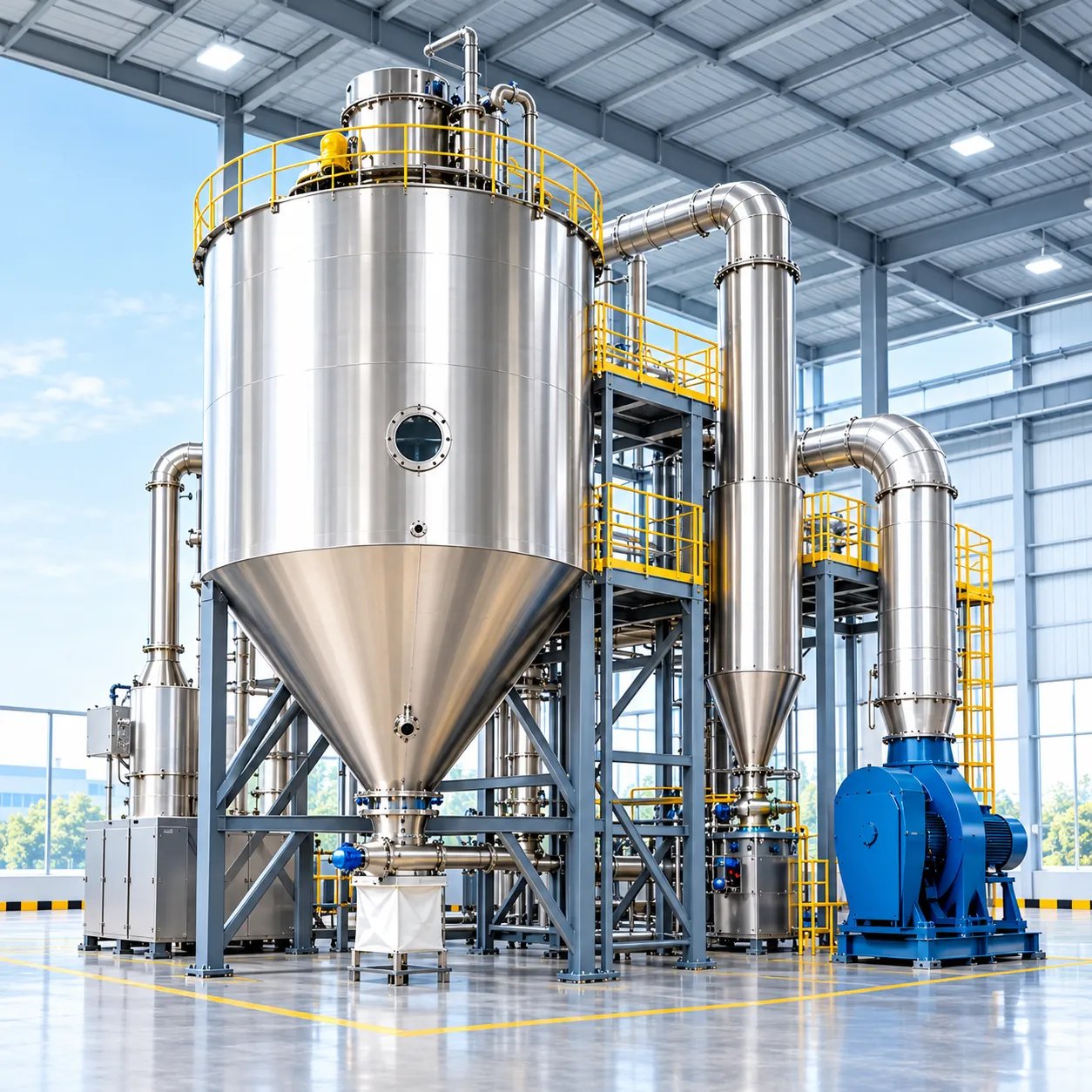

A spray dryer is one of the few pieces of process equipment where almost every engineering discipline meets in a single structure. Thermodynamics sets the size of the chamber, fluid mechanics shapes the air pattern, metallurgy decides how long the plant will last, and control engineering determines whether the powder is the same on Monday as it was on Friday. When any of these is handled carelessly during construction, the plant may run, but it rarely runs well. Wall deposits, wet powder, low yield and frequent stoppages are usually the result of decisions made months earlier on the drawing board or the fabrication floor.
This guide follows a spray dryer construction project from the first process inquiry to the day the plant is handed over to production. It is written for process engineers, project managers and plant heads who want to understand what should happen at each stage, which questions to ask their supplier, and where projects most often go wrong. The sequence reflects the way AKSH Engineering has approached spray drying projects since 2013, but the principles apply to any well-run installation.
Stage 1: Defining the Process Basis
Every sound spray dryer design starts with a clear process basis, sometimes called the design basis or process specification. This is the document that everything else is measured against, and weak data at this stage tends to multiply into large errors later.
Feed Characterization
The engineering team needs to know exactly what will be pumped into the atomizer. Key properties include total solids content, viscosity across the expected temperature range, density, pH, particle content in suspensions, and whether the feed contains organic solvents. Heat sensitivity matters just as much: a herbal extract, a dairy concentrate and an inorganic salt solution will tolerate very different air temperatures. Stickiness is another critical property, because sugar-rich and acidic feeds readily adhere to warm surfaces.
Powder Specification
The second half of the basis describes the product that must come out of the plant: residual moisture, particle size distribution, bulk density, flowability, solubility and any color or activity limits. A target such as "fine, free-flowing powder" is not enough. Engineers need numerical ranges, ideally backed by laboratory or pilot trial results, because these figures drive the choice of atomizer, the chamber geometry and the outlet temperature.
Capacity and Utilities
Capacity in spray drying is normally expressed as water evaporation rate rather than powder output, because evaporation is what consumes the energy and sizes the equipment. The basis should also capture available utilities, such as steam pressure, natural gas or other fuels, electrical supply, compressed air, cooling water and the site's ambient conditions. Humid monsoon air, for example, carries more moisture into the dryer and reduces its drying capacity, so it must be accounted for in the heat balance.
Stage 2: Process Design and Heat and Mass Balance
With the basis agreed, the engineers build a heat and mass balance. This calculation links inlet air temperature, outlet air temperature, airflow, feed rate and evaporation into one consistent set of numbers. It answers the most important sizing questions: how much air must be heated, how much energy the heater must supply, and how large the fans must be. For readers who want the underlying theory, our article on the physics of spray drying and heat and mass transfer explains how droplets lose moisture and why outlet temperature is so closely tied to final powder moisture.
The heat and mass balance also helps decide the overall plant configuration. A simple single-stage open-cycle dryer suits many water-based feeds. Products that need agglomeration or very gentle final drying may require a two- or three-stage system with an integrated fluid bed. Feeds containing flammable solvents call for a closed-loop design with nitrogen as the drying gas.
Stage 3: Atomizer Selection
The atomizer is the heart of the plant. It converts the liquid feed into droplets, and droplet size largely determines particle size, drying time and the chamber dimensions needed to dry each droplet before it touches a wall. There are three main options:
- Rotary disk atomizers spin a wheel at high speed and throw the liquid off its rim as a fine spray. They handle viscous and abrasive feeds well, are not prone to clogging, and produce a wide, flat spray that calls for a chamber with a large diameter.
- Pressure nozzles force the feed through a small orifice at high pressure. They tend to produce coarser, more free-flowing particles and suit tall, narrower chambers.
- Two-fluid nozzles use compressed air or gas to break up the liquid. They offer fine droplets and good control at small capacities and are common in pilot and pharmaceutical units.
Choosing between these is rarely obvious, and the trade-offs are explored in depth in our comparison of rotary disc atomizers versus nozzle atomizers. You can also review the full range of options in AKSH's atomization technologies category.
Stage 4: Chamber and Air Distribution Design
Once the atomizer and airflow are known, the drying chamber can be sized. The goal is simple to state and difficult to achieve: every droplet must be dry enough not to stick by the time it reaches a wall or the cone. Engineers balance chamber diameter, cylindrical height and cone angle against the spray pattern, the residence time required and the space available in the building.
The air disperser at the top of the chamber is equally important. It controls how hot air enters and mixes with the spray. A poorly designed disperser can create hot spots that scorch product, or swirl patterns that throw wet droplets onto the walls. Well-designed dispersers use guide vanes to set the swirl and velocity so that hot air meets the spray evenly.
Choosing the Material of Construction
Material selection is fixed during detailed design. Most food, dairy and pharmaceutical plants use SS316 or SS316L for product contact surfaces, with SS304 often used for non-contact parts and structural items. Chemical plants handling chlorides, acids or abrasive slurries may need special alloys or wear-resistant inserts in high-erosion zones. Surface finish also matters: polished internal surfaces reduce adhesion and make cleaning easier. We cover the grade decision in more detail in our guide to choosing the right stainless steel grade for spray dryer construction.
Stage 5: Auxiliary Systems and Equipment Selection
A spray dryer is a system, not a single vessel. Around the chamber sit several subsystems that must be engineered together:
| Subsystem | Main Function | Key Design Questions |
|---|---|---|
| Air intake and filtration | Supplies clean process air | What filtration level does the product need? Is dehumidification required in humid seasons? |
| Air heater | Raises air to the inlet temperature | Direct or indirect firing, steam radiator, thermic fluid or electric heating? |
| Feed system | Delivers feed at a steady, controlled rate | Pump type, filtration of feed, feed tank agitation and heating |
| Powder recovery | Separates powder from exhaust air | Cyclone only, or cyclone plus bag filter or wet scrubber? |
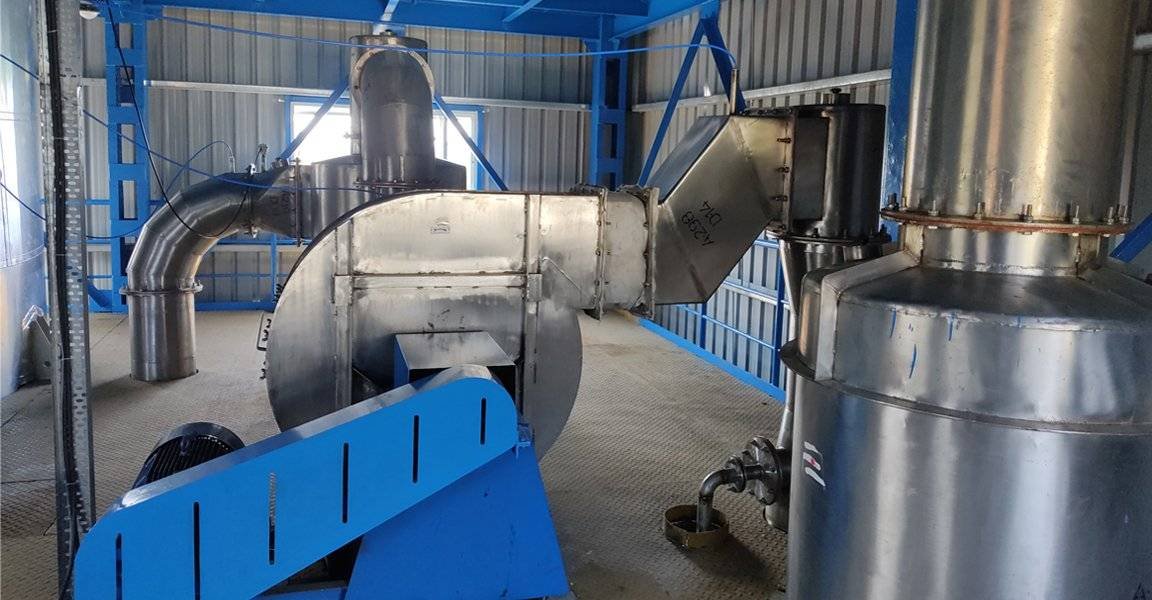
| Fans and ducting | Move air through the plant | Pressure balance, insulation, avoiding powder settling in ducts |
| Powder handling | Cools, conveys and packs the product | Pneumatic conveying, fluid bed cooling, sieving, packing |
| Cleaning system | Removes deposits between campaigns | Manual wash, wet cleaning nozzles or full automated CIP? |
Powder recovery deserves special attention because it affects both yield and emission compliance. A cyclone typically captures most of the powder, while a bag filter or scrubber handles the fines that escape. Our guide to cyclone separators, bag filters and scrubbers explains how to choose the right combination for your powder and your local emission norms.
For food, dairy, nutraceutical and pharmaceutical applications, these subsystems also need sanitary design: crevice-free welds, polished surfaces, filtered process air and cleaning provisions designed into the plant from the start. AKSH's hygienic spray dryer range is built around exactly these requirements.
Stage 6: Detailed Engineering and Safety Review
Detailed engineering turns the process design into fabrication drawings, piping and instrumentation diagrams (P&IDs), general arrangement layouts, structural designs and electrical drawings. It also produces the control philosophy, which describes how the plant starts, runs, alarms and shuts down.
Safety review is an essential part of this stage. Many dried powders are combustible, and a spray dryer combines fine dust, heat and air. Depending on the product's dust explosion characteristics, the design may include explosion vents, suppression systems, isolation devices, fire detection and carefully placed temperature interlocks. Plants that evaporate organic solvents need an inert nitrogen atmosphere, oxygen monitoring and electrical equipment rated for hazardous areas. These measures should be decided with real test data on the product's dust properties wherever possible, rather than assumptions.
Stage 7: Fabrication and Quality Control
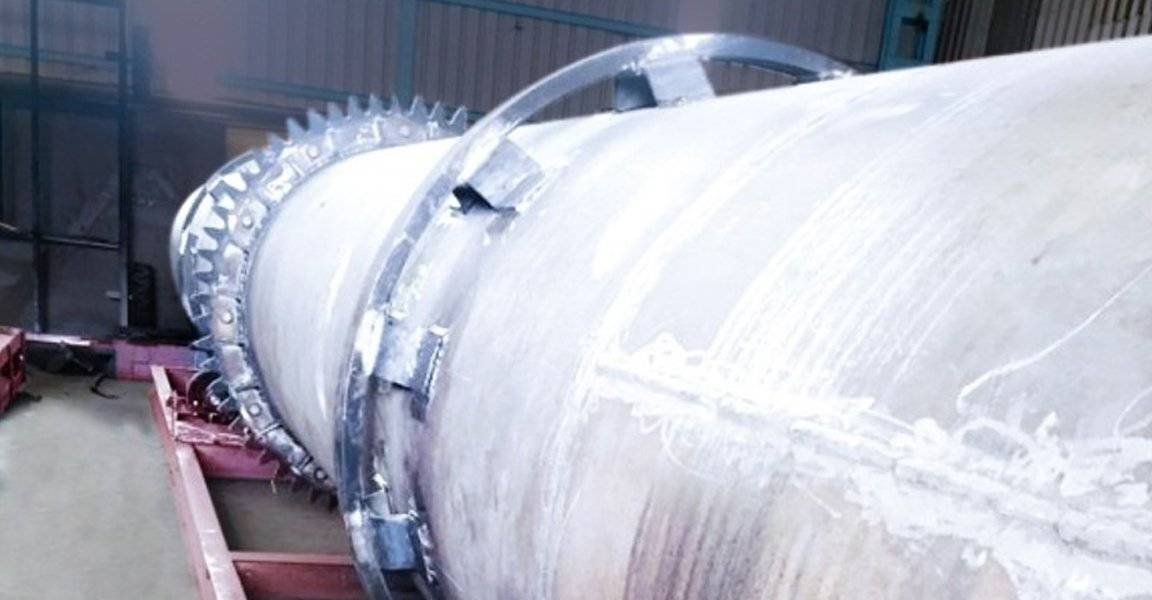
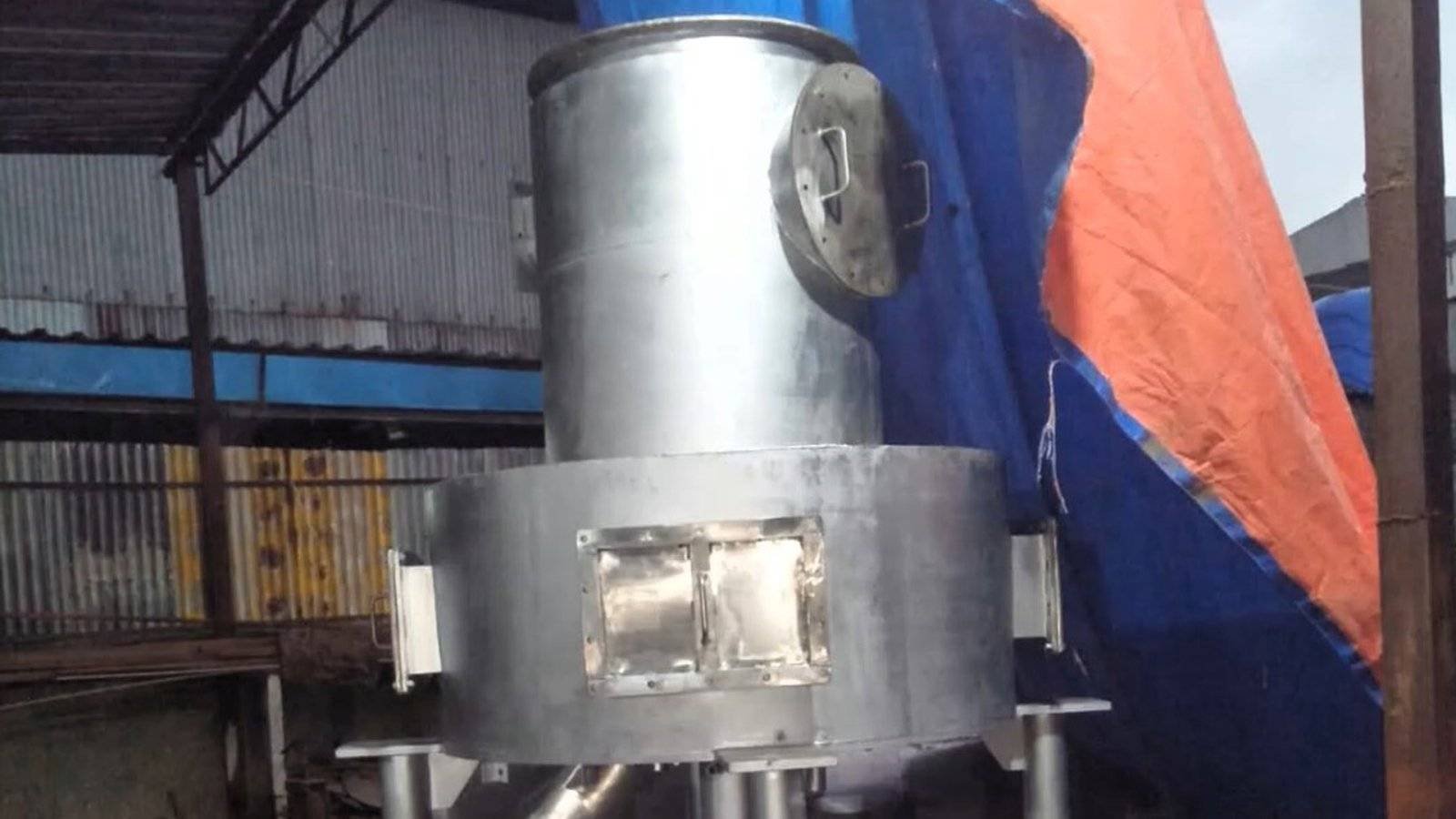
Fabrication quality decides how well the plant performs and how long it lasts. Key quality points include:
- Material traceability: mill test certificates for plates, pipes and fittings, checked against the specified grade.
- Welding quality: qualified welding procedures and welders, with full-penetration, smooth internal welds on product contact surfaces.
- Surface finishing: grinding and polishing of internal welds and surfaces to the specified finish, since rough patches become sites for powder build-up and microbial growth.
- Dimensional accuracy: checking chamber roundness, cone angles and flange alignment so that the plant assembles correctly on site.
- Inspection and testing: dye penetrant or other weld inspection where specified, leak testing of ducts and vessels, and dynamic balancing of rotating parts such as atomizer wheels and fan impellers.
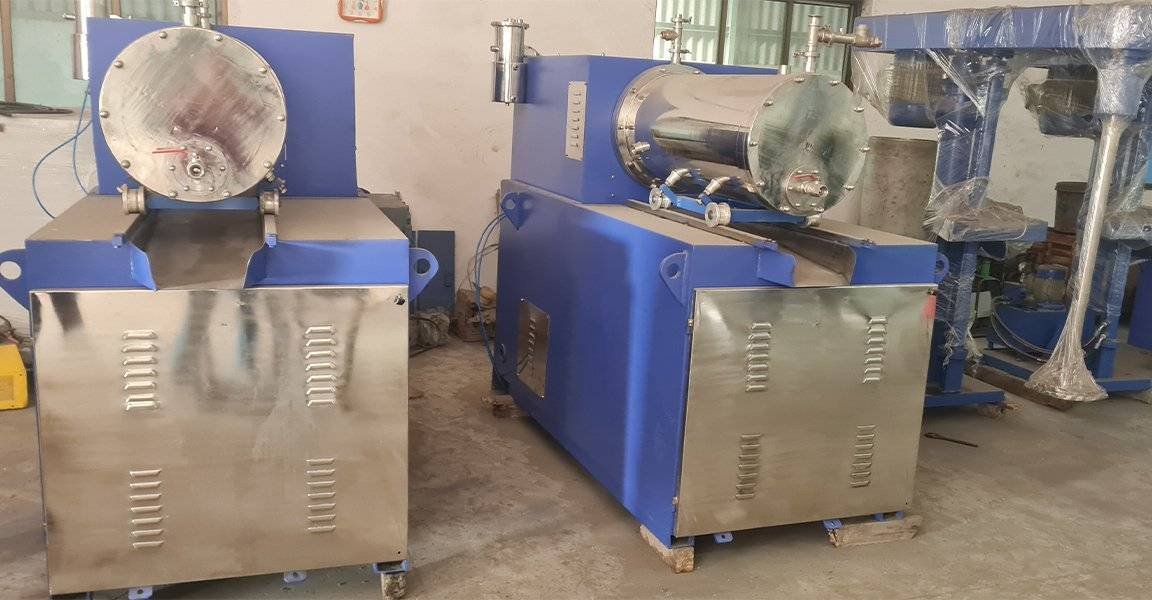
Building major components in-house, as AKSH does at its Ahmedabad facility, gives tighter control over these quality steps. Spare and replacement components such as atomizer wheels, nozzles, air dispersers and cyclones should be made to the same standard; AKSH's spray dryer accessories and spares are engineered for this purpose.
Stage 8: Installation and Erection
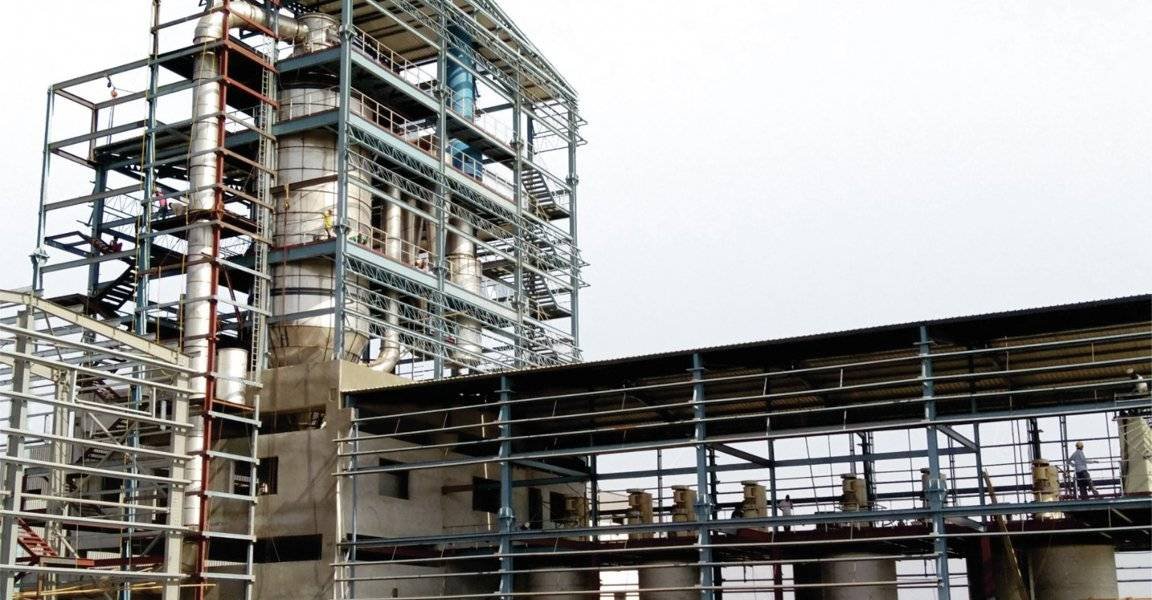
Large drying chambers are usually fabricated in sections and assembled on site, often inside a multi-story steel structure. A good installation plan sets the sequence for foundations, structure, chamber erection, ducting, equipment placement, piping, insulation and cabling. Common pitfalls at this stage include misaligned flanges that leak air, insufficient duct support that allows vibration, and insulation gaps that create cold spots where moisture condenses and powder sticks.
Stage 9: Commissioning
Commissioning is the structured process of proving that the plant works as designed. It normally proceeds in clearly defined steps:
- Mechanical completion checks: verify that all equipment is installed, aligned, lubricated and free of construction debris.
- Loop checks: test every instrument and control loop from the field device to the control screen.
- Interlock and safety tests: confirm that trips, alarms and emergency stops act correctly, for example that the feed stops if airflow is lost or the outlet temperature runs too high.
- Cold run: run fans and air systems without heat to check airflow, pressure balance and rotation direction.
- Hot run on water: heat the system and atomize water to establish stable temperatures, test the heater and tune control loops without risking product.
- Product trials: introduce real feed gradually, adjust inlet temperature, outlet temperature and feed rate, and sample the powder for moisture, particle size and bulk density.
- Performance test: run the plant at rated capacity for an agreed period to confirm evaporation rate, powder quality and utility consumption against the design basis.
- Training and handover: train operators and maintenance staff and hand over documentation, drawings, manuals and spare part lists.
Automation plays a big part in a smooth commissioning. A well-structured PLC and SCADA system with clear trends and alarm logs lets engineers see how the plant responds to every change and reproduce good conditions quickly. AKSH supplies integrated instrumentation, automation and control systems with PID temperature control, feed synchronization and fail-safe interlocks for exactly this reason.
Common Mistakes That Undermine Spray Dryer Projects
Looking back across many projects in the industry, the same few problems appear again and again:
- Skipping trials: designing from literature data alone instead of testing the actual feed. Pilot trials are the most reliable way to confirm drying behavior, and our article on using pilot spray dryers for seamless scale-up explains how to make the most of them.
- Undersizing for real conditions: designing for ideal ambient air and ignoring humid seasons or variable feed solids.
- Underestimating cleaning: failing to plan for access doors, wash nozzles or CIP until after the first deposits appear.
- Treating emissions as an afterthought: adding dust collection late, which often forces compromises in fan sizing and layout.
- Cutting corners on finish and welding: rough internal surfaces that shorten cleaning intervals and complicate hygiene validation.
Why AKSH Engineering
AKSH Engineering Systems Pvt. Ltd. has designed and manufactured industrial drying and evaporation plants in Ahmedabad, Gujarat, since 2013, with more than 100 installations in India and export markets. Our team of technocrats brings over 100 years of combined experience to each project. Because we handle process design, fabrication, automation and commissioning in-house, a single team stays accountable from the first heat balance to the final performance test. Our industrial spray dryers are custom-built for each feed, with rotary or nozzle atomization, a range of heating options, and SS304, SS316 or SS316L construction to suit the application.
Conclusion
Building a spray dryer that performs well for years is not a matter of buying a chamber and connecting a heater. It is a chain of linked decisions: a reliable process basis, a sound heat and mass balance, the right atomizer, careful chamber and air distribution design, well-chosen materials, disciplined fabrication, thoughtful installation and a methodical commissioning plan. Each link supports the next, and a weak one shows up later as lost yield, wall deposits or downtime.
If you are planning a new spray drying plant or upgrading an existing one, the AKSH Engineering team would be glad to review your feed, your powder targets and your site conditions. Contact us to discuss how we can design, build and commission a spray dryer that fits your process from day one.