
When a spray dryer fails early, the cause is often not the design of the chamber or the atomizer but the metal it was built from. Pitting on the cone, cracks near welds, rust stains in a dairy powder line or a rotary wheel worn thin by abrasive slurry all trace back to a material decision that did not match the process. Because a spray dryer is expected to run for many years, the material of construction is one of the most important and least reversible choices in the whole project.
This article explains how engineers choose stainless steel grades for spray dryer construction. We cover the common grades, what makes each one different, which parts of the plant face the harshest conditions, and how to match the material to your feed, your cleaning chemicals and your regulatory needs. The aim is to help process engineers and purchase teams ask the right questions before the order is placed, not after the first corrosion report.
Why Material Selection Is So Critical in Spray Drying
A spray dryer exposes metal to a combination of stresses that few other machines face at the same time. Hot air enters at elevated temperature, while wet droplets and condensate can collect in cooler zones. The feed may be acidic, alkaline, salty or abrasive. Cleaning cycles add caustic and acid solutions, often hot. Surfaces also have to stay smooth enough to discourage powder build-up and, in food and pharmaceutical plants, to support hygienic cleaning.
Three main failure mechanisms drive material choice:
- Corrosion: general thinning, localized pitting, crevice corrosion under deposits or gaskets, and stress corrosion cracking in some chloride-containing environments.
- Erosion and wear: abrasive particles in slurries or high-velocity powder streams wear down atomizer wheels, nozzle orifices, cyclone inlets and bends in ducting.
- Heat effects: oxidation and scaling at high temperatures, thermal expansion stresses, and changes to the metal's structure near welds.
A material that resists one of these may still be vulnerable to another, so selection always involves balancing performance against cost.
What Makes Stainless Steel Stainless
Stainless steels contain at least around 10.5% chromium. The chromium reacts with oxygen to form a very thin, self-repairing oxide film called the passive layer. As long as this film stays intact, the steel underneath resists corrosion. Other alloying elements change how robust that film is and how the steel behaves:
- Nickel stabilizes the austenitic structure, improving toughness, formability and weldability.
- Molybdenum significantly improves resistance to pitting and crevice corrosion, especially in the presence of chlorides.
- Low carbon content (the "L" grades) reduces the risk of chromium carbides forming at grain boundaries during welding, a problem called sensitization that can lead to corrosion along the weld zone.
- Nitrogen adds strength and further improves pitting resistance, particularly in duplex grades.
Engineers often compare pitting resistance using the Pitting Resistance Equivalent Number (PREN), commonly calculated as %Cr + 3.3 x %Mo + 16 x %N. A higher PREN generally indicates better resistance to chloride pitting. It is a useful screening tool, but it does not replace testing in the actual process environment.
Common Stainless Steel Grades for Spray Dryers
The table below summarizes the grades most often considered for spray drying equipment. Composition figures are typical nominal values and vary by standard and supplier.
| Grade | Typical Composition Highlights | Main Strengths | Typical Spray Dryer Uses | Watch Points |
|---|---|---|---|---|
| SS304 / 304L | About 18% Cr, 8% Ni, no Mo | Good general corrosion resistance, economical, easy to fabricate | Non-contact parts, structures, casings, mild water-based feeds | Limited resistance to chlorides and acidic feeds |
| SS316 | About 16 to 18% Cr, 10 to 14% Ni, 2 to 3% Mo | Better pitting resistance than 304 | Product contact parts for many food and chemical duties | Higher carbon than 316L, so welds need care |
| SS316L | As 316, carbon limited to about 0.03% | Pitting resistance plus reduced weld sensitization | Pharma, dairy, nutraceutical and hygienic plants; welded contact surfaces | Still susceptible to chloride stress corrosion at elevated temperatures |
| Duplex (for example 2205) | About 22% Cr, 5% Ni, 3% Mo, with nitrogen | High strength, better chloride and stress corrosion resistance | Atomizer components, parts handling saline or chloride-rich feeds | More demanding welding procedures; higher cost |
| Nickel alloys (for example Hastelloy) | High Ni, Mo and Cr | Excellent resistance to aggressive acids and chlorides | Severe chemical duties, critical wetted parts | Significantly higher cost; usually used selectively |
| Heat-resistant grades (for example 310S) | High Cr and Ni | Resistance to oxidation and scaling at high temperatures | Hot zones near heaters or burners where specified | Not chosen for corrosion resistance in wet service |
SS304: The Workhorse for Non-Critical Duties
SS304 is the most widely used stainless steel in the world. It offers good corrosion resistance in clean, mildly corrosive environments and is easy to form and weld. In spray dryers, it is commonly used for structures, insulation cladding, non-contact ducting and in some plants handling mild, low-chloride water-based feeds. Its weakness is chloride: salty feeds, chloride-containing cleaning agents or even chloride-rich cooling water can cause pitting over time.
SS316 and SS316L: The Standard for Product Contact
Adding molybdenum gives SS316 noticeably better resistance to pitting and crevice corrosion. SS316L keeps this benefit while limiting carbon, which makes it the preferred choice for welded product contact surfaces. This is why SS316L is the default material for hygienic food, dairy and pharmaceutical spray dryers, where frequent caustic and acid cleaning, strict cleanliness and long service life all matter. AKSH's hygienic spray dryers use SS316L or SS316 for contact parts and SS304 for non-contact components, with mirror-polished internal finishes.
Duplex Stainless Steels: Strength Plus Chloride Resistance
Duplex grades combine austenitic and ferritic structures. The result is roughly twice the yield strength of standard austenitic grades and considerably better resistance to chloride stress corrosion cracking. These properties make duplex attractive for high-stress rotating parts and for equipment that sees saline feeds, such as some effluent and mineral applications. Welding duplex requires qualified procedures to keep the right phase balance, so the fabricator's experience matters.
Nickel Alloys and Special Materials
For highly aggressive chemistry, such as strong acids, high chloride concentrations at elevated temperatures or certain halogen-containing compounds, nickel-based alloys such as Hastelloy may be needed. Because they are expensive, they are usually applied only where the process demands them, for example the atomizer, feed lines or a specific chamber section. For erosion rather than corrosion, hard materials such as tungsten carbide or technical ceramics are used as inserts in wear zones.
Which Parts of a Spray Dryer Need the Most Attention?
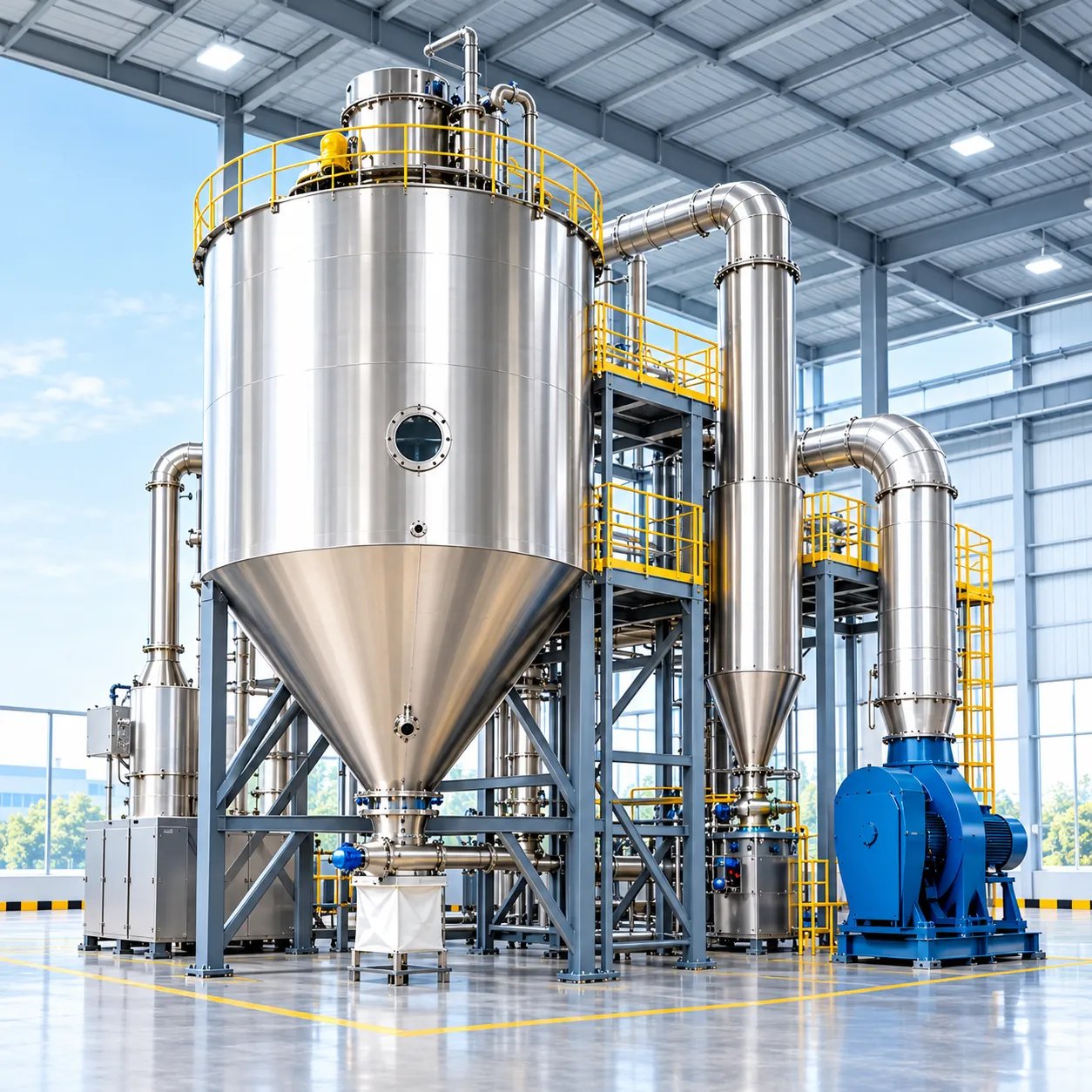
Not every part of the plant faces the same conditions, and smart material selection takes advantage of this. Common high-risk zones include:
- Atomizer: rotary wheels and nozzles experience high velocity, abrasion and direct contact with concentrated feed. AKSH's rotary disk atomization systems are offered in SS304, SS316, SS316L, duplex steel and Hastelloy, with tungsten carbide or ceramic inserts along high-friction flow channels.
- Feed system: tanks, pumps and lines carry the feed at full concentration, sometimes heated.
- Chamber cone and lower walls: moist powder and condensate can accumulate here, especially during start-up and shutdown.
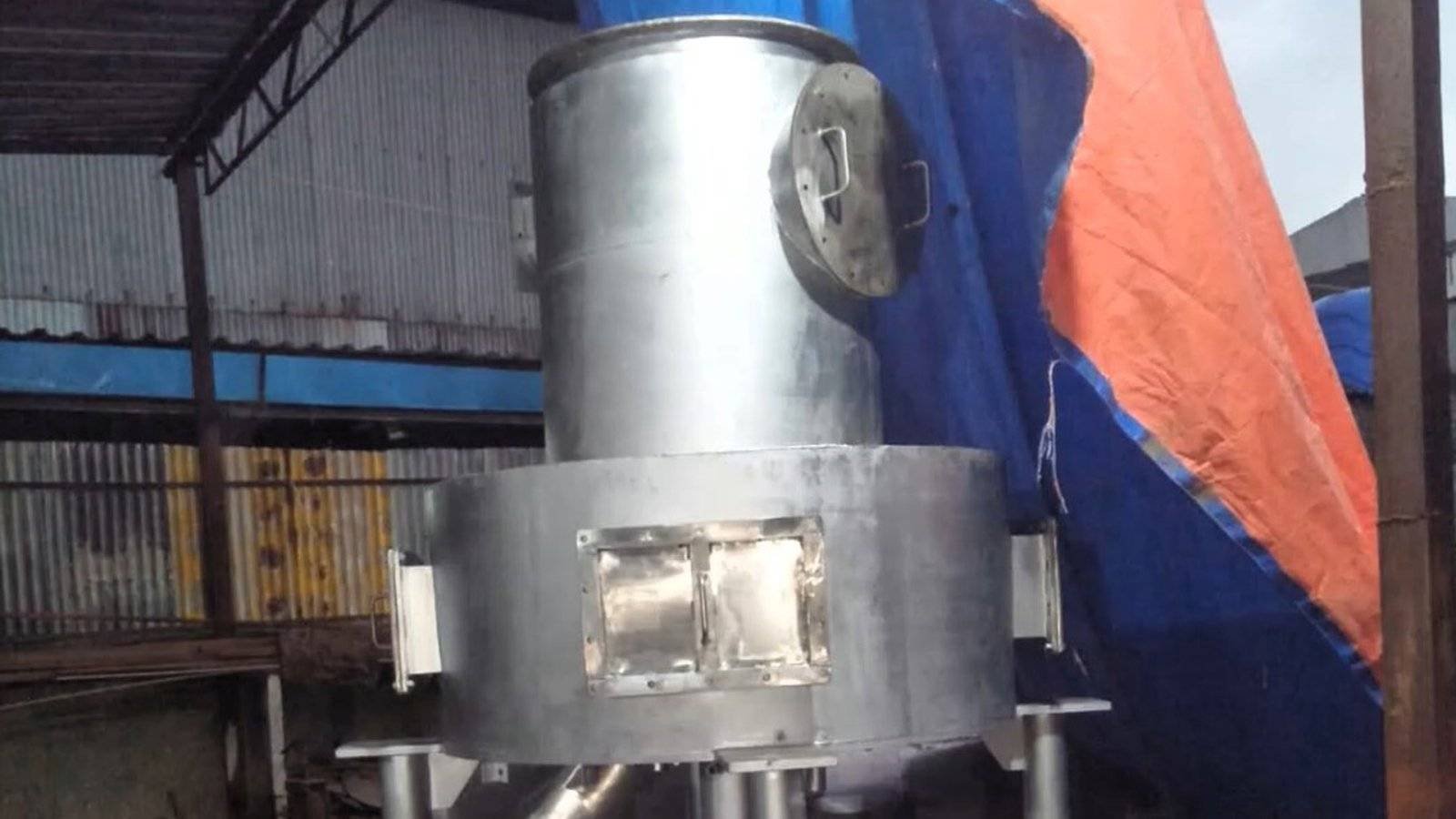
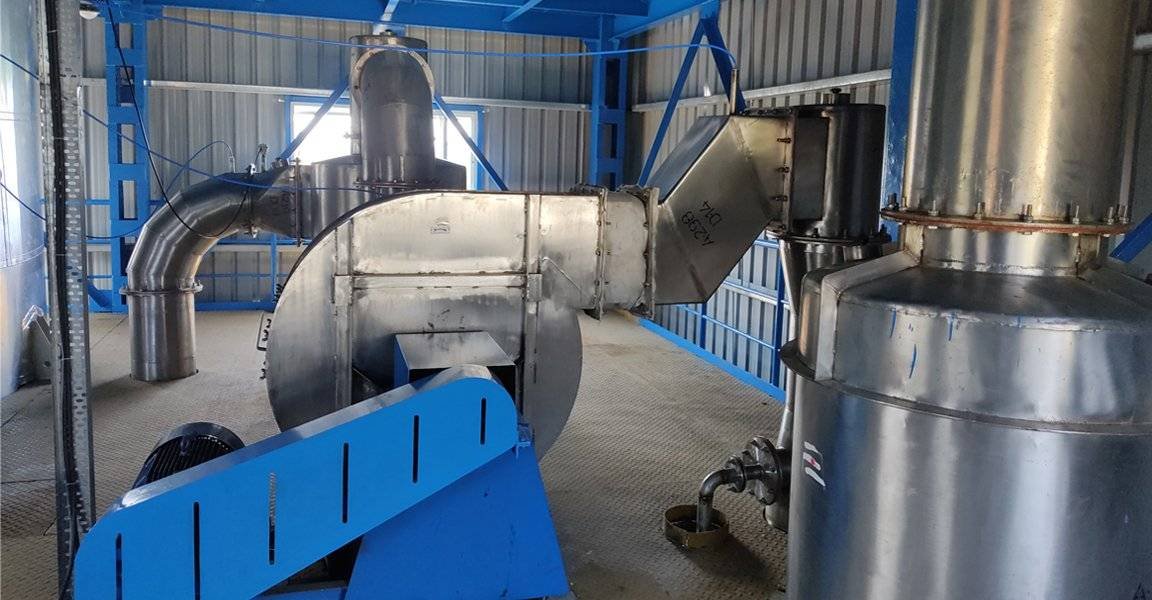
- Cyclone inlets and exhaust ducting: high-velocity powder can erode metal, and cooler exhaust may approach the dew point, creating acidic or salty condensate.
- Bag filter housing: condensation during cold starts can attack metal surfaces if the exhaust contains corrosive compounds.
- Air heater and hot air ducting: high temperatures call for heat resistance rather than wet corrosion resistance.
A practical approach is a mixed-material design: higher grades where they are needed and economical grades elsewhere. Our complete guide to spray dryer construction shows where material decisions fit in the wider design and fabrication sequence.
Matching the Grade to Your Industry
Food and Dairy
Milk, whey, coffee, starch derivatives and fruit powders are generally handled in SS316L contact parts with sanitary finishes. The main corrosive challenge often comes from cleaning rather than from the product itself, since hot caustic and acid washes run frequently. Chloride-based sanitizers must be used carefully, as they can attack austenitic stainless steel if left on surfaces or used at high concentration.
Pharmaceuticals and Nutraceuticals
Here, SS316L with very smooth, often electropolished surfaces is standard for product contact, because surface quality supports cleaning validation and prevents contamination. Solvent-based processes add the need for leak-tight construction and compatibility with organic solvents. In a closed-loop spray dryer, the same materials must also suit the condensers and solvent recovery circuit.
Chemicals, Dyes and Agrochemicals
Chemical feeds vary enormously. Some are mild and suit SS316, while acidic, chloride-rich or halogen-containing feeds may require duplex or nickel alloys in selected areas. Abrasive slurries call for wear-resistant atomizer components and erosion protection at cyclone inlets. Our guide on choosing the right spray dryer for chemical slurries covers these feed-related challenges in more depth.
Ceramics, Minerals and Effluents
Ceramic slips and mineral slurries are mainly an erosion problem, while effluent and zero liquid discharge streams can be both abrasive and high in dissolved salts, including chlorides. These duties often justify duplex grades, hardened atomizer parts and carefully designed ducting. Abrasion-related concerns for ceramic feeds are discussed in our article on spray drying ceramic pigments and frit.
Surface Finish, Welding and Passivation
Choosing the right grade is only half the job. How the metal is fabricated and finished decides whether it performs as expected.
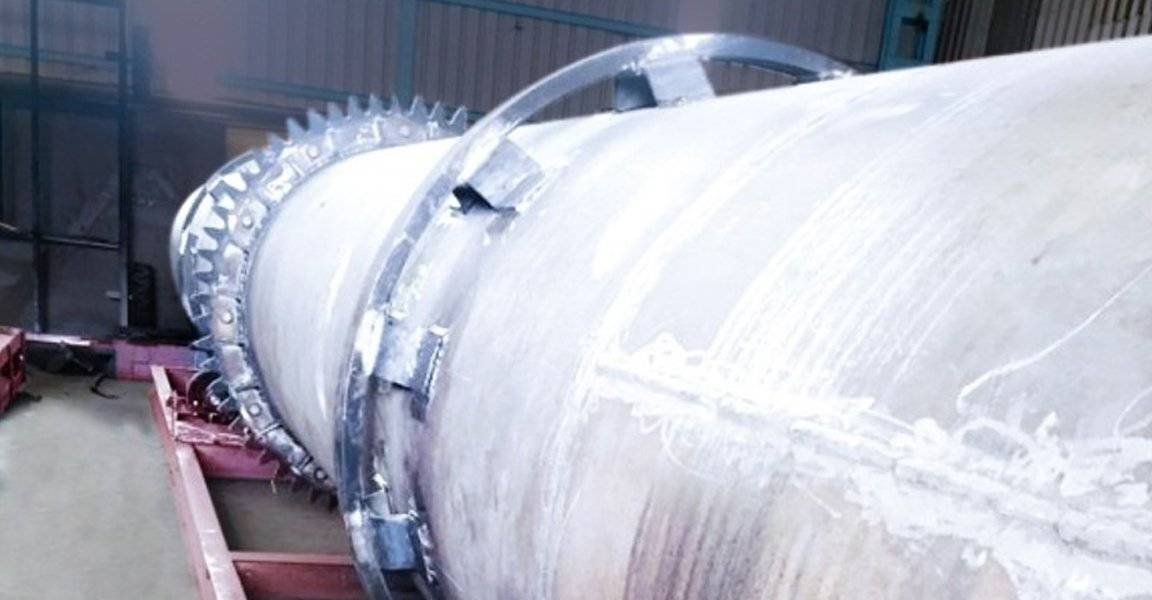
- Welding procedure: use qualified procedures, suitable filler metals and proper gas shielding so that weld zones keep their corrosion resistance. Heat tint left on welds can be a starting point for corrosion.
- Weld finishing: grind and polish internal welds on product contact surfaces so they are smooth and continuous, with no crevices.
- Surface finish: specify the internal finish in measurable terms, such as a maximum roughness average (Ra). Hygienic plants commonly specify finishes around Ra 0.4 to 0.8 µm or better for product contact areas.
- Pickling and passivation: chemical treatments remove free iron and heat tint and help restore a uniform passive layer after fabrication.
- Electropolishing: where specified, this smooths the surface on a microscopic scale, further improving cleanability.
- Contamination control: keep carbon steel tools and grinding discs away from stainless surfaces, since embedded iron particles can rust and trigger pitting.
Cleaning chemistry also has to be compatible with the chosen grade. Our article on the fundamentals of clean-in-place technology explains how detergent type, concentration and temperature should be set with the equipment materials in mind.
A Practical Checklist for Selecting Your Grade
- List every component of the feed, including trace chlorides, acids, solvents and abrasive solids.
- Note the full temperature range each part will see, including start-up, shutdown and cleaning.
- Identify the cleaning and sanitizing chemicals and their concentrations.
- Check regulatory or customer requirements for contact materials and surface finish.
- Estimate the cost of downtime and contamination, not just the cost of the metal.
- Ask for material test certificates and confirm grade identity on delivery.
- Where the chemistry is unusual or aggressive, run coupon or immersion corrosion tests, or seek a metallurgist's opinion, before finalizing the design.
Corrosion behavior depends on the exact combination of chemistry, temperature, concentration and surface condition, so the guidance in this article should be treated as general direction rather than a guarantee for any specific process. Material testing is the most reliable way to confirm a choice for an unfamiliar or aggressive feed.
Why AKSH Engineering
AKSH Engineering Systems Pvt. Ltd., based in Ahmedabad, Gujarat, has designed and manufactured spray dryers and related process equipment since 2013, with more than 100 installations across India and export markets. Our team of technocrats, with over 100 years of combined experience, reviews feed chemistry, cleaning regimes and operating temperatures before recommending materials. We fabricate in-house, which gives us direct control over welding, finishing and inspection. Our industrial spray dryers are available in SS304, SS316 and SS316L, with carbon steel and Hastelloy options where the duty calls for them, and our spray dryer accessories and spares extend the same material choices to replacement atomizers, nozzles, air dispersers and cyclones. You can explore our full range of drying systems for other process needs.
Conclusion
The right stainless steel grade protects your product, your equipment and your production schedule. SS304 handles many non-critical duties economically, SS316L is the standard for welded product contact surfaces, and duplex steels, nickel alloys and wear-resistant inserts address chloride-rich, highly acidic or abrasive conditions. Equally important are good welding, smooth finishing, passivation and cleaning chemicals that suit the metal.
If you are planning a new spray dryer or facing corrosion or wear on an existing one, speak to the AKSH Engineering team. We will review your feed, temperatures and cleaning regime, recommend testing where needed, and help you select materials that deliver a long, trouble-free service life.