
Industrial drying has always been a balancing act. Dry too little and the product cakes, spoils or fails specification. Dry too much and you waste fuel, damage heat-sensitive ingredients and lose yield. For decades, plants have managed that balance with experienced operators, fixed recipes and conventional control loops. Those tools still matter, but they are being joined by a new generation of technologies that promise tighter control, lower energy use and fewer surprises.
This article looks at the future trends in industrial drying that are already moving from research papers into real plants: artificial intelligence and advanced analytics, digital twins, and the broader drive toward sustainable manufacturing. For each one, we explain what it actually does, where it adds value in spray, flash, fluid bed and rotary drying, and what practical steps manufacturers can take today without betting the plant on unproven ideas.
Why Drying Is Ripe for Change
Drying is widely recognized as one of the most energy-intensive unit operations in process industries, because it relies on evaporating water, which requires a large amount of latent heat. Many dryers also run below their potential efficiency, with exhaust temperatures set conservatively, air flows higher than necessary and heat leaving the stack unrecovered.
At the same time, drying has a direct impact on product quality. Moisture content, particle size, bulk density, solubility, color and flavor are all shaped in the dryer. That combination of high energy cost and high quality sensitivity makes drying an ideal target for smarter control and better design. Several forces are accelerating change:
- Energy prices and carbon targets: Manufacturers face pressure from both cost and customers to reduce fuel use and emissions.
- Quality expectations: Pharmaceutical, nutraceutical, infant nutrition and specialty chemical customers demand consistent, documented quality.
- Affordable sensors and computing: Instruments, data storage and analytics tools have become far more accessible.
- Skills transitions: As experienced operators retire, plants need ways to capture their knowledge in systems.
The Foundation: Automation and Good Data
Every advanced trend in this article depends on one thing: reliable, well-organized process data. A dryer without accurate temperature, flow, pressure and humidity measurements cannot be optimized by any algorithm. That is why the first step for most plants is not artificial intelligence but solid automation.
Modern PLC and SCADA systems control inlet and outlet temperatures, feed rate, airflow and atomizer speed, apply safety interlocks and log every variable to a historian. AKSH's instrumentation, automation and controls systems combine field instruments such as RTD sensors, pressure transmitters and electromagnetic flow meters with PLC, HMI and SCADA platforms, historical data logging and remote diagnostics. For pharmaceutical duties, options include 21 CFR Part 11 features such as audit trails and electronic signatures. Our article on how PLC and SCADA automation improves spray dryer consistency explains why this foundation matters.
Trend 1: Artificial Intelligence and Advanced Analytics
"AI" covers a wide range of techniques. In drying, the most useful applications are practical and focused rather than futuristic.
Soft Sensors for Moisture and Quality
Final moisture is often measured in the laboratory, which means results arrive long after the powder was produced. A soft sensor is a data-driven model that estimates moisture or another quality attribute in real time from variables that are measured continuously, such as outlet temperature, exhaust humidity, feed rate and feed solids. Combined with inline instruments such as near-infrared moisture analyzers where suitable, soft sensors let operators correct drift before off-specification product builds up.
Advanced and Predictive Control
Conventional PID loops control one variable at a time. Model predictive control uses a mathematical model of the dryer to anticipate how changes in feed, ambient humidity or air flow will affect outlet conditions, and adjusts several inputs together. The aim is to hold product moisture closer to target, which allows the setpoint to move nearer the specification limit without risking failures. Even small reductions in over-drying can save meaningful energy.
Predictive Maintenance
Rotary atomizers, fans, rotary valves, bag filters and burners are critical to dryer uptime. Trends in vibration, bearing temperature, motor current and pressure drop can reveal developing faults weeks before failure. Machine learning models trained on these signals help maintenance teams plan interventions rather than react to breakdowns.
Anomaly Detection
Pattern recognition models learn what normal operation looks like and flag unusual combinations of variables, such as early signs of wall deposits, nozzle wear, cyclone blockage or air leaks, that a human might miss among hundreds of tags.
What AI Cannot Do
AI does not replace sound process design or physics. A dryer that is undersized, poorly insulated or fed with an unstable liquid will not be fixed by an algorithm. Models also need maintenance as products, equipment and raw materials change. The most successful projects start with a narrow, well-defined problem and expand from there.
Trend 2: Digital Twins
A digital twin is a virtual model of a physical dryer that is connected to, and kept up to date with, real plant data. It can range from a simplified heat and mass balance to detailed computational fluid dynamics of air and particle flow inside the chamber. What makes it a twin rather than just a simulation is the link to live operation.
How Digital Twins Are Used in Drying
- Design and scale-up: Simulating chamber geometry, air distribution and residence time before fabrication reduces design risk, especially when moving from pilot to production scale.
- Virtual commissioning: Control logic can be tested against the model before it reaches the real plant, shortening start-up.
- What-if analysis: Engineers can explore new products, feed concentrations or operating temperatures virtually before committing plant time and material.
- Operator training: Trainees can practice start-up, shutdown and upset scenarios safely on the model.
- Performance monitoring: Comparing actual behavior with the model's prediction highlights fouling, air leaks or instrument drift.
We explore these applications in detail in our article on how digital twin technology can optimize modern spray drying.
Building a Twin Realistically
A useful twin does not have to be a giant software project. Many plants begin with a validated heat and mass balance model linked to historian data, which already reveals efficiency gaps. More detailed models can be added where they answer specific questions, such as why deposits form in one region of a chamber.
Trend 3: Sustainable Drying
Sustainability in drying is mostly about using less energy per kilogram of water removed, using cleaner energy, and wasting less product, water and air quality along the way.
Remove Water Before the Dryer
Evaporation typically removes water at a far lower energy cost per kilogram than thermal drying. Concentrating a liquid feed as far as practical before spray drying, using efficient industrial evaporators, is one of the most effective sustainability measures available. Mechanical vapor recompression pushes this further; our article on how MVR evaporators cut steam costs explains why. For wet cakes, efficient mechanical dewatering before a flash or rotary dryer serves the same purpose.
Recover Exhaust Heat
Dryer exhaust carries a large amount of energy. Air-to-air heat exchangers, exhaust-to-feed preheaters and, where product characteristics allow, partial recirculation can recover part of it. Dust-laden or sticky exhaust requires careful design so that heat exchangers do not foul.
Optimize Operating Conditions
Raising inlet temperature where the product allows, lowering outlet temperature to the minimum consistent with specification, minimizing excess air and sealing leaks are low-cost measures that compound over time. Our energy-saving tips for industrial spray dryers cover these in more detail.
Electrification and Heat Pumps
Heat pump dryers and electrically heated systems are attracting interest as grids add renewable power. Today, heat pumps are most practical at lower drying temperatures, but their range is expanding. Where electrification is not yet feasible, cleaner fuels and high-efficiency burners or steam air heaters reduce emissions.
Closed Loops and Zero Waste
Closed-loop drying with inert gas allows solvents to be recovered and reused. High-efficiency powder recovery returns fines to the product stream instead of the stack. Recovered condensate from evaporators reduces freshwater use. The broader philosophy is described in our article on zero-waste drying and reducing energy costs.
The Human Side of Smarter Drying
Technology alone does not deliver results. Operators need to trust the recommendations an advanced controller or soft sensor makes, which means models should be transparent enough to explain why they suggest a change. Engineers need time and skills to maintain models as products and raw materials evolve. Many plants find that the most valuable outcome of a digital project is a shared, data-based understanding of the dryer among production, quality and maintenance teams. Capturing the experience of senior operators in alarm limits, operating guides and model assumptions also protects knowledge that might otherwise leave with them.
Trends at a Glance
| Trend | Main Benefit | Typical Maturity Today | Practical First Step |
|---|---|---|---|
| PLC/SCADA automation and data logging | Stable operation, records, foundation for analytics | Mature and widely used | Upgrade instruments and historian |
| Soft sensors | Real-time quality estimates | Proven in many process industries | Correlate lab moisture with process data |
| Model predictive control | Tighter moisture control, less over-drying | Established in larger plants | Identify a high-value control loop |
| Predictive maintenance | Fewer unplanned stops | Growing adoption | Monitor vibration on critical rotating equipment |
| Digital twins | Better design, training and diagnosis | Emerging to established, depending on scope | Build a validated heat and mass balance model |
| Heat recovery and pre-concentration | Lower energy per kg of product | Mature | Energy audit of dryer and evaporator |
| Electrification and heat pumps | Lower direct emissions | Emerging for higher temperatures | Assess feasibility for low-temperature duties |
How These Trends Apply Across Dryer Types
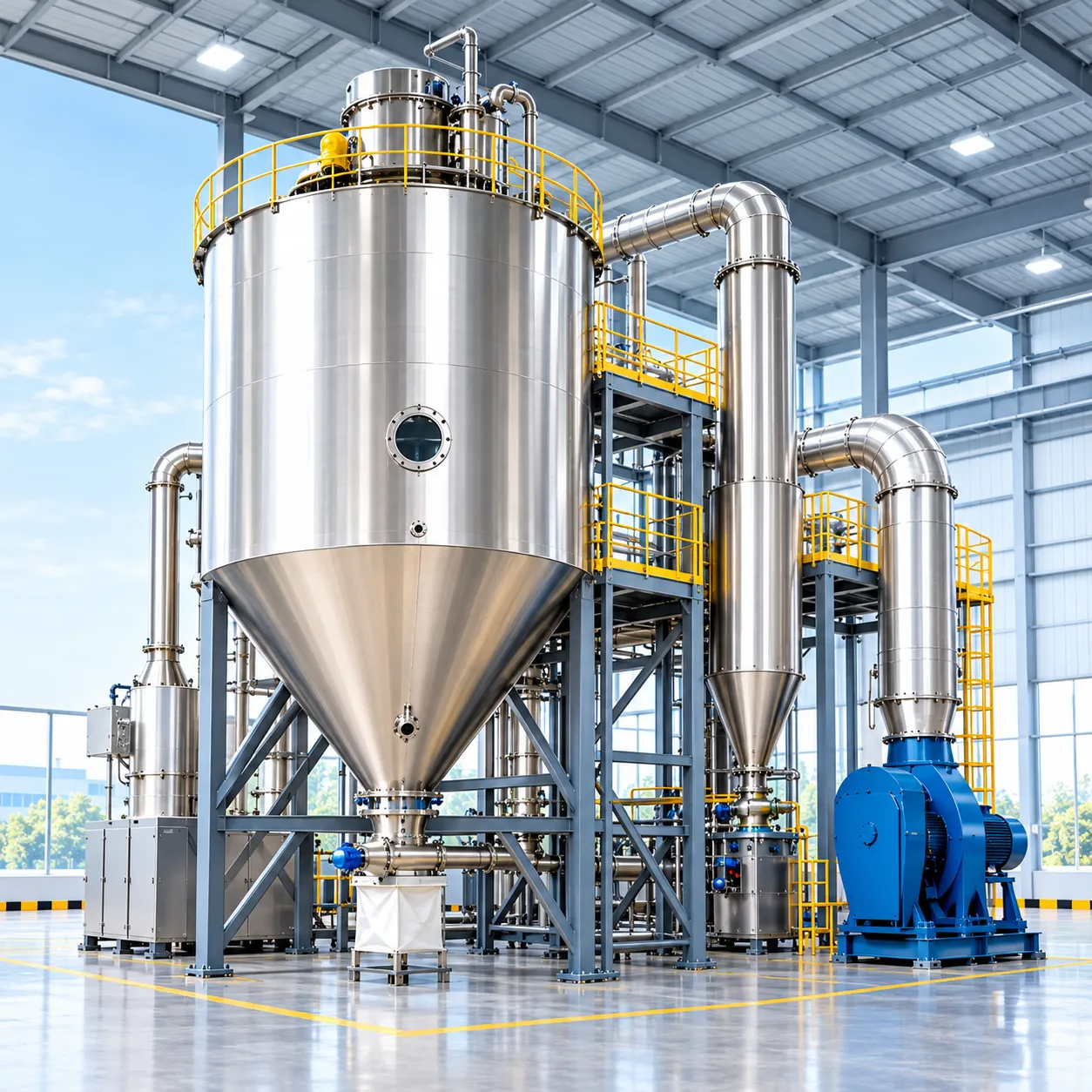
- Spray dryers: Outlet temperature control, atomizer monitoring, deposit detection and powder property prediction benefit strongly from advanced control and twins. AKSH's industrial spray dryers are supplied with PLC and SCADA control, automated CIP options and heat recovery features.
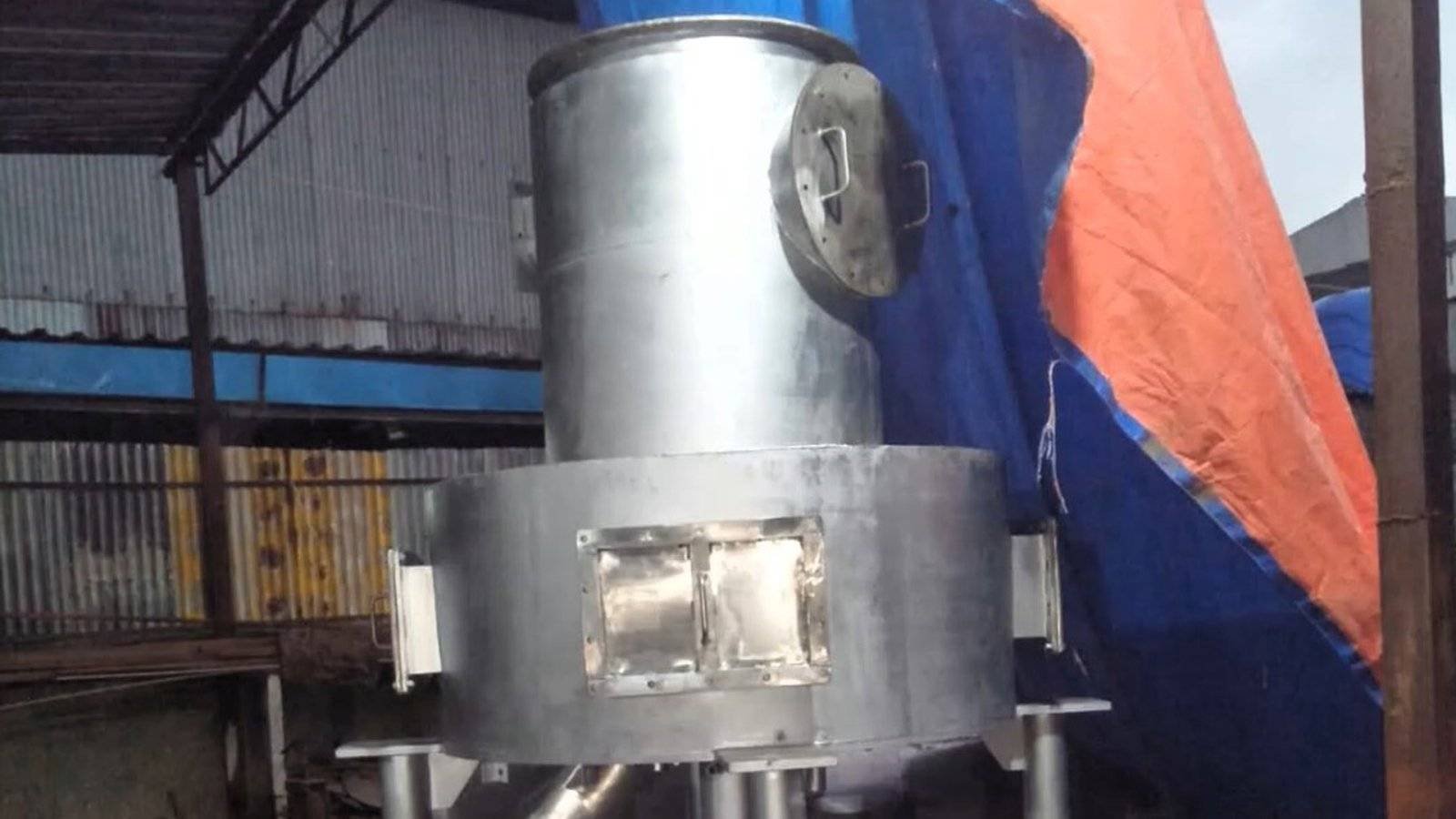
- Flash and spin flash dryers: Fast dynamics make feed-forward control and soft sensors valuable for moisture consistency.
- Fluid bed dryers: Bed temperature and humidity models help determine end points in batch drying and stabilize continuous units.
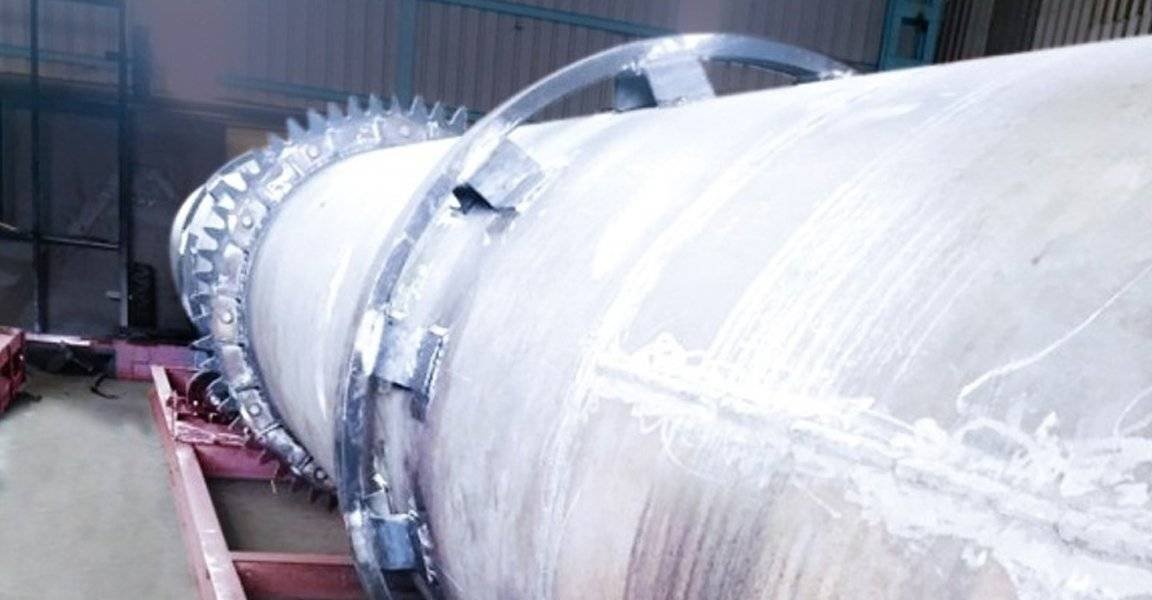
- Rotary dryers: Long residence times and variable feed moisture make predictive control and burner optimization attractive.
You can explore the full range of equipment in our drying systems category.
A Practical Roadmap for Manufacturers
- Audit the basics: Check instruments, calibration, insulation, air leaks and heat losses. Fix what is broken first.
- Establish a data foundation: Ensure key variables are measured and stored in a historian with consistent naming and time stamps.
- Quantify the baseline: Calculate energy per kilogram of water evaporated and product yield, and track them over time.
- Pick one high-value problem: Examples include moisture variability, frequent wall deposits or unplanned atomizer stops.
- Apply the simplest effective tool: Sometimes a better control loop solves the problem; sometimes a soft sensor or model is needed.
- Measure results and scale up: Expand proven approaches to other lines and integrate them with maintenance and quality systems.
- Address cybersecurity: Connected plants need secure network architecture, access control and update policies.
Upgrading control systems is often the logical starting point, and our automation and control range covers instrumentation, PLC and SCADA, CIP and pollution control.
Why Choose AKSH Engineering
AKSH Engineering Systems Pvt. Ltd., based in Ahmedabad, Gujarat, has designed and manufactured spray dryers, flash dryers, fluid bed and rotary dryers, evaporators and turnkey plants since 2013, with more than 100 installations. Our team of technocrats brings over 100 years of combined experience. Because we design and build drying equipment and its control systems in-house, we can integrate instrumentation, automation and energy-saving features from the start, or help upgrade existing plants step by step.
Conclusion
The future of industrial drying is not a single breakthrough but a combination of steady improvements: reliable automation and data, AI-driven analytics that turn data into decisions, digital twins that let engineers test ideas safely, and sustainable practices that cut energy and waste. Plants that build a strong data foundation and tackle specific problems one at a time will gain the most, with better quality, lower energy use and fewer unplanned stops.
If you are planning a new dryer or want to modernize an existing one, talk to the AKSH Engineering team. We will help you identify the upgrades that offer the best return for your products, your plant and your sustainability goals.