


Microcrystalline cellulose, better known as MCC, is one of the most widely used excipients in the world. It sits inside a large share of tablets and capsules as a binder, diluent and disintegration aid, and it appears in foods and personal care products as a texturizer, anti-caking agent and bulking agent. For all its familiarity, MCC is a demanding product to manufacture. Its value lies in physical properties such as particle size, bulk density, flow and compressibility, and those properties are shaped to a large extent in the drying step.
This article describes how an advanced spin flash dryer plant for microcrystalline cellulose is put together and why spin flash technology suits MCC wet cake so well. It covers the MCC process from pulp to powder, the specific drying challenges, the main plant sections, the design choices that protect quality and the questions to settle before investing. It is written for excipient manufacturers, pharmaceutical and food ingredient producers and project teams evaluating new MCC capacity.
What Is Microcrystalline Cellulose?
Cellulose in plant fibers contains both highly ordered crystalline regions and less ordered amorphous regions. MCC is produced by partially breaking down the cellulose so that the amorphous regions are largely removed, leaving fine particles made mainly of crystalline cellulose aggregates. The result is a white, odorless, chemically inert powder that is insoluble in water but able to absorb and hold moisture.
Key uses include:
- Pharmaceuticals: Diluent and dry binder for direct compression and wet granulation, with good compactibility and a contribution to tablet disintegration.
- Nutraceuticals: Filler and binder in vitamin, mineral and herbal tablets and capsules.
- Food: Bulking agent, anti-caking agent and texture modifier, and in colloidal forms a stabilizer for suspensions and emulsions.
- Personal care: Absorbent, texturizer and mild abrasive in cosmetic formulations.
For pharmaceutical use, MCC must meet pharmacopoeial monographs that set limits on parameters such as loss on drying, pH, conductivity, residue on ignition, heavy metals and microbial counts. Customers also expect consistent particle size distribution, bulk density and flow for each grade they buy.
How MCC Is Made: From Pulp to Powder
Manufacturing routes vary between producers, but a typical process follows these stages:
- Raw material preparation: High-purity cellulose, commonly dissolving-grade wood pulp or cotton linters, is shredded or slurried.
- Hydrolysis: The cellulose is treated with a dilute mineral acid at elevated temperature, which preferentially attacks the amorphous regions and reduces the degree of polymerization.
- Washing and neutralization: The hydrolyzed material is washed repeatedly to remove acid and soluble by-products, then neutralized. Conductivity and pH are monitored to meet specification.
- Dewatering: The washed slurry is filtered or centrifuged to form a wet cake. Depending on the dewatering equipment, this cake often still contains more water than solids.
- Drying: The wet cake is dried to the target moisture and, at the same time, broken down into a fine powder with the required particle size distribution.
- Sieving and blending: The powder is screened, blended for uniformity and packed, typically in lined bags or drums.
Two main drying approaches are used commercially. Some producers reslurry the washed cellulose and spray dry it, which produces agglomerated, rounded particles. Others dry the wet cake directly in a flash or spin flash dryer, which avoids adding water back and suits grades where the particle structure is set mainly by hydrolysis and disintegration. The choice depends on the grades being made and the producer's overall process.
The MCC Drying Challenge
A Cohesive, Fibrous Wet Cake
MCC wet cake is sticky and fibrous. It forms lumps, bridges in hoppers and does not disperse easily in a gas stream. A standard pneumatic flash dryer struggles to break these lumps, so wet agglomerates either fall out of the air stream or pass through partially dried.
Tight Moisture Targets
Pharmacopoeial monographs set a maximum loss on drying for MCC, and many commercial grades are supplied at moisture levels well inside that limit. Under-dried product risks failing specification and microbial growth; over-dried product wastes energy and may become more prone to static and dusting.
Protecting Functional Properties
Compactibility is one of MCC's most valuable characteristics. Excessive or prolonged heating is widely reported to reduce the compactibility of cellulose-based materials, so the dryer should remove moisture quickly and avoid holding product at high temperature after it is dry.
Particle Size Control
MCC is sold in several grades that differ mainly in particle size and bulk density. The dryer must deliver a consistent distribution within each grade and ideally allow some adjustment between grades.
Hygiene and Contamination Control
As a pharmaceutical and food ingredient, MCC must be produced in equipment that resists contamination, is easy to clean and does not shed particles or rust into the product.
Why a Spin Flash Dryer Suits MCC
A swirl agitated spin flash dryer addresses each of these challenges in a single machine:
- Direct handling of wet cake: A feed screw pushes cohesive cake into the chamber without reslurrying, and the bottom agitator breaks it apart.
- Rapid drying: Tangential hot air creates an intense swirl around the fragments, removing moisture within seconds while evaporation keeps the product cool.
- Built-in classification: A classifier ring at the chamber outlet allows only particles of the target size and dryness to leave, so lumps are retained until they are broken down and dried.
- Consistent output: Because each particle stays only as long as it needs to, moisture and particle size are uniform across the product.
- Compact, continuous operation: Drying, deagglomeration and classification take place in one vertical chamber.
For a closer look at the internal mechanics, see our guide to spin flash drying mechanics.
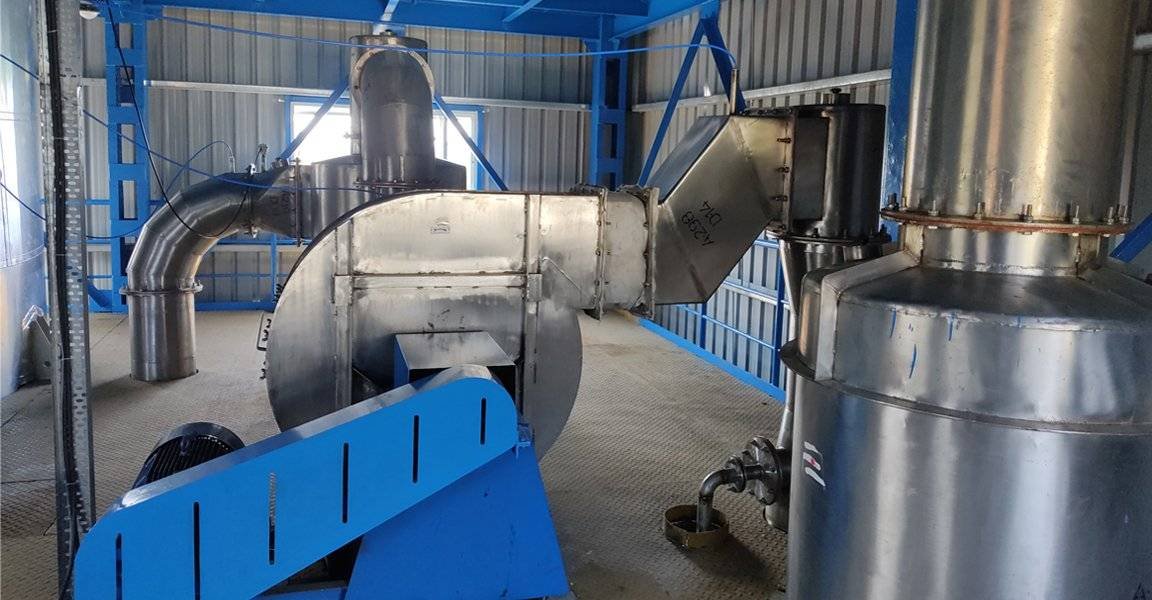
Anatomy of an MCC Spin Flash Drying Plant
| Plant Section | Function | Key Considerations for MCC |
|---|---|---|
| Wet cake feed system | Receives cake from dewatering and meters it into the dryer | Anti-bridging hopper agitator, variable-speed feed screws, sanitary construction |
| Air intake and filtration | Supplies clean process air | Multi-stage filtration to protect product purity |
| Air heating | Heats process air to the required inlet temperature | Indirect heating, for example thermic fluid or steam, keeps combustion gases away from the product |
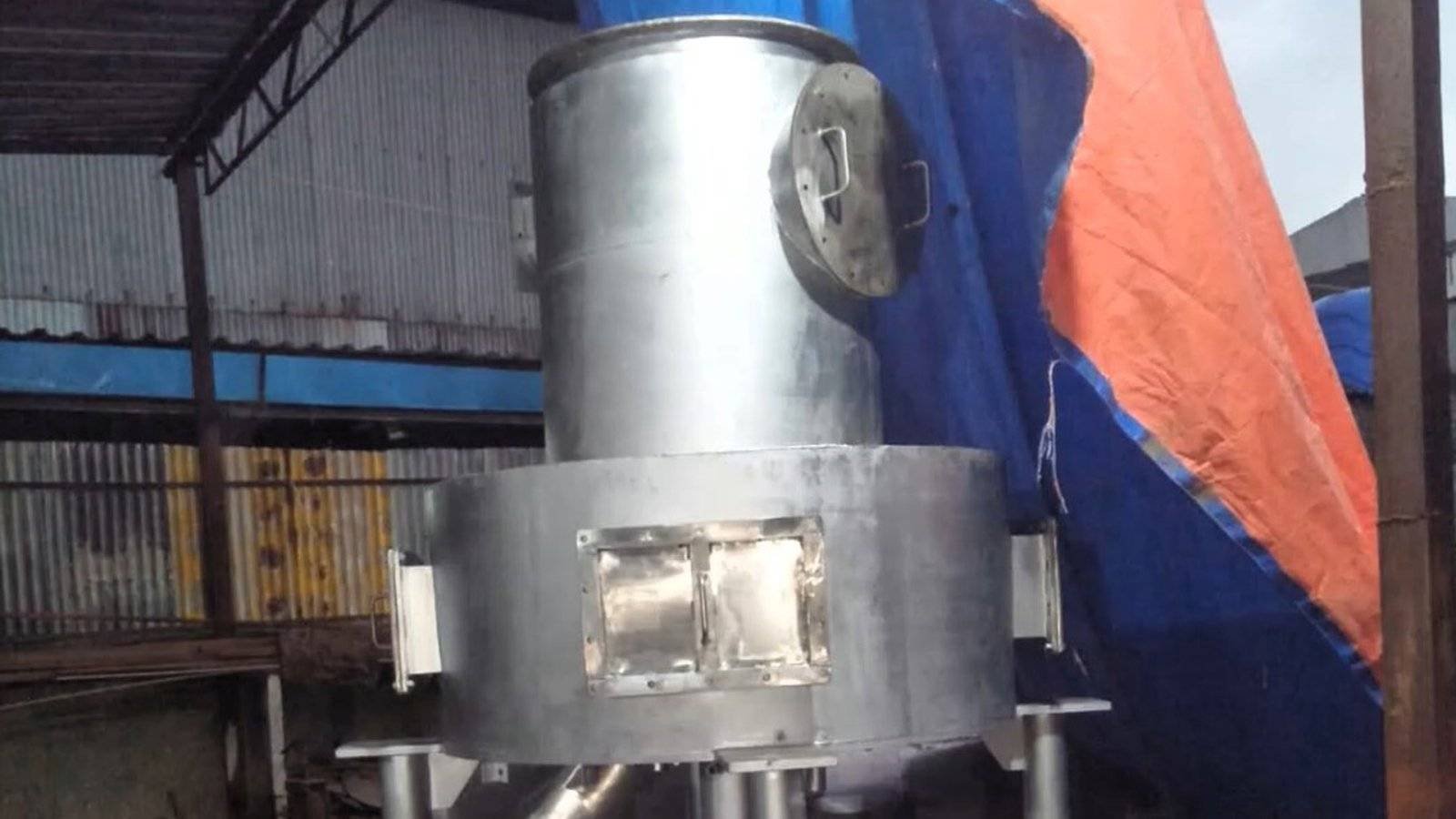
| Spin flash drying chamber | Disintegrates, dries and classifies the product | Agitator design for fibrous cake, classifier sized for target grades, stainless steel contact parts |
| Product recovery | Separates powder from air | High-efficiency cyclones and pulse-jet bag filters for high yield and low emissions |
| Sieving and handling | Screens, conveys and blends powder | Enclosed transfer to limit dust and contamination |
| Controls and instrumentation | Controls temperatures, feed and safety interlocks | Recorded process data and alarms to support batch documentation |
Heating System Choice
AKSH spin flash dryers can be configured with direct or indirect gas or oil firing, hot air radiators or thermic fluid heating, with inlet temperatures from about 120°C upward depending on construction and heat source. For pharmaceutical and food grades of MCC, indirect heating through a thermic fluid heater or steam radiator is usually preferred, because the process air never contacts combustion products. Thermic fluid systems also allow steady, well-controlled air temperatures, which helps protect product quality.
Materials of Construction
Product-contact parts for MCC are normally specified in stainless steel, with SS316 or SS316L common for pharmaceutical duty, together with smooth internal finishes and minimal crevices. Our article on choosing the right stainless steel grade discusses the differences between grades, and the same reasoning applies to spin flash equipment.
Product Recovery and Emissions
MCC fines are valuable and should not be lost to the stack. High-efficiency cyclones recover most of the product, and pulse-jet bag filters capture the remaining fines. Our comparison of cyclone separators, bag filters and scrubbers explains how these systems work together.
Automation
Outlet temperature is held by trimming the feed rate, while interlocks protect the heater, fan, agitator and feeder. A well-engineered instrumentation, automation and controls package records trends and alarms, which supports batch records and investigations. AKSH spin flash dryers are supplied with fully automatic PLC and HMI control and variable speed drives.
Key Design and Operating Parameters
- Wet cake moisture: Sets the evaporation load. Better dewatering upstream reduces energy use and raises capacity.
- Inlet and outlet temperatures: Inlet temperature drives capacity; outlet temperature controls final moisture and protects functionality.
- Agitator speed: Determines how aggressively the fibrous cake is broken; too high may generate excess fines.
- Classifier setting: Defines the maximum particle size and therefore the grade.
- Airflow: Must be enough to fluidize and convey the product without carrying oversized material past the classifier.
Quality Checks on Dried MCC
A drying plant is only as good as the powder it releases, so MCC lines are usually supported by a routine testing program that links laboratory results back to dryer settings. Typical checks include:
- Loss on drying: Confirms that final moisture sits within the grade specification and the pharmacopoeial limit. Trends in this result are the first indicator that outlet temperature or feed moisture has drifted.
- Particle size distribution: Measured by sieve analysis or laser diffraction. Shifts usually point to changes in classifier setting, airflow or agitator speed.
- Bulk and tapped density: Affect how the powder fills dies and capsules. Density is influenced by particle size and shape, and therefore by drying conditions.
- Flow properties: Measured by angle of repose or flow index, these matter to customers running high-speed tablet presses.
- Microbial quality: Confirms that the plant's hygiene and moisture control are effective.
- Chemical parameters: pH, conductivity and residue on ignition largely reflect hydrolysis and washing, but should be monitored to confirm the dried product meets specification.
Recording dryer parameters alongside each lot's test results builds a dataset that makes it far easier to hold every grade on target and to investigate any deviation quickly.
Spin Flash Drying vs Spray Drying for MCC
Both technologies are used in the MCC industry, and each has its place. Spray drying, carried out in industrial spray dryers, starts from a pumpable slurry and produces rounded agglomerates with good flow, which suits certain grades. It requires the washed cellulose to be reslurried, adding water that must then be evaporated. Spin flash drying works directly from the wet cake, avoiding that extra water, and delivers finer, more irregular particles shaped by mechanical disintegration and classification. Our article on how spray dryer plants support pharmaceutical and nutraceutical production describes the spray drying route in more detail.
Where only free-flowing, easily dispersed material is involved, a standard pneumatic flash dryer may be considered, but the cohesive nature of most MCC cake makes the spin flash design the more robust choice. You can compare all these technologies side by side across our drying systems range.
Questions to Settle Before Investing
- Which MCC grades, particle sizes and bulk densities must the plant produce?
- What is the wet cake moisture from your dewatering equipment, and how much does it vary?
- What production capacity is needed now, and what expansion is planned?
- Which heating utilities are available on site?
- Which regulatory and customer standards apply to the finished product?
- What are the local emission limits for the exhaust?
- Can product trials or pilot data be used to confirm the design?
Why AKSH Engineering
AKSH Engineering Systems Pvt. Ltd., based in Ahmedabad, Gujarat, has designed and manufactured industrial drying and evaporation systems since 2013, with more than 100 installations. Our team of technocrats brings over 100 years of combined experience, and all design and manufacturing is done in-house. We engineer spin flash dryers around the specific feed, with custom agitators, classifiers, heating systems and automation, and we build complete process lines within our specialized plants portfolio. We serve customers across India and in export markets.
Conclusion
Producing microcrystalline cellulose that meets pharmaceutical and food specifications depends heavily on the drying step. The plant must handle a cohesive, fibrous wet cake, reach tight moisture targets, preserve compactibility, control particle size and maintain hygiene. A well-designed spin flash dryer plant, with clean indirect heating, stainless steel construction, efficient product recovery and reliable automation, meets these demands in a compact, continuous process.
If you are planning new MCC capacity or upgrading an existing drying line, contact the AKSH Engineering team. We will review your process, wet cake properties and grade requirements and propose a spin flash drying plant designed around them.