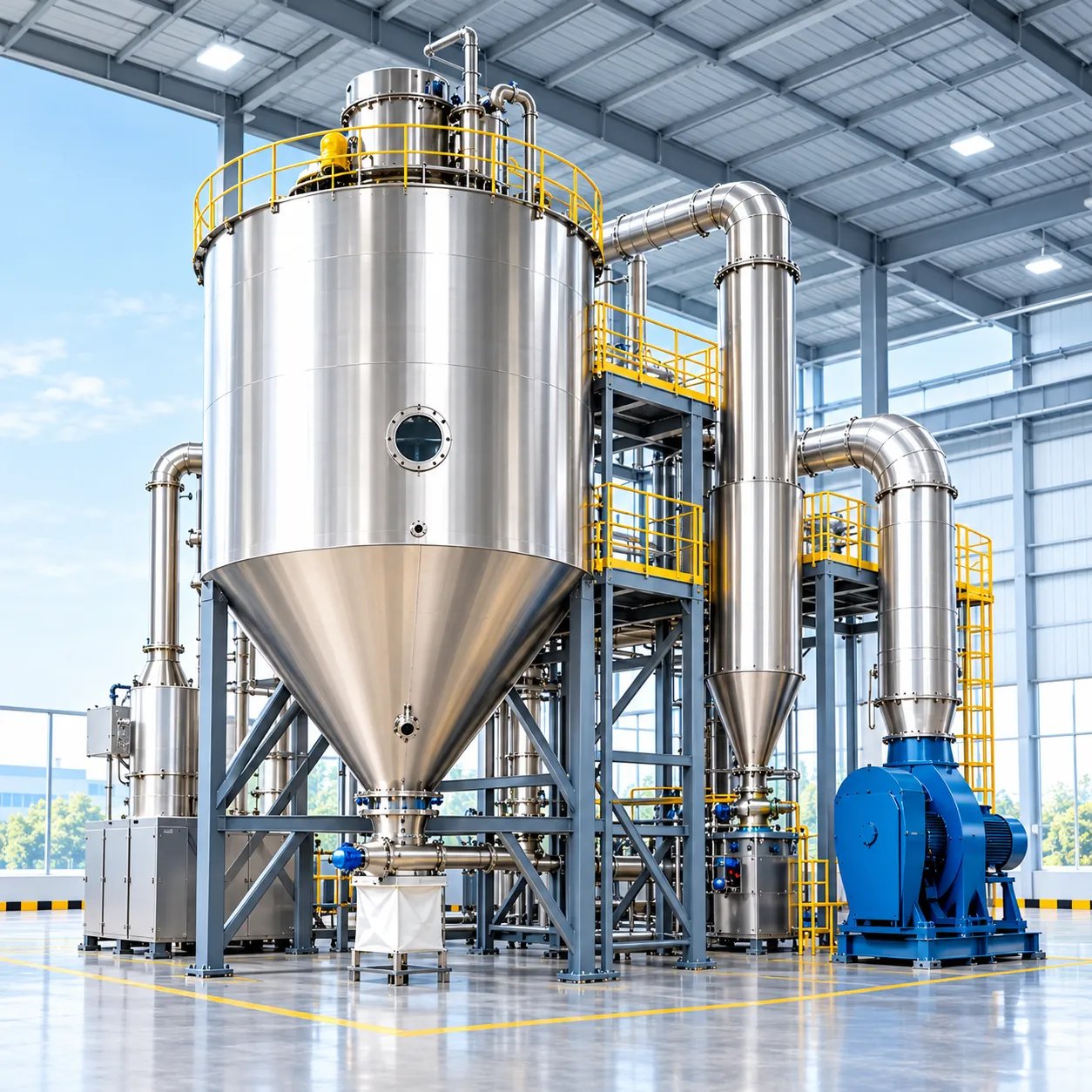
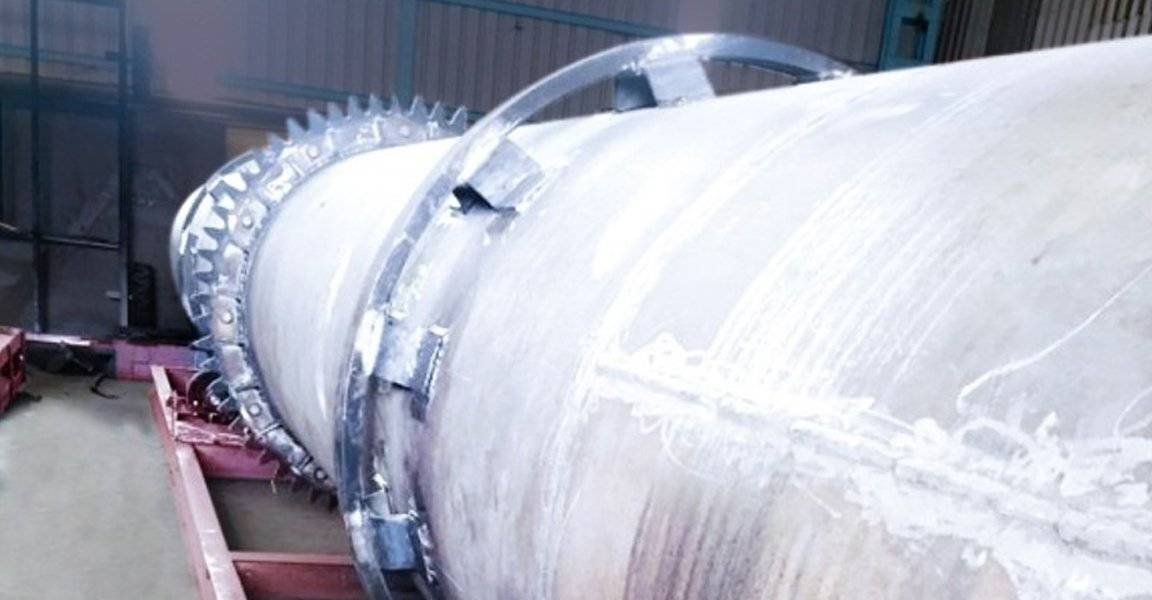
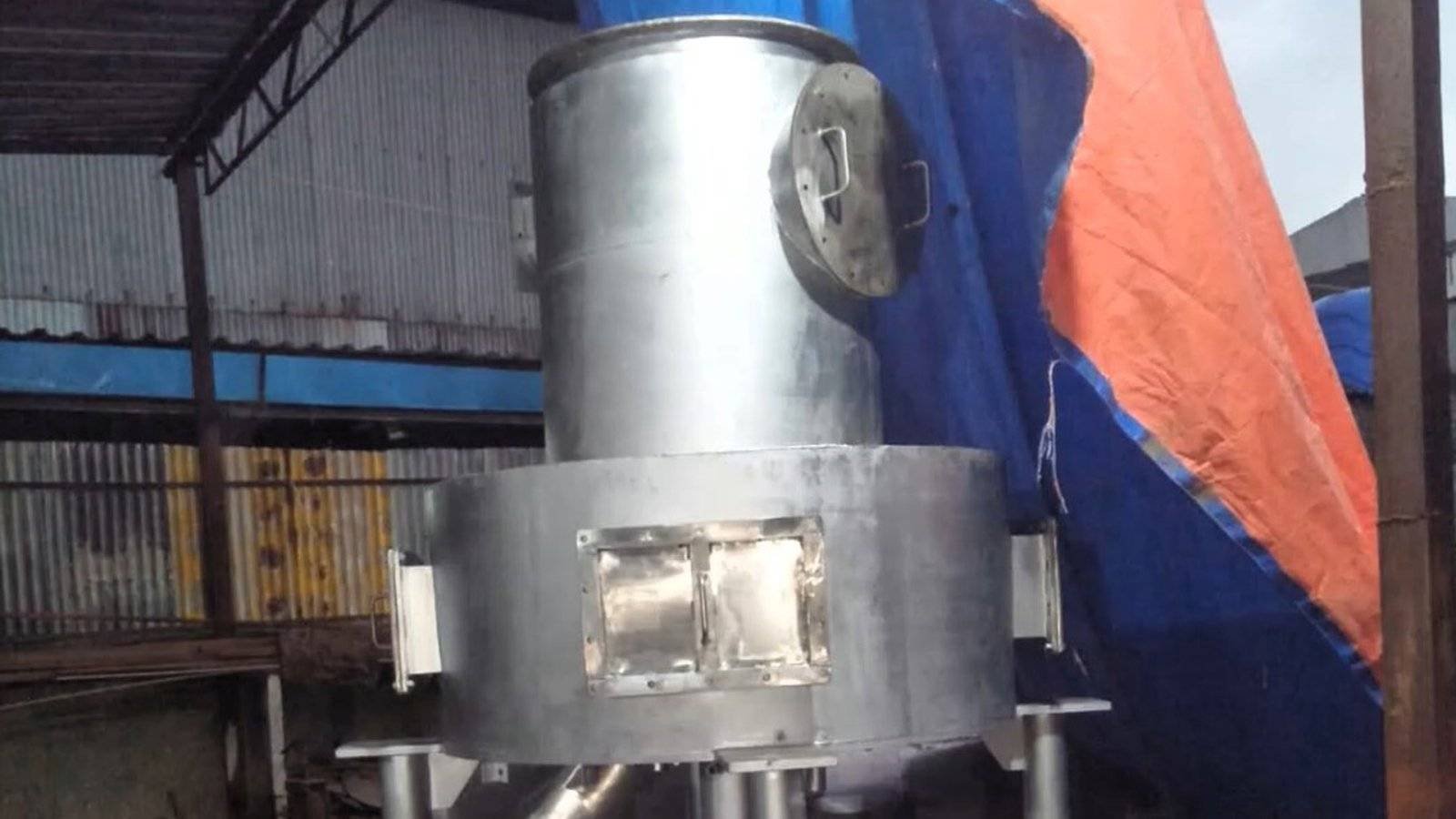
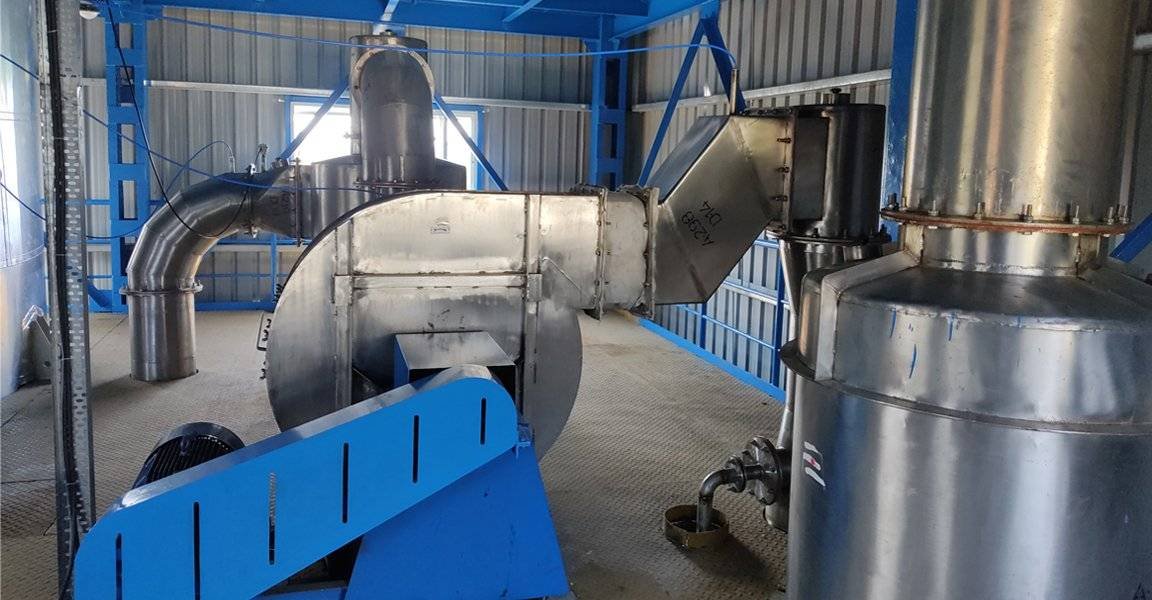

Spray drying looks simple on a flow diagram: pump a liquid in, atomize it into hot air, collect a powder. Anyone who has run a food spray dryer through a busy production season knows the reality is more complicated. Sugars soften and smear on the chamber wall, delicate flavors disappear with the exhaust, fine powder escapes to the stack, smoldering deposits create a fire risk, and cleaning between products eats into production hours. Each of these problems costs money, and several can put food safety or worker safety at risk.
This article is a practical troubleshooting guide. We examine five of the most common challenges in food industry spray drying, explain the symptoms operators usually see, trace them back to their root causes and set out solution strategies covering formulation, operation and equipment design. The aim is to help plant heads, process engineers and maintenance teams diagnose problems faster and decide which fixes are worth investing in.
Why Food Products Are Particularly Challenging
Compared with many chemical powders, food materials are demanding to dry. They often contain low-molecular-weight sugars and organic acids that become sticky at drying temperatures, fats that smear and oxidize, proteins that denature, volatile aromas that escape easily and nutrients that degrade with heat. They are also usually combustible dusts once dry, and they must be processed under strict hygiene. Feed composition may also change with harvest, supplier or season, so a dryer that ran perfectly in one month can struggle in the next.
If you are new to the subject, our overview of spray drying in the food industry and its common uses provides useful background before diving into the troubleshooting below.
Challenge 1: Stickiness and Wall Deposits
What Operators See
Powder building up on the chamber walls, cone and roof; lumps falling into the product; rising pressure drop in ducts; reduced yield; and, in severe cases, the need to stop the dryer for manual cleaning. Products rich in sugars or organic acids, such as fruit juices, honey, tomato, malt extracts and some dairy permeates, are the usual suspects. High-fat products can also smear.
Root Causes
Amorphous sugars in a dried particle have a glass transition temperature, above which they turn from a hard glass into a soft, sticky, rubbery state. Water acts as a plasticizer, so a particle that is still slightly moist becomes sticky at a lower temperature. When the particle surface temperature exceeds its sticky point while it is in contact with a wall or another particle, it adheres. Poor air distribution that sends wet droplets onto the wall, an atomizer spray that is too wide for the chamber and excessive outlet temperatures all make the problem worse.
Solution Strategies
- Use drying aids: Adding carriers such as maltodextrin, gum arabic or modified starch raises the glass transition temperature of the mixture. Dosage should be the minimum that works, because carriers dilute the active ingredient and affect labeling.
- Adjust temperatures: Lowering the outlet temperature reduces particle surface temperature, but it must be balanced against final moisture. Multistage drying helps by allowing a lower exhaust temperature with final drying in a fluid bed.
- Dehumidify the drying air: Drier inlet air lowers particle moisture and raises the effective sticky point, which can be valuable in humid climates.
- Cool the walls: Cool air sweeping or jacketing the chamber cone keeps wall surfaces below the sticky point.
- Improve air and spray geometry: A well-designed air disperser and correctly matched atomizer keep wet droplets away from the walls. Our comparison of rotary disc and nozzle atomizers explains how spray pattern influences deposits.
- Use mechanical aids: Pneumatic hammers or wall vibrators help dislodge light deposits before they build up.
Challenge 2: Loss of Flavor, Color and Nutrients
What Operators See
Powder that tastes flat or cooked compared with the liquid feed, darker color than specified, lower vitamin or bioactive content in laboratory analysis and customer complaints about aroma. These issues often appear gradually as throughput is pushed higher.
Root Causes
Volatile aroma compounds evaporate with the water, especially during the early, wet stage of drying before a protective skin forms on the droplet. Heat-sensitive components such as some vitamins, pigments, enzymes and proteins degrade when particles spend too long at elevated temperature. Maillard browning accelerates at higher temperatures and moderate moisture levels. Overheating is often caused by running a hot outlet to compensate for a wide or unstable droplet size distribution, so that the largest droplets dry fully while the smallest are overcooked.
Solution Strategies
- Raise feed solids: Higher solids help form a surface skin faster, which retains volatiles. Pre-concentrating at low temperature under vacuum supports this.
- Encapsulate: Emulsifying flavors or oils with wall materials such as gum arabic, modified starch or proteins before drying protects them inside a matrix.
- Narrow the droplet size distribution: More uniform droplets dry evenly, allowing a lower outlet temperature without wet product.
- Choose co-current flow: Introducing the hottest air with the wettest droplets uses evaporative cooling to protect the product.
- Minimize residence time at temperature: Cool the powder promptly after drying rather than letting it sit warm in the chamber cone or conveying lines.
Challenge 3: Poor Powder Recovery and Dust Emissions
What Operators See
Yield below target, visible dust at the stack or around the building, frequent bag filter blinding, high cyclone losses and complaints from neighbors or environmental inspectors. Fine, light powders such as flavors, cocoa extracts and some dairy permeates are especially prone to losses.
Root Causes
Fine particles below the efficient cut size of the cyclone pass through to the exhaust. Atomization that produces excessive fines, too much air velocity in the separator, leaking rotary valves and worn cyclone internals all reduce collection efficiency. Sticky fines can also blind filter bags, increasing pressure drop and reducing airflow.
Solution Strategies
- Optimize atomization: Coarser, more uniform droplets reduce fines at the source.
- Use a staged separation train: A high-efficiency cyclone followed by a sanitary bag filter or wet scrubber recovers most of the fines. Recovered fines can often be returned to the chamber.
- Maintain seals and valves: Rotary airlocks and ducts that leak air undermine separation efficiency.
- Agglomerate: Building fines into larger particles in a multistage system reduces dust and improves product handling.
For a detailed checklist, read our guide to improving powder recovery in industrial spray dryers. AKSH also supplies cyclones, filters and other spray dryer accessories to upgrade existing plants.
Challenge 4: Fire and Dust Explosion Risk
What Operators See
Smoldering deposits, burnt specks in the product, sudden temperature spikes at the outlet or in the bag filter, smoke or a smell of burning, and in the worst cases a fire or deflagration in the chamber, cyclone or filter.
Root Causes
Many dried food materials, including milk powder, starches, sugars, cocoa and flour-based products, are combustible dusts. Deposits that remain on hot surfaces for long periods can self-heat and ignite, especially fat-rich products. A smoldering deposit that breaks free into a dust cloud can trigger an explosion. Ignition sources also include mechanical sparks from damaged atomizers or rotary valves, and electrostatic discharge.
Solution Strategies
- Prevent deposits: All of the measures in Challenge 1 also reduce fire risk.
- Monitor temperatures and carbon monoxide: Early detection of smoldering through outlet temperature trends and CO monitoring in the exhaust allows intervention before ignition.
- Design for explosion protection: Explosion vents, suppression systems, isolation valves and pressure-rated equipment, designed to recognized standards such as ATEX or NFPA where applicable, protect people and plant.
- Install fire suppression: Water or inert gas deluge systems inside the chamber and filter can extinguish fires quickly.
- Control ignition sources: Earth all equipment, maintain rotating parts and follow safe start-up and shutdown sequences.
- Train operators: Clear alarm responses and emergency procedures matter as much as hardware.
Integrated automation is central to most of these measures. Our article on how PLC and SCADA automation improves spray dryer consistency shows how interlocks, alarms and trend monitoring work together, and our automation and control range covers the hardware involved.
Challenge 5: Hygiene, Cleaning and Changeover Downtime
What Operators See
Long cleaning times between products, inconsistent cleaning results, microbial counts above specification, allergen cross-contact concerns and production schedules squeezed by frequent stops. Plants that make many products on one dryer feel this challenge most.
Root Causes
Dryers that were not designed for hygienic operation contain crevices, rough welds, dead legs and areas that cleaning solutions cannot reach. Manual cleaning varies from shift to shift and is hard to validate. Heavy wall deposits extend cleaning cycles. Poor scheduling forces unnecessary changeovers.
Solution Strategies
- Specify hygienic design: A hygienic spray dryer with polished stainless steel contact surfaces, crevice-free welds, sanitary fittings and filtered process air is far easier to clean and keep clean.
- Automate cleaning: An automatic cleaning-in-place system delivers repeatable, logged cycles using controlled time, temperature, chemical concentration and flow.
- Plan production sequences: Running products from light to dark color, low to high flavor intensity and allergen-free to allergen-containing reduces the depth of cleaning required between runs.
- Validate and verify: Swab testing, visual inspection and periodic microbiological monitoring confirm cleaning effectiveness.
Quick Reference: Challenges and Solutions
| Challenge | Typical Root Cause | Key Solutions |
|---|---|---|
| Stickiness and wall deposits | Particle temperature above its sticky point; poor air distribution | Drying aids, lower outlet temperature, dehumidified air, wall cooling, multistage drying |
| Flavor, color and nutrient loss | Volatile stripping; excess heat exposure; wide droplet size | Higher solids, encapsulation, uniform atomization, co-current flow, prompt cooling |
| Poor recovery and dust emissions | Excess fines; inefficient separation; leaks | Coarser atomization, cyclone plus bag filter or scrubber, fines return, maintenance |
| Fire and explosion risk | Self-heating deposits; combustible dust; ignition sources | Deposit prevention, CO and temperature monitoring, venting and suppression, earthing |
| Hygiene and changeover downtime | Non-hygienic design; manual cleaning; poor scheduling | Hygienic dryer design, automated CIP, smart sequencing, validation |
A Structured Approach to Troubleshooting
When a problem appears, resist the temptation to change several settings at once. A disciplined approach finds the real cause faster:
- Record the symptoms precisely, including when they started and what changed in feed, weather or equipment.
- Review trends for inlet and outlet temperatures, airflow, feed rate and atomizer speed or pressure.
- Check the feed: solids, viscosity, temperature and composition against normal values.
- Inspect the equipment: atomizer wear, air disperser condition, seals, valves and filters.
- Change one variable at a time and observe the result.
- Document the root cause and the fix, and update operating procedures.
Understanding how each component contributes to the process makes diagnosis much easier; our article explaining the industrial spray dryer working principle and components is a helpful reference for training new team members.
Designing the Challenges Out from Day One
Many of the problems above are far cheaper to prevent than to fix after commissioning. When planning a new food dryer, a few decisions make a lasting difference:
- Run pilot trials on representative feed, including worst-case seasonal batches, to establish the sticky point, outlet temperature window and expected fines fraction.
- Size the chamber generously enough for the largest droplets to dry without hitting the wall.
- Include provisions for wall cooling, a fluid bed stage or dehumidified air if the product range may expand to stickier materials.
- Specify explosion protection, fire detection and CIP as part of the original design, not as later add-ons.
- Plan access platforms and inspection doors so that operators can see and reach the areas where problems start.
Why AKSH Engineering
AKSH Engineering Systems Pvt. Ltd., based in Ahmedabad, Gujarat, has designed and manufactured industrial spray dryers and complete drying plants since 2013, with more than 100 installations completed. Our team of technocrats has over 100 years of combined experience, and because we design and manufacture in-house, we can address problems at their source, whether that means a better air disperser, a different atomizer, an added fluid bed stage, improved separation or a hygienic redesign. We support both new projects and upgrades of existing dryers, in India and in export markets.
Conclusion
Stickiness, quality loss, powder losses, fire risk and cleaning downtime are the five challenges most food spray drying plants face sooner or later. None of them is unavoidable. With the right combination of formulation adjustments, disciplined operation and well-engineered equipment, each can be controlled, resulting in higher yield, better product quality and a safer, more productive plant.
If one of these challenges is affecting your plant, or you want to design them out of a new project from the start, contact the AKSH Engineering team. We will review your product and process and recommend practical solutions.