
Every powder product on the market today, from an instant coffee and a probiotic supplement to an inhalable drug or a battery cathode material, began as a liquid in a beaker. Between that beaker and a full-scale production tower lies the most expensive and uncertain stage of any project: proving that the formulation can be dried consistently, economically and at the quality the market demands. This is exactly where a pilot spray dryer earns its place.
In this guide, we explain what a pilot spray dryer is, how it works, how it differs from laboratory and production equipment, and why it has become an essential tool for R&D teams in the pharmaceutical, food, nutraceutical and chemical industries. We also share a practical checklist for selecting the right pilot unit, drawn from AKSH Engineering's experience of designing and building spray drying systems since 2013.
What Is a Pilot Spray Dryer?
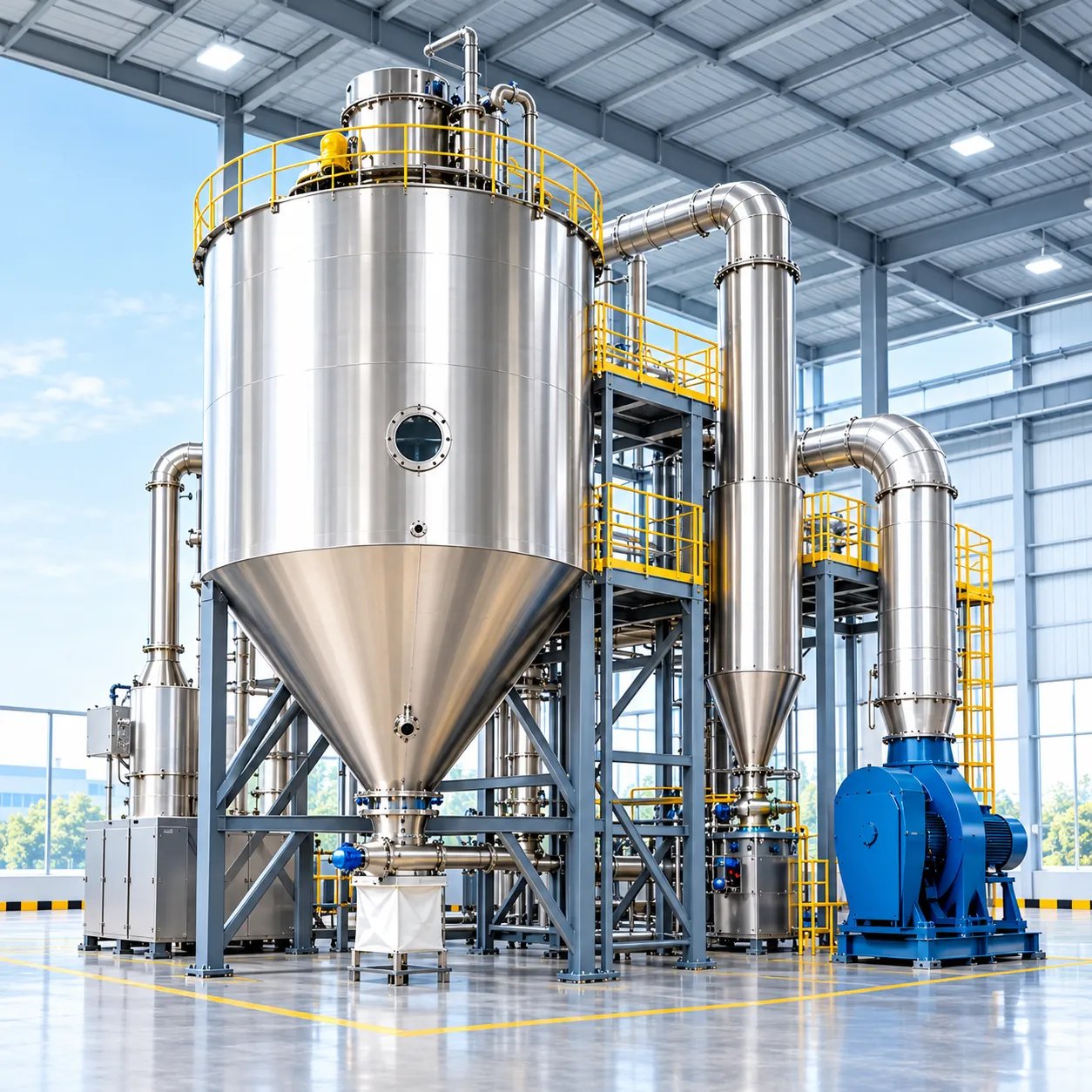
A pilot spray dryer is a compact, small-capacity spray drying plant that reproduces the same drying process used in a commercial tower, but at a scale suitable for development work, process trials and small-batch production. It converts a liquid feed, such as a solution, emulsion, suspension or slurry, into a dry, free-flowing powder in a single continuous step.
What separates a true pilot unit from a simple benchtop instrument is representativeness. A well-designed pilot spray dryer uses industrial-style atomizers, a stainless steel drying chamber with realistic geometry, controlled hot-air distribution and a proper powder recovery system. Because the droplets experience drying conditions similar to those inside a production tower, the data and powder produced on the pilot plant are far more meaningful for scale-up than results from a glassware laboratory unit.
At AKSH Engineering, pilot spray dryers are custom-built with water evaporation capacities from about 1 kg/hr up to 50 kg/hr, inlet air temperatures up to 350°C, and construction in SS304, SS316 or SS316L. They are, in effect, small versions of our full-scale industrial spray dryers, designed so that what you learn at pilot scale can be carried forward to the production design.
How a Pilot Spray Dryer Works
The working principle of a pilot spray dryer is identical to that of a commercial unit. The process happens in five closely linked stages:
- Feed preparation and pumping: The liquid feed is prepared at the target solids content and viscosity, then delivered to the atomizer by a variable-speed pump. Feed rate is one of the main levers for controlling outlet temperature and final moisture.
- Atomization: The feed is broken into millions of fine droplets, typically by a high-speed rotary disk atomizer or a two-fluid nozzle. Atomization determines the droplet size distribution and, therefore, much of the final particle size. You can explore the options in our atomization technologies range.
- Droplet drying: Inside the drying chamber, the droplets meet a controlled stream of hot air. Their enormous combined surface area allows moisture to evaporate within seconds. Evaporative cooling keeps the droplet temperature well below the inlet air temperature, which is why spray drying is suitable even for many heat-sensitive materials.
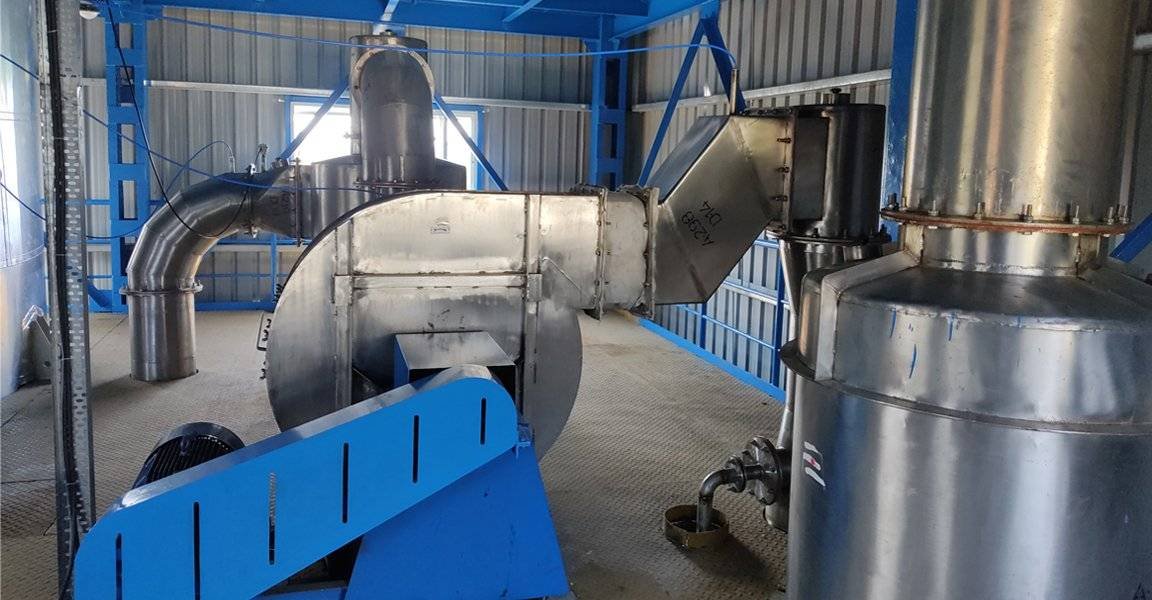
- Powder separation: The dried particles are separated from the exhaust air, usually by a high-efficiency cyclone, sometimes supported by a bag filter or wet scrubber, and collected in a sealed container.
- Exhaust and control: The cleaned air is exhausted, while a PLC with an HMI touchscreen monitors and logs inlet temperature, outlet temperature, airflow, feed rate and atomizer speed throughout the trial.
The choice of atomizer deserves special attention during pilot trials, because it shapes particle morphology, bulk density and flowability. If you are unsure which route suits your product, our comparison of rotary disc atomizers vs nozzle atomizers explains the trade-offs in detail. Many AKSH pilot units are supplied with interchangeable atomization so both routes can be tested on the same machine.
Lab vs Pilot vs Production Spray Dryers
It helps to see the pilot spray dryer as the middle step of a three-stage journey. Each scale answers a different question:
| Aspect | Lab Spray Dryer | Pilot Spray Dryer | Production Spray Dryer |
|---|---|---|---|
| Main question answered | Can this feed be spray dried at all? | How do we dry it reliably, and what will it cost? | How do we make it every day at volume? |
| Typical evaporation rate | Below 1 to 2 kg/hr | About 1 to 50 kg/hr | Hundreds to thousands of kg/hr |
| Construction | Often glass or light-gauge components | Industrial stainless steel, realistic chamber geometry | Full industrial plant with utilities |
| Atomization | Small two-fluid nozzle | Rotary disk and/or industrial nozzles | Rotary disk, pressure or two-fluid nozzles |
| Output | Grams of powder | Kilograms of representative powder | Commercial tonnage |
A lab spray dryer is excellent for early screening, but the droplet sizes, residence times and air patterns are very different from those in a commercial tower. For a deeper side-by-side look, read our article on how a pilot spray dryer differs from a lab spray dryer in scale and features.
Why a Pilot Spray Dryer Matters in Product Development
Skipping the pilot stage can look like a way to save time and budget. In practice, it often leads to the opposite: production plants that cannot reach specification, months of troubleshooting, and costly modifications after commissioning. Here is why the pilot stage matters so much.
1. It Proves Feasibility Before Major Capital Investment
A commercial spray drying plant is a significant capital investment. Pilot trials confirm, using real equipment and real feed, that your formulation can be dried to the required moisture, yield and quality. Questions such as whether the product sticks to the chamber wall, whether it degrades at the planned temperatures, or whether the powder caramelizes or cakes are answered before the purchase order is placed, not after.
2. It Defines Your Critical Process Parameters
Product quality in spray drying is controlled by a handful of interacting variables: inlet and outlet air temperature, feed solids and viscosity, feed rate, atomizer speed or nozzle pressure, and airflow. A pilot spray dryer allows these to be varied systematically, often through a structured design-of-experiments approach, to identify the operating window that consistently produces in-specification powder. These parameters then become the basis for the production plant's design and its standard operating procedures.
3. It Lets You Engineer Particle Size and Powder Properties
Particle size distribution affects solubility, dispersibility, flowability, bulk density, dusting and even bioavailability. On a pilot plant, you can see how changes in atomization and drying conditions shift these properties and lock in the combination that meets your target. Our dedicated guide explains how pilot spray dryers help achieve consistent particle size across batches.
4. It Reduces Development Cost and Material Waste
High-value ingredients such as APIs, enzymes, probiotics, specialty proteins and flavors are expensive. Because pilot spray dryers can run meaningful trials with only a few liters of feed and achieve high powder recovery, each experiment consumes far less material than a trial on a production tower. Fewer failed batches, less downtime on the main plant and faster decisions all add up to significant savings. We explore the economics further in how pilot spray dryers reduce product development costs.
5. It Produces Real Samples for Customers and Regulators
A pilot spray dryer produces kilograms, not grams, of powder that is representative of commercial output. These samples can be used for stability and shelf-life studies, packaging trials, sensory evaluation, customer sampling, toxicology studies and regulatory submissions. For many start-ups and specialty manufacturers, the pilot plant also serves as a small-batch production line for launch volumes and niche products.
6. It De-Risks Scale-Up
The most valuable output of a pilot campaign is reliable scale-up data: evaporation rate, heat consumption, yield, powder characteristics and the parameter window that works. Engineers use this data to size the production drying chamber, air heater, fans, atomizer and powder handling system with confidence. Our article From Lab to Line: How to Use Pilot Spray Dryers for Seamless Scale-Up walks through this process step by step.
7. It Allows Safe Testing of Sensitive and Solvent-Based Products
Heat-sensitive materials such as probiotics, vaccines and natural extracts need gentle drying, while solvent-based feeds need an inert, explosion-safe environment. Pilot units can be configured as open-loop systems for water-based feeds or as nitrogen-purged closed-loop systems with solvent recovery for organic solvents. The same principle is used at production scale in our closed-loop spray dryer systems, so the pilot results remain relevant when you scale up.
Industries That Rely on Pilot Spray Dryers
Because spray drying is used across so many sectors, pilot spray dryers support a wide range of development work:
- Pharmaceuticals and biotech: APIs, amorphous solid dispersions, inhalable powders, micro-encapsulated drugs, enzymes, proteins and vaccine formulations.
- Food and dairy: Milk and whey powders, coffee and tea extracts, flavors, colors, fruit and vegetable powders, egg powder and instant beverages.
- Nutraceuticals: Herbal extracts, vitamins, probiotics, plant proteins and functional ingredients.
- Chemicals and advanced materials: Catalysts, pigments, dyes, ceramic powders, agrochemicals and lithium battery materials.
- Academic and contract research: Universities, research institutes and contract development organizations that test many products for multiple clients.
What to Look for When Choosing a Pilot Spray Dryer
Not every small spray dryer delivers useful development data. When evaluating a pilot unit, consider these points:
- Representative design: The chamber geometry, air distribution and atomization should reflect industrial practice so results can be scaled.
- Atomization flexibility: Interchangeable rotary disk and nozzle options let you test the route best suited to your product.
- Right capacity: Choose an evaporation rate large enough to produce representative samples, but small enough to conserve costly feed.
- Material of construction and finish: SS316L with sanitary, polished internal surfaces is preferred for pharmaceutical and food products, along with easy cleaning.
- High recovery: An efficient cyclone and smooth chamber walls minimize product loss during short trials.
- Automation and data logging: PLC and HMI controls with recorded trends make trials repeatable and simplify technology transfer to production.
- Solvent capability: If you work with organic solvents, insist on a closed-loop nitrogen design with explosion-proof components.
- Manufacturer support: Choose a partner who can also design and build your production plant, so pilot and production equipment follow the same engineering approach.
Pilot spray dryers are one part of a broader portfolio of thermal processing equipment. You can compare them with flash, rotary and fluid bed dryers in our complete drying systems category.
A Typical Pilot Spray Drying Trial Workflow
A well-run pilot campaign generally follows a structured sequence:
- Define targets: Agree on the required moisture, particle size, bulk density, solubility and yield.
- Characterize the feed: Measure solids content, viscosity, pH and heat sensitivity.
- Run baseline trials: Start with conservative temperatures and feed rates to establish a stable operation.
- Vary key parameters: Adjust inlet and outlet temperatures, atomization and feed concentration to map the operating window.
- Analyze the powder: Test each batch in the laboratory and compare the results with the targets.
- Confirm repeatability: Repeat the best conditions to prove the process is consistent.
- Compile scale-up data: Record evaporation rate, energy use and yield as the design basis for the production plant.
Why Choose AKSH Engineering for Your Pilot Spray Dryer
AKSH Engineering Systems Pvt. Ltd., based in Ahmedabad, Gujarat, has been designing and manufacturing spray drying, evaporation and turnkey drying plants since 2013, with more than 100 installations. Our team of technocrats brings over 100 years of combined experience. Our pilot spray dryers are built with the same engineering discipline as our production plants, and they offer:
- Custom-sized evaporation capacities from 1 to 50 kg/hr
- Interchangeable rotary disk and two-fluid nozzle atomization
- SS304, SS316 and SS316L construction with sanitary finishes
- Electric or gas-fired air heating with inlet temperatures up to 350°C
- Open-loop or closed-loop nitrogen configurations for solvent-based feeds
- PLC and HMI automation with digital data logging
Conclusion
A pilot spray dryer is far more than a small version of a production machine. It is the bridge between a promising formulation and a profitable product. By proving feasibility, defining process parameters, engineering powder properties, cutting development costs and producing reliable scale-up data, it removes much of the risk from one of the most critical steps in product development.
If you are planning a new powder product or preparing to scale up an existing one, talk to the AKSH Engineering team. We will help you specify a pilot spray dryer that fits your materials, your budget and your path to commercial production.