
Ask any plant operator what they dislike most about fine powders and the answers are usually the same: dust clouds at the bagging station, product caked in hoppers, powders that float on water instead of dissolving, and a fine film of material on every surface in the room. Fine powders can be chemically perfect and still be a nightmare to handle, sell and use. That is why so many food, pharmaceutical, chemical and agrochemical products are not sold as fine powders at all, but as granules.
Granulation deliberately builds small particles into larger, porous agglomerates that flow, dissolve and dose far better than the original powder. Among the technologies that can do this, the fluid bed stands out because it combines particle growth and drying in one controlled environment. This article explains the science behind granulation, why fluid beds are so well suited to producing dust-free powders, and what engineers should consider when specifying a fluid bed granulation and drying system.
Why Fine Powders Cause So Many Problems
As particles get smaller, the forces between them begin to dominate over gravity. Van der Waals attraction, electrostatic charge and moisture films make fine particles cling to each other and to equipment. Particles below roughly 50 microns are especially prone to this behavior. The practical consequences include:
- Poor flowability: Cohesive powders bridge and rathole in hoppers, feed unevenly into packing machines and cause fill-weight variation.
- Dusting and product loss: Fines become airborne during transfer and packing, wasting product and contaminating the workplace.
- Health and safety risks: Airborne dust can be an inhalation hazard, and many organic dusts are combustible, creating a dust explosion risk.
- Segregation: In powder blends, fine and coarse components separate during handling, so the composition at the bottom of a bag differs from the top.
- Poor reconstitution: Fine food and beverage powders often form lumps when added to water, because the surface wets and seals dry powder inside.
- Caking: High surface area means more contact points, so fine powders absorb moisture and cake more easily.
Granulation tackles these problems at their root by changing the particle size and structure of the product.
What Granulation Actually Does
Granulation is size enlargement: binding many small primary particles into larger granules, typically in the range of a few hundred microns to a few millimeters. Unlike simple compaction, wet granulation in a fluid bed produces porous agglomerates with a large internal surface. This structure gives granules their characteristic advantages: they flow like sand, they release very little dust, and water can penetrate their pores quickly so they disperse and dissolve readily.
The internal structure is the key. A dense, hard granule might flow well but dissolve slowly. A loose, open agglomerate dissolves instantly but may break during transport. Good granulation design finds the balance for each product.
The Physics of Fluidization
A fluid bed works by passing gas upward through a bed of particles resting on a perforated distributor plate. As gas velocity increases, the bed passes through distinct regimes:
- Fixed bed: At low velocity, gas simply percolates through the gaps between stationary particles.
- Minimum fluidization: At a certain velocity, the upward drag on the particles balances their weight. The bed expands slightly and begins to behave like a liquid.
- Bubbling fluidization: Above minimum fluidization, excess gas passes through the bed as bubbles. These bubbles create vigorous mixing, which is ideal for uniform heat transfer and particle contact.
- Entrainment: At still higher velocities, fine particles are carried out of the bed with the gas, which is why fluid beds are designed with an expanded freeboard and filters or cyclones to catch fines.
In the bubbling regime, every particle is surrounded by moving gas. Heat and mass transfer are fast and uniform, and particles collide constantly with each other. These collisions are exactly what granulation needs.
The Mechanisms of Granule Growth
Modern granulation science describes wet granulation as a combination of three groups of rate processes. Understanding them helps explain why fluid bed parameters matter so much.
1. Wetting and nucleation
A liquid binder, which can be water, a solution of the product itself, or a polymer such as starch, maltodextrin or PVP, is sprayed onto the fluidized powder. Each binder droplet lands on particles and wets them, forming small nuclei held together by liquid bridges. Droplet size relative to particle size, and how quickly the liquid spreads and penetrates the powder, determine the size and number of nuclei.
2. Growth and consolidation
Wet nuclei collide with other particles and nuclei. If the liquid at the contact point can absorb the collision energy, the particles stick and the granule grows. Collisions also gradually compact granules, reducing their porosity. In a fluid bed, collision energies are relatively gentle compared with high-shear mixers, so granules stay more porous, which is why fluid bed granules are prized for instant solubility.
3. Drying and bridge solidification
Here the fluid bed shows its unique advantage. The same hot gas that fluidizes the bed also evaporates the binder liquid. As the liquid dries, dissolved binder or product solidifies into solid bridges that lock the granule structure in place. Growth and drying happen at the same time, so the operator can balance them: more spray or lower temperature favors growth, while less spray or higher temperature favors drying and limits growth.
4. Attrition and breakage
Not all collisions build granules. Weak or very dry granules can break, and fragile edges wear off as fines. Controlling air velocity, bed depth and binder strength keeps breakage low enough that the net result is growth toward the target size.
Why Fluid Beds Are the Preferred Route to Dust-Free Powders
Simultaneous granulation and drying
Other granulators, such as high-shear mixers, produce wet granules that must then be dried in a separate step. The fluid bed combines both in one vessel, saving handling, space and time, and avoiding the damage that transferring wet granules can cause.
Gentle handling and porous structure
Because particles are supported by air rather than crushed by blades, fluid bed granules tend to be open and porous. This favors fast dispersion and dissolution, which is particularly valuable for instant beverages, dairy powders and soluble agrochemical formulations.
Uniform temperature and moisture
Intense mixing in the fluidized state keeps temperature uniform throughout the bed, avoiding hot spots. Evaporative cooling keeps product temperature well below inlet air temperature while moisture is still present, which protects heat-sensitive ingredients.
Built-in fines control
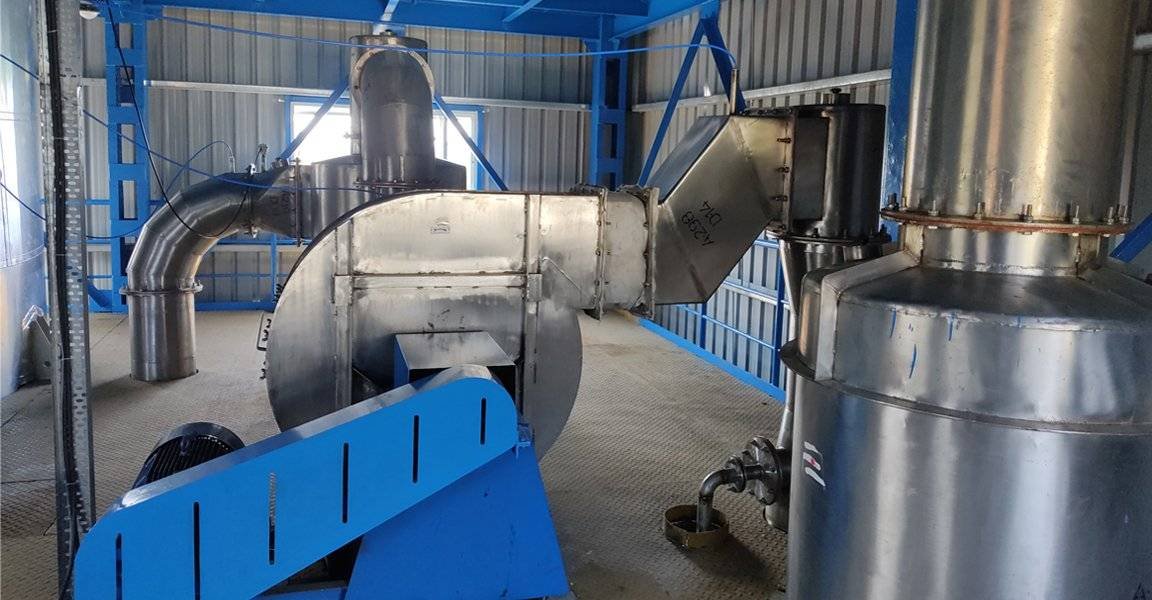
Fines carried out of the bed are captured by cyclones or filters and can be returned to the granulation zone, where they become part of new granules. The finished product therefore contains far fewer fines than the feed. The dust collection and pollution control systems attached to the fluid bed are an integral part of the granulation process, not just an emission control device.
Flexibility
The same fluid bed platform can be configured for drying, cooling, agglomeration and coating. AKSH's continuous fluid bed dryers can be built as standalone dryers, combined drying and cooling units, or with agglomeration and top-spray coating capability.
Before and After: How Granulation Changes Powder Properties
| Property | Fine powder (typical) | Fluid bed granules (typical) |
|---|---|---|
| Particle size | Often below 50 to 100 microns | Often a few hundred microns up to 1 to 2 mm |
| Flowability | Poor to fair, prone to bridging | Good to excellent, free-flowing |
| Dust generation | High | Low |
| Wettability and dispersion | Slow, forms lumps | Fast, sinks and disperses |
| Segregation in blends | Significant | Reduced, components locked in granules |
| Bulk density | Varies, often low and variable | Controllable through process settings |
| Caking tendency | Higher | Lower |
Key Process Parameters in Fluid Bed Granulation
Granule size, density and moisture depend on a handful of interacting variables. Engineers typically map these in trials before fixing a production recipe.
- Binder spray rate: Higher rates increase bed wetness and growth; too high and the bed can collapse into wet lumps.
- Atomizing pressure and droplet size: Smaller droplets produce smaller, more uniform granules; larger droplets favor faster growth and larger granules.
- Inlet air temperature and humidity: These control evaporation rate and therefore the balance between wetting and drying.
- Fluidizing air velocity: Must be high enough for good mixing but not so high that fines are blown out or granules break.
- Binder type and concentration: Affects bridge strength, granule hardness and dissolution behavior.
- Bed temperature and residence time: In continuous systems, residence time is set by bed geometry, weir height and feed rate.
Accurate, repeatable control of these parameters is what separates consistent granules from variable product. PLC-based control with logged trends, such as our instrumentation, automation and controls packages, makes recipes reproducible from batch to batch and shift to shift.
A Typical Fluid Bed Granulation Sequence
- Feeding: Fine powder enters the fluid bed, either as a batch charge or continuously through a feeder.
- Preheating and fluidization: Conditioned hot air fluidizes and warms the bed.
- Binder spraying: Binder liquid is atomized over the bed, wetting particles and forming nuclei.
- Growth: Collisions in the bubbling bed build granules toward the target size, while fines from the filter are returned to the bed.
- Drying: Spraying stops or the granules move into a drying zone, where moisture is reduced to the final specification.
- Cooling: A cooling zone brings granules to a stable temperature to prevent caking in packaging.
- Classification: Granules are screened; oversize can be milled and fines recycled.
Fluid Beds and Spray Dryers: A Powerful Combination
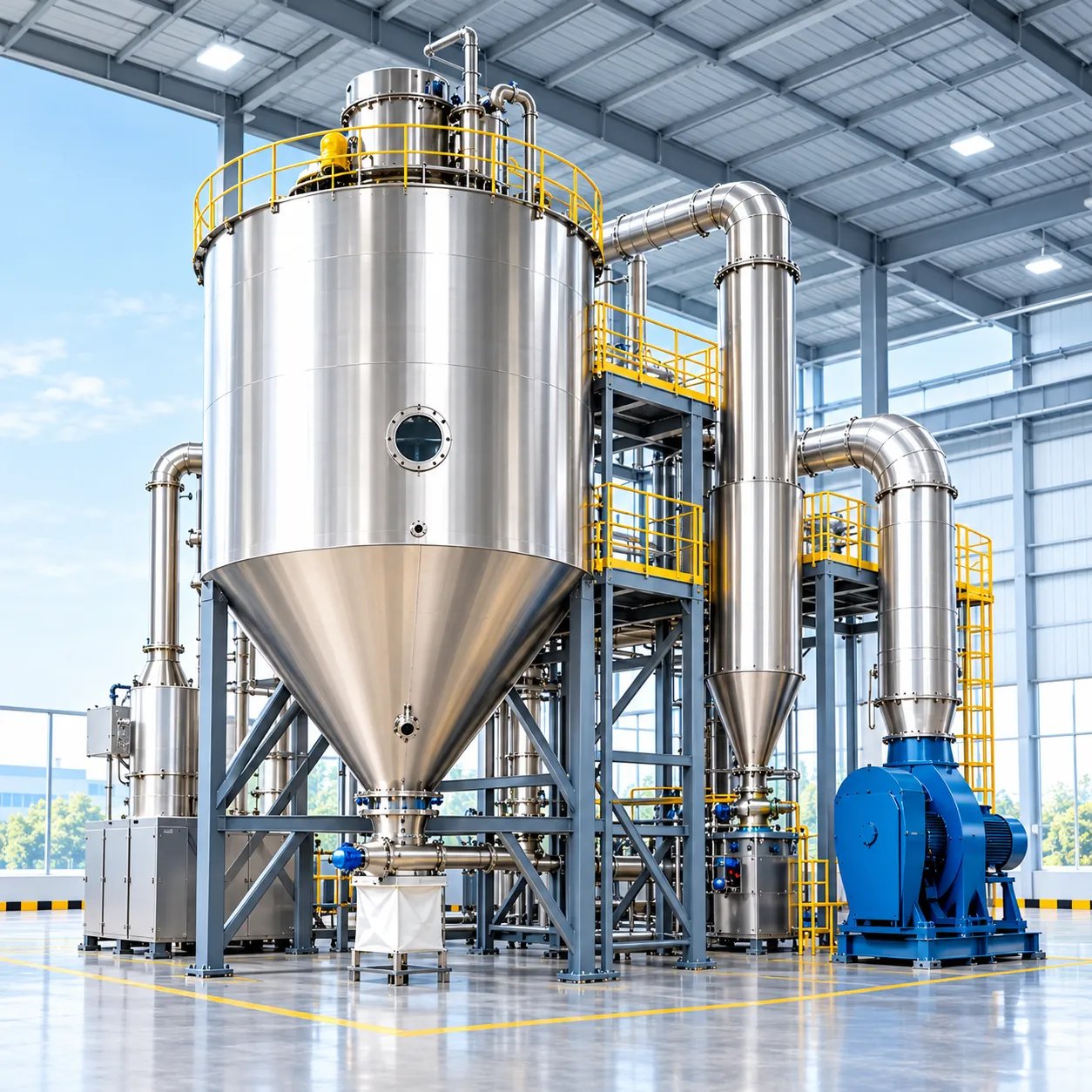
Many of the most familiar instant powders are made by combining spray drying with fluid bed agglomeration. In a multistage spray dryer, fine particles from the spray chamber are agglomerated and finished in an integrated or external fluid bed, producing dust-free, instantly soluble powders. This approach is widely used for dairy, infant nutrition and beverage powders, as explained in our article on why multistage spray dryers are ideal for infant formula manufacturing. For background on how particle size is controlled upstream, see how pilot spray dryers help achieve consistent particle size.
Industries That Depend on Dust-Free Granules
- Pharmaceuticals: Granules for tablet compression and capsule filling, where flow and content uniformity are critical.
- Food and beverages: Instant coffee, cocoa drinks, soups, sweeteners, flavors and dairy powders that must dissolve without lumps.
- Agrochemicals: Water-dispersible granules that dissolve quickly in spray tanks while minimizing operator exposure to dust.
- Detergents and chemicals: Free-flowing granules that dose consistently and do not cake.
- Fertilizers and specialty minerals: Granular forms that spread evenly and store well.
Recovering Fines Efficiently
Even the best granulation produces some fines. How they are captured and returned determines both product yield and workplace dust levels. Cyclones remove the bulk of particles, while bag filters capture the finest fraction. Our comparison of cyclone separators, bag filters and scrubbers covers the trade-offs, and our guide to improving powder recovery in industrial dryers offers practical tips that apply equally to fluid bed systems.
Choosing the Right Drying Technology
Fluid beds are ideal for particulate, granular and crystalline materials that can be fluidized. They are not the right first step for liquids, which need spray drying, or for sticky pastes, which suit spin flash dryers. If you are deciding between these technologies, our spray vs flash vs fluid bed comparison chart is a helpful starting point, and our complete range is available under drying systems.
Why AKSH Engineering
AKSH Engineering Systems Pvt. Ltd., based in Ahmedabad, Gujarat, has designed and manufactured drying systems since 2013, with more than 100 installations. Our continuous fluid bed dryers are custom-built from about 50 kg/hr to 25,000+ kg/hr, in SS304, SS316L, duplex stainless steel, Hastelloy or carbon steel, with heating by steam, thermic fluid, gas, electric heaters or waste heat recovery. They can be configured for drying, cooling, agglomeration and top-spray coating, with PLC and HMI control, and hygienic finishes with optional CIP for food and pharmaceutical duties. AKSH also offers material trials on a pilot fluid bed facility in Ahmedabad to establish fluidization velocities, temperatures and scale-up data. Our team of technocrats brings over 100 years of combined experience to every project.
Conclusion
Dusty powders are not just an inconvenience; they cost yield, compromise safety and frustrate customers. Granulation solves these problems by building fines into porous, free-flowing granules, and the fluid bed is uniquely suited to the task because it wets, grows, dries and cools particles in one controlled, gentle environment. With the right binder, spray conditions and air management, a fluid bed turns a difficult powder into a product that flows, doses and dissolves the way the market expects.
If you are struggling with dust, poor flow or slow solubility in your powders, talk to the AKSH Engineering team. We will help you evaluate fluid bed granulation and drying for your material and design a system that delivers consistent, dust-free product.