
A conventional single-stage spray dryer asks the drying chamber to do everything at once: evaporate the water, bring the powder down to its final moisture and deliver it ready for packing. For many products that works well. For others, especially heat-sensitive, sticky or instant powders, it forces a compromise between moisture and quality. The multistage spray dryer removes that compromise by sharing the drying work between the spray chamber and one or more fluid beds, and that simple idea has made it a workhorse in industries as different as dairy, coffee, herbal extracts and detergents.
This article surveys where multistage spray dryers are used and why. After a brief look at how the technology works, we go industry by industry through food, dairy, pharmaceutical and nutraceutical, and chemical applications, explaining what each sector gains from multistage drying and what to consider when specifying a plant.
How a Multistage Spray Dryer Works
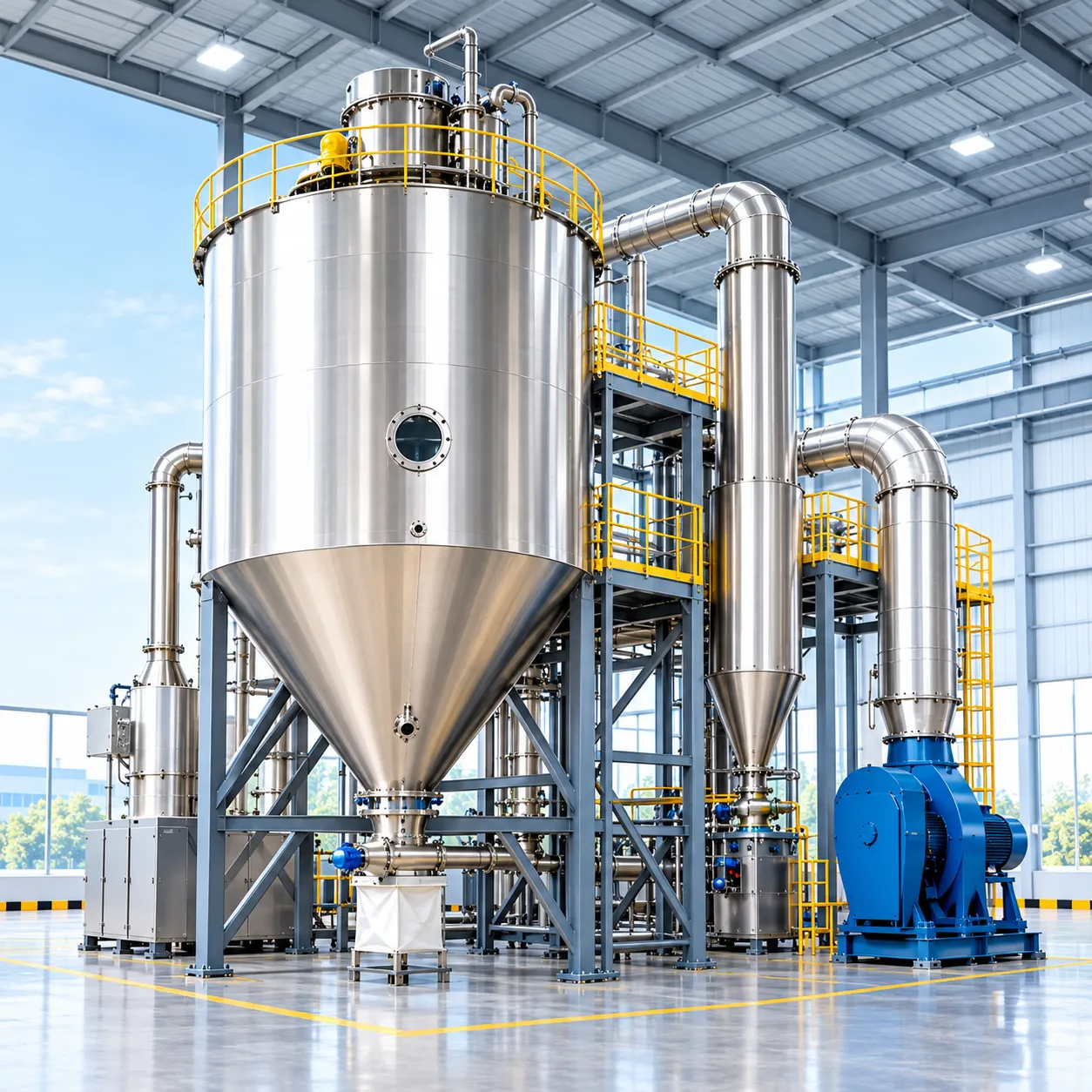
A multistage spray dryer splits drying into two or three distinct steps:
- Primary spray drying: the concentrated feed is atomized by high-pressure nozzles or a rotary disk into hot air in the main chamber. Most of the water evaporates here, but the particles leave the spray zone with a controlled amount of residual moisture.
- Integrated fluid bed drying: the slightly moist particles fall onto a fluid bed built into the base of the chamber. Low-temperature air completes moisture removal gently. Because the particle surfaces are still slightly tacky, they collide and bind into porous agglomerates.
- External fluid bed cooling and conditioning: the powder moves to an external vibrating fluid bed where ambient or chilled air cools it before packing, which helps prevent caking.
Because final drying happens in the fluid bed rather than the spray chamber, the spray chamber can run with a lower exhaust air temperature. That reduces the thermal load on the product and improves energy efficiency. According to AKSH product data, operating with higher inlet and lower exhaust temperatures can cut specific steam and fuel consumption by up to 15 to 25 percent compared with single-stage drying, depending on the product and design. The fluid bed principles involved are explored in the science of granulation and fluid bed dryers.
What Multistage Drying Offers Every Industry
Before looking at specific sectors, it helps to summarize the benefits that make multistage designs attractive across the board:
- Agglomerated, instant powders: porous granules that wet, sink and disperse quickly without lumping.
- Low dust: agglomeration and fines recycling reduce the proportion of very fine particles.
- Gentler heat treatment: lower exhaust temperatures limit thermal exposure, helping preserve color, flavor and active compounds.
- Better handling of sticky feeds: fluidization reduces wall deposits and lump formation with hygroscopic or high-fat products.
- Tighter moisture control: the fluid bed provides a second, independently controlled drying step.
- Energy savings: more water is removed at favorable conditions, lowering specific energy use.
Applications in the Dairy Industry
Dairy is the sector where multistage spray drying is most firmly established, and for good reason. Milk-based powders are heat-sensitive, contain fat and lactose that can become sticky, and are often expected to reconstitute instantly.
Typical Dairy Products
- Skimmed milk powder and whole or fat-filled milk powder
- Whey powder and whey protein concentrates
- Infant and growing-up formula bases
- Dairy creamers and milk-based beverage mixes
Why Multistage Suits Dairy
Instant milk powders need agglomerated particles that dissolve in cold or warm water without lumps, which the integrated fluid bed delivers. Lower exhaust temperatures help limit heat damage to milk proteins and reduce browning. Fat-containing powders, which are prone to sticking, benefit from fluidization in the final stage. Dairy plants also demand strict hygiene, so they are typically built with polished stainless steel surfaces and integrated automatic cleaning-in-place systems.
Dairy feeds are almost always concentrated before drying, because removing water in an evaporator uses far less energy than removing it in a spray dryer. Pairing the dryer with industrial evaporators is therefore standard practice. One of the most demanding dairy applications, infant formula, is covered in detail in our article on why multistage spray dryers suit infant formula manufacturing.
Applications in the Food and Beverage Industry
Beyond dairy, food and beverage producers use multistage dryers wherever consumers expect a powder to dissolve quickly and look and taste like the original product.
Typical Food Products
- Instant coffee and tea extracts
- Malt extracts and malted beverage powders
- Cocoa and chocolate drink mixes
- Fruit juice and vegetable powders
- Hydrolyzed proteins, soup and sauce bases, and flavor powders
Why Multistage Suits Food
Instant beverages depend on agglomeration for good wettability and an attractive granular appearance. Fruit and sugar-rich powders are hygroscopic and sticky, so the gentle fluid bed finish reduces wall buildup and caking. Lower thermal stress helps retain natural color and aroma, which are central to product quality. For a broader view of food applications, see spray drying in the food industry: benefits and common uses.
Applications in Pharmaceuticals and Nutraceuticals
Pharmaceutical and nutraceutical manufacturers use multistage spray drying for products that are heat-sensitive, hygroscopic or need specific flow and dissolution properties.
Typical Products
- Herbal and botanical extracts
- Vitamin premixes and nutraceutical formulations
- Certain antibiotics and fermentation-derived ingredients
- Protein and peptide powders
Why Multistage Suits Pharma and Nutraceuticals
Many plant extracts are highly hygroscopic and become sticky at the exhaust temperatures a single-stage dryer would need. Leaving residual moisture in the chamber and finishing in the fluid bed avoids this. Agglomerated powders flow better into capsule fillers, sachet machines and tablet presses, and the lower thermal exposure helps protect active compounds.
Pharmaceutical installations add requirements for cleanability, filtered process air, documented control and, in many cases, electronic records. These are features associated with a hygienic spray dryer design, including SS316L mirror-polished contact surfaces and PLC-SCADA systems that support validation. Our article on how spray dryer plants transform pharmaceutical and nutraceutical production discusses the sector in more depth.
Applications in the Chemical Industry
Chemical manufacturers are sometimes surprised to find multistage spray dryers in their sector, since the technology is closely associated with food. Yet the same benefits of dust reduction, controlled moisture and better flow are valuable for many chemical powders.
Typical Chemical Products
- Resins and polymer powders
- Detergent and cleaning product components
- Dyes and colorants
- Organic salts and specialty chemical intermediates
Why Multistage Suits Chemicals
Dusty chemical powders create handling problems, product losses and, for some materials, safety concerns. Agglomeration in the fluid bed produces coarser, low-dust granules that are easier to convey, dose and dissolve. Heat-sensitive resins and polymers benefit from the lower exhaust temperature, which can help avoid softening or degradation. Precise final moisture control is also important for products that cake or react when stored with too much moisture.
Industry Comparison at a Glance
| Industry | Typical Products | Main Reason for Multistage Drying | Key Design Considerations |
|---|---|---|---|
| Dairy | Milk powders, whey, formula bases, creamers | Instant solubility, gentle heat treatment, fat handling | Hygienic design, CIP, evaporator integration |
| Food and beverage | Instant coffee, malt, cocoa mixes, fruit powders | Agglomeration, aroma and color retention, anti-caking | Sticky feed handling, fines return, dehumidified air where needed |
| Pharma and nutraceutical | Herbal extracts, vitamins, antibiotics, proteins | Hygroscopic feeds, flowability, protection of actives | SS316L finishes, filtered air, validated controls |
| Chemical | Resins, detergents, dyes, organic salts | Low dust, better flow, moisture control | Material of construction, dust and emission control, safety |
Key Design Considerations Across Industries
Atomization
Multistage dryers can use high-pressure nozzles or high-speed rotary disks. Nozzles are often preferred where coarser primary particles help build larger agglomerates, while rotary atomizers suit high-capacity or more variable feeds. The choice depends on the product and should be confirmed by trials.
Capacity and Heating
AKSH multistage spray dryers are custom sized from about 50 kg/hr to 10,000+ kg/hr water evaporation, with heat supplied by steam radiators, direct or indirect gas firing, or thermic fluid. The heat source is chosen to suit product requirements, site utilities and fuel costs.
Fluid Bed Configuration
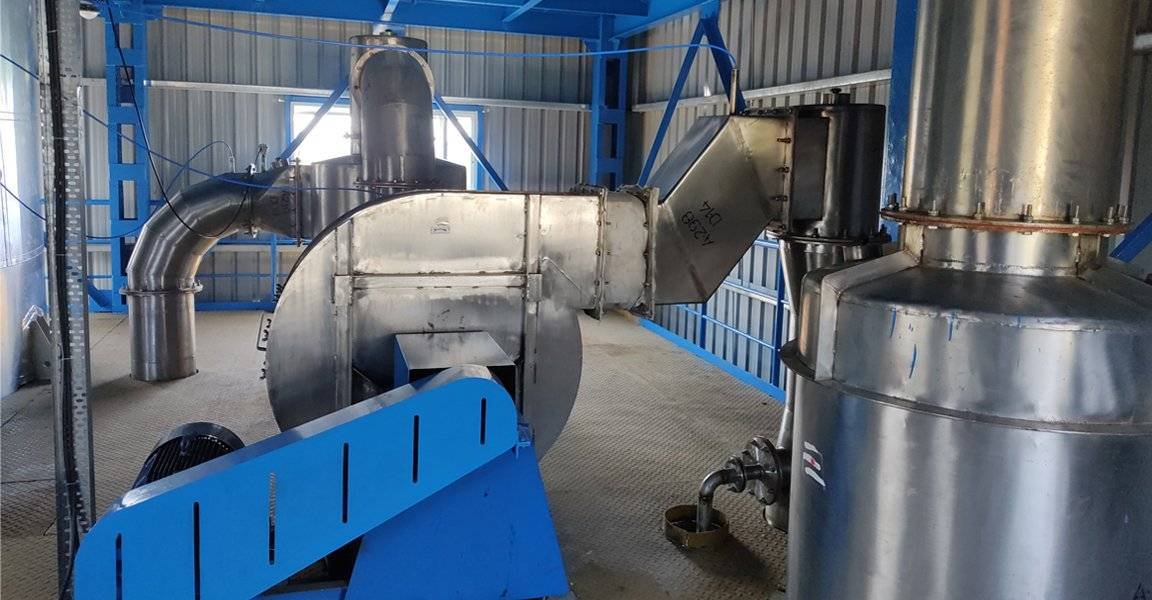
The integrated bed provides final drying and agglomeration, while an external vibrating fluid bed cools and conditions the powder. Some processes add lecithin coating or other treatments in the fluid bed stage. Standalone continuous fluid bed dryers use the same fluidization principles and are also used independently for granular materials.
Fines Management
Fine particles collected in cyclones or bag filters are often returned to the atomization zone or fluid bed so they become part of agglomerates rather than leaving as dust. The fines return arrangement has a strong influence on agglomerate size and powder appearance.
Materials of Construction and Hygiene
AKSH builds multistage systems in SS304, SS316 and SS316L, with sanitary food and pharma grade options. Hygienic designs can include automated CIP spray nozzles, retractable cleaning devices and polished SS316L surfaces.
Automation
With several drying stages and air streams to balance, automation is essential. AKSH multistage dryers use fully automatic PLC and SCADA control with recipe management, so each product can be run with its own validated settings.
When a Single-Stage Dryer Is Still Enough
Multistage drying is not always necessary. Non-sticky products that do not need agglomeration, such as many inorganic chemicals, effluent salts or fine powders destined for further processing, are often dried economically in a single-stage spray dryer. The decision usually comes down to whether the product needs instant properties, low dust, gentle treatment or better handling of stickiness. If none of these apply, a simpler plant may be the better investment. Pilot trials are the most reliable way to decide.
Planning a Multistage Spray Drying Project
Whatever the industry, a multistage project tends to follow a similar path from idea to operating plant:
- Define the powder: moisture, particle and agglomerate size, bulk density, solubility or wettability, dust limits and packaging requirements.
- Characterize the feed: solids content after concentration, viscosity, fat or sugar content, heat sensitivity and stickiness behavior.
- Run trials: confirm the residual moisture that can be left in the chamber without wall deposits, and how the fluid bed agglomerates and dries the powder.
- Size the system: calculate the evaporation load, air flows and heat duty for the chamber and each fluid bed, and design the fines return.
- Specify hygiene and safety: choose materials, surface finishes, cleaning systems and, where relevant, explosion protection and emission control.
- Integrate upstream and downstream: match the dryer to the evaporator, feed preparation, sieving and packing lines.
- Commission and optimize: establish product recipes in the control system and fine-tune the balance between chamber and fluid bed drying.
Emerging Applications
The same strengths that serve dairy and coffee are being applied to newer product categories. Plant-based protein powders, which can be sticky and need good dispersibility in beverages, are one example. Probiotic carriers, specialty sweeteners and clean-label flavor powders are others, where gentle treatment and instant properties add commercial value. As these markets grow, multistage spray drying is likely to remain a key tool for producers who want premium powder quality at efficient operating cost.
Why AKSH Engineering
AKSH Engineering Systems Pvt. Ltd., based in Ahmedabad, Gujarat, has been designing and manufacturing spray drying and evaporation plants since 2013, with more than 100 installations delivered. Our team of technocrats, with over 100 years of combined experience, designs and manufactures in-house, so the spray chamber, fluid beds, atomization, CIP and automation are engineered as one system. We also build the evaporators, fluid bed dryers and supporting equipment that surround a multistage plant, and we export to customers outside India. You can explore our complete range of drying systems to see how multistage drying fits alongside other technologies.
Conclusion
Multistage spray dryers have earned their place across food, dairy, pharmaceutical and chemical manufacturing because they solve problems that single-stage drying handles poorly: sticky and hygroscopic feeds, heat-sensitive ingredients, dusty powders and products that must dissolve instantly. By separating primary drying from final drying, cooling and agglomeration, they deliver better powder quality and lower specific energy use at the same time. The right configuration depends on your product, so atomization, fluid bed design, fines management and hygiene should all be specified around your specific requirements.
If you are considering multistage spray drying for a new product or an upgrade, contact the AKSH Engineering team. We will help you assess whether a multistage design suits your product and specify a plant that meets your quality, capacity and hygiene goals.