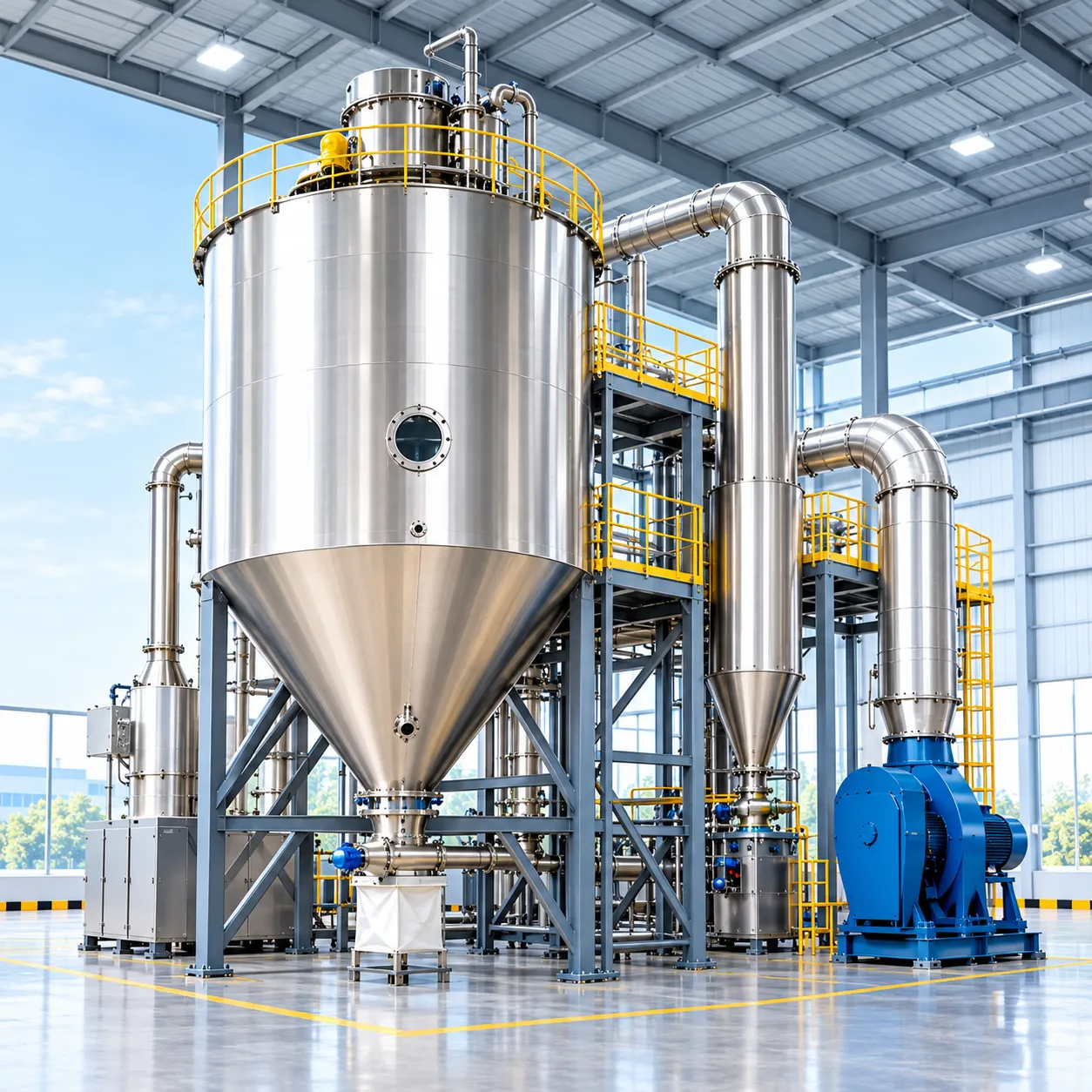
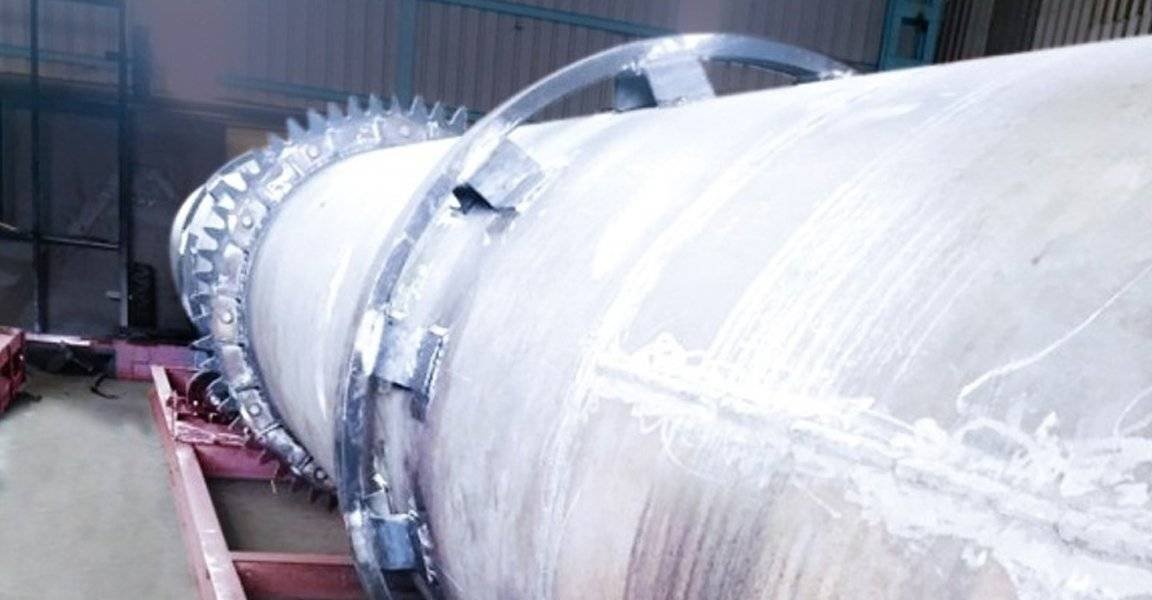
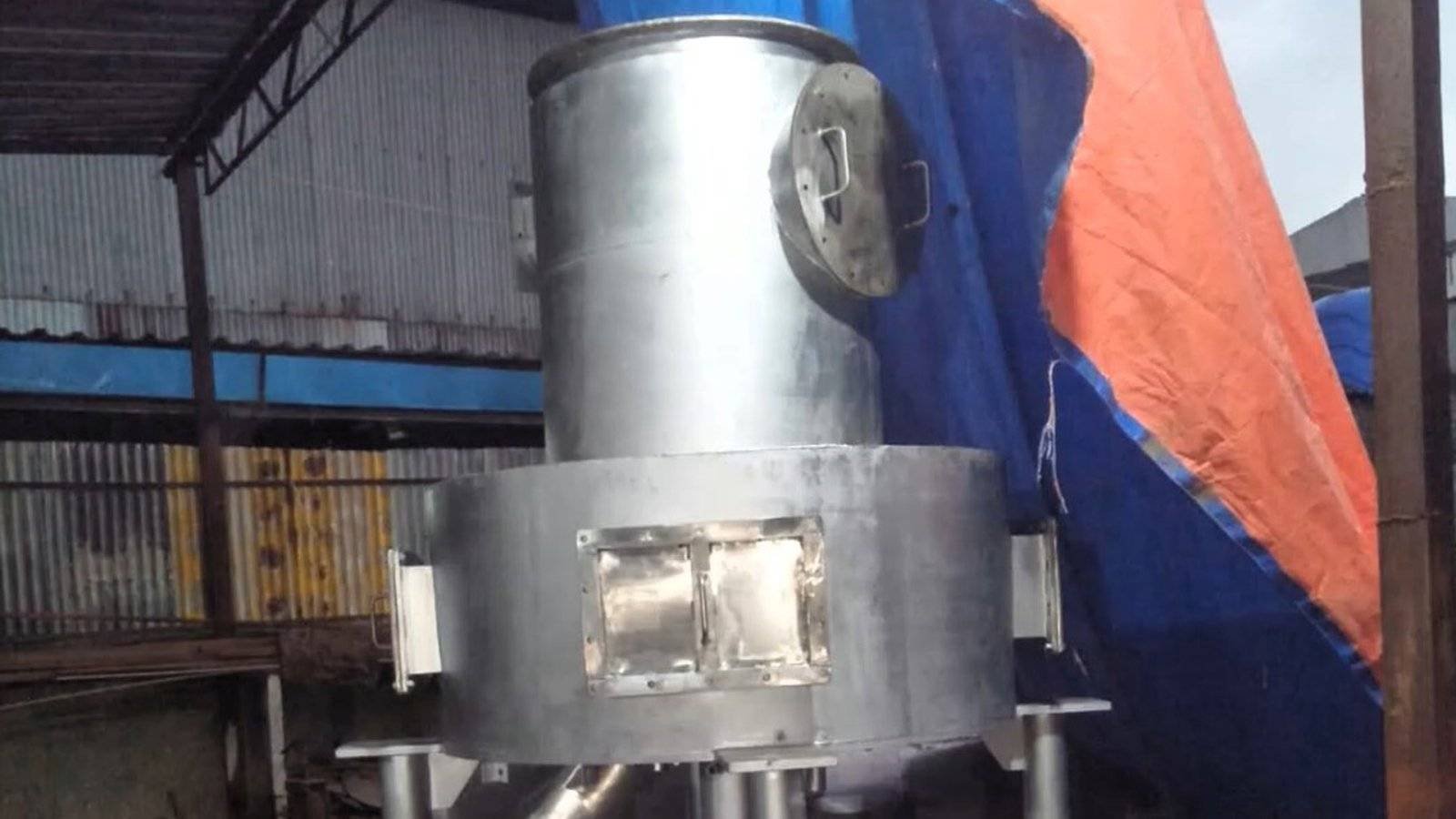
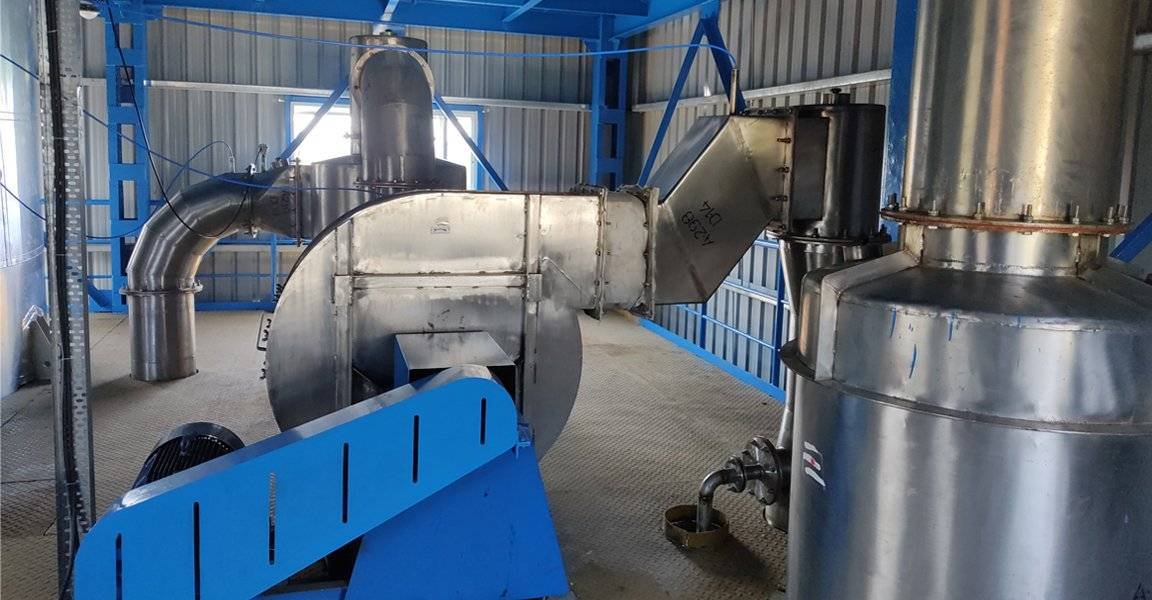

Spray drying is used in almost every process industry, so it is no surprise that spray dryers are built by a wide range of companies: multinational process engineering groups, laboratory instrument specialists, regional plant builders and focused niche suppliers. For a buyer researching the market for the first time, the number of names can be confusing, and many "top manufacturer" lists online rank companies on criteria that are never explained.
This article takes a different approach. It presents ten well-known spray dryer manufacturers from around the world, listed in alphabetical order rather than ranked, with neutral, general descriptions of where each is headquartered and what it is broadly known for. It then explains how the market is segmented and, most importantly, how to evaluate any manufacturer against your own needs. The aim is to help you build an informed shortlist, not to tell you which company to choose.
How the Spray Dryer Market Is Organized
Before looking at individual companies, it helps to recognize that "spray dryer manufacturer" covers several different kinds of business:
- Large process engineering groups that supply complete spray drying plants, often alongside evaporators, separators and other process equipment, for dairy, food, chemical and pharmaceutical customers worldwide.
- Laboratory and R&D equipment specialists that build benchtop and small pilot spray dryers for universities, research centers and product development teams.
- Specialist and regional plant builders that design and manufacture custom industrial spray dryers, frequently with strong engineering contact, application-specific know-how and competitive lead times.
Most buyers need a supplier from one of these segments, not all three. A pharmaceutical R&D lab and a dairy cooperative building a large powder plant will have very different shortlists. If you are new to the technology, our introduction to what an industrial spray dryer is and how it works is a useful starting point.
10 Well-Known Spray Dryer Manufacturers (Alphabetical)
The companies below are widely recognized in the spray drying field. Descriptions are deliberately general and based on publicly known information about each company's home country and broad areas of activity. Product ranges and corporate structures change over time, so always confirm current details directly with each company.
1. AKSH Engineering Systems Pvt. Ltd. (India)
Based in Ahmedabad, Gujarat, AKSH Engineering has designed and manufactured industrial spray dryers, evaporators, zero liquid discharge plants and turnkey drying systems since 2013, with more than 100 installations and exports to international markets. Its team of technocrats brings over 100 years of combined experience, and equipment is designed and manufactured in-house. The spray drying range spans pilot units through to large industrial spray dryers, along with hygienic, multistage and closed-loop designs for food, pharmaceutical, chemical and effluent applications.
2. BUCHI (Switzerland)
BUCHI is a Swiss laboratory equipment company widely known in research laboratories. In spray drying, it is best known for compact laboratory-scale spray dryers used by universities, pharmaceutical developers and food researchers for early-stage formulation and particle engineering work.
3. Dedert Corporation (United States)
Dedert is a US-based company known for evaporation and drying systems. Its activities include spray dryers and other drying technologies alongside evaporators, serving sectors such as food, chemical and environmental processing.
4. GEA Group (Germany)
GEA is a German process technology group headquartered in Düsseldorf and one of the most widely recognized names in industrial spray drying. Its spray drying activities trace back to the Danish Niro business, and it supplies spray drying plants for dairy, food, chemical and pharmaceutical applications worldwide, alongside a wide range of other process equipment.
5. Hosokawa Micron (Japan)
Hosokawa Micron is a Japanese powder and particle processing group. It is broadly known for size reduction, classification, mixing and other powder technologies, with drying among the processes covered by its wider portfolio and group companies.
6. Ohkawara Kakohki (Japan)
Ohkawara Kakohki is a Japanese manufacturer known as a specialist in spray drying and related drying and granulation equipment, supplying laboratory, pilot and industrial units for food, chemical and pharmaceutical customers, particularly in Asia.
7. ProCepT (Belgium)
ProCepT is a Belgian company focused on laboratory and pilot-scale process equipment for powder and particle research. Its range includes small-scale spray dryers used in pharmaceutical, food and materials development.
8. SPX FLOW (United States)
SPX FLOW is a US-headquartered process equipment company. In spray drying, it is associated with the Anhydro brand, which has its roots in Denmark and is known for dairy, food and chemical drying systems, as well as with other process technologies for liquid processing.
9. Tetra Pak (Switzerland / Sweden)
Tetra Pak, founded in Sweden and widely known for food packaging, also supplies food processing equipment and solutions. Its processing activities include equipment for dairy and food powder production as part of broader processing lines.
10. Yamato Scientific (Japan)
Yamato Scientific is a Japanese laboratory equipment manufacturer. Its range includes compact laboratory spray dryers used for research, small-batch trials and education, alongside other laboratory instruments.
Summary Table
| Company | Home Country | Broad Segment |
|---|---|---|
| AKSH Engineering Systems | India | Custom industrial and pilot spray dryers, evaporators, ZLD and turnkey plants |
| BUCHI | Switzerland | Laboratory-scale spray dryers and lab equipment |
| Dedert | United States | Evaporation and drying systems |
| GEA Group | Germany | Large-scale process engineering, including spray drying plants |
| Hosokawa Micron | Japan | Powder and particle processing technologies |
| Ohkawara Kakohki | Japan | Spray drying and granulation equipment |
| ProCepT | Belgium | Lab and pilot-scale particle processing equipment |
| SPX FLOW | United States | Process equipment, including Anhydro spray drying |
| Tetra Pak | Switzerland / Sweden | Food processing and packaging, including dairy powder processing |
| Yamato Scientific | Japan | Laboratory equipment, including lab spray dryers |
Many other capable manufacturers exist, including numerous regional plant builders in Europe, Asia and the Americas. A company not appearing here may still be an excellent fit for your project. Equally, a famous name is not automatically the right choice for a small specialty line, and a laboratory instrument maker is not the right partner for a large production tower. Treat the list as a map of the market rather than a verdict.
What Buyers Are Prioritizing Today
Across the market, buyer priorities have shifted in recent years, and these trends are useful when comparing manufacturers of any size:
- Energy efficiency: rising fuel and power costs have made heat recovery, multistage drying and accurate outlet temperature control standard topics in every specification.
- Hygiene and cleanability: food, infant nutrition and pharmaceutical buyers increasingly expect automated cleaning and sanitary design as a baseline.
- Automation and data: recipe management, trend logging and remote diagnostics are now expected even on mid-sized plants.
- Solvent and emissions control: closed-loop operation, solvent recovery and effective dust collection help plants meet tighter environmental rules.
- Water and effluent: spray drying as the final step in zero liquid discharge systems has grown in importance for chemical and textile producers.
A manufacturer's ability to address these priorities is often a better guide to fit than its size or brand recognition.
How to Evaluate a Spray Dryer Manufacturer
A list of names is only the start. The right manufacturer for you is the one whose capabilities match your product, scale, standards and budget. The following criteria apply to any supplier, large or small, domestic or overseas. For a more detailed buying process, see our guide to choosing the right spray dryer manufacturer for your business.
1. Match the Segment to Your Need
Decide first whether you need laboratory, pilot or production equipment. Laboratory spray dryers answer feasibility questions with grams of powder; pilot units produce representative kilograms and scale-up data; production plants make commercial tonnage. Our comparison of how pilot spray dryers differ from lab spray dryers explains the distinction. AKSH, for instance, supplies pilot spray dryers from about 1 to 50 kg/hr water evaporation for development and scale-up work.
2. Check Application Experience
Ask for experience with products similar to yours in behavior, not just in name: sticky sugars, abrasive slurries, solvent-based APIs, heat-sensitive proteins or high-TDS effluent. Relevant experience shortens commissioning and reduces risk.
3. Look at Technology Range
A supplier offering rotary, pressure nozzle and two-fluid atomization, plus open-cycle, multistage and closed-cycle designs, can recommend the best route rather than the only route available. Our guide to the types of industrial spray dryers explains what each option offers.
4. Confirm Hygiene and Safety Capability
Food, nutraceutical and pharmaceutical buyers should check for sanitary construction, polished SS316L contact parts, filtered process air and automated cleaning, as found in a hygienic spray dryer. Buyers drying solvent-based or flammable materials should confirm experience with inert gas operation and solvent recovery, as in a closed-loop spray dryer.
5. Review Engineering and Manufacturing Quality
Ask for heat and mass balances, process flow diagrams and general arrangement drawings with the proposal. Visit the workshop if you can, and review welding, finishing and material traceability. Our complete guide to spray dryer construction outlines what good engineering practice looks like from design to commissioning.
6. Ask About Testing
For new products, trials with your actual feed are the best way to confirm feasibility, particle properties and yield before investing in a production plant.
7. Compare Total Cost of Ownership
Look beyond the purchase price to energy consumption per kilogram of water evaporated, expected yield, wear parts, cleaning time and maintenance. Over the life of the plant, these often outweigh the initial investment.
8. Evaluate Support and Responsiveness
Consider how quickly the supplier can provide engineers on site, how spares are stocked and shipped, and whether they offer training, audits and upgrades. Time-zone, language and travel distance all influence the practical support you will receive.
Questions to Ask Every Manufacturer on Your Shortlist
Asking every supplier the same questions keeps comparisons fair and quickly reveals differences in approach:
- What additional information do you need about our feed and powder specification?
- Which atomizer, airflow pattern and configuration do you recommend, and why?
- On what inlet temperature, outlet temperature and ambient conditions is the stated capacity based?
- What materials of construction and surface finishes are proposed for each part of the plant?
- What powder recovery efficiency and emission level is the design based on?
- What is the expected specific energy consumption?
- Can we run trials, visit your workshop or speak to an existing user?
- What is included in commissioning, training and documentation, and how is after-sales support organized?
Thoughtful, specific answers usually indicate a supplier that will also handle the inevitable surprises of a real project well.
A Practical Shortlisting Process
- Define your product, capacity, standards, budget and timeline in a written requirement document.
- Identify which market segment you need: lab, pilot or production.
- Build a long list from industry contacts, trade events and research, including global and regional suppliers.
- Send the same requirement document to three or four shortlisted manufacturers.
- Evaluate their questions, proposals and engineering depth, not just price.
- Arrange trials, reference visits and workshop visits where possible.
- Compare scope line by line and estimate total cost of ownership.
- Select the partner whose capability and support best match your project.
You can also explore the wider range of drying technologies, including flash, rotary and fluid bed dryers, in our drying systems category, which may be useful if your material is not a pumpable liquid.
Why AKSH Engineering
AKSH Engineering Systems Pvt. Ltd. has designed and manufactured spray drying, evaporation and turnkey drying plants in Ahmedabad, Gujarat, since 2013, with more than 100 installations across India and export markets. Our team of technocrats, with over 100 years of combined experience, designs and manufactures in-house, which allows us to tailor atomization, chamber design, materials, gas cleaning and automation to each customer's product. We welcome comparison with any supplier, and we are happy to share detailed engineering information so buyers can make a well-informed decision.
Conclusion
The global spray dryer market includes large process engineering groups, laboratory specialists and custom plant builders, each serving different needs. The ten companies above are widely known names, but the best manufacturer for your project is the one that fits your product, scale, standards and support expectations. Use clear requirements, consistent evaluation criteria and testing to make that choice with confidence.
If you would like to include AKSH Engineering in your evaluation, contact our team with your requirements. We will respond with technical questions, options and a transparent proposal.