
Introduction to Spray Drying Technology: How Spray Dryers Work
Look at the label of almost any powdered product, whether it is milk powder, instant coffee, a vitamin supplement, a detergent or a ceramic tile body, and there is a good chance it was made using spray drying. Yet for many people, including those just starting out in process engineering, food technology or plant management, spray drying can seem like a complex and specialised technology.
The good news is that the core idea is simple. In this introductory guide, Aksh Engineering Systems Pvt. Ltd. explains spray drying technology from the ground up: what it is, where it came from, how a spray dryer works in plain terms, the main types of systems available, the key terms you will hear, and how companies get started with spray drying for their own products.
What Is Spray Drying?
Spray drying is a method of turning a liquid into a dry powder in a single, continuous step. The liquid, called the feed, is sprayed as a fine mist into a chamber of hot air. The tiny droplets dry almost instantly, and the resulting powder is collected.
The feed can be:
- A solution, such as coffee extract or a salt solution.
- An emulsion, such as milk or a flavour oil emulsion.
- A suspension or slurry, such as a ceramic slip or pigment slurry.
As long as the liquid can be pumped and sprayed, it can usually be spray dried.
The defining feature of spray drying is speed. Drying takes seconds, not hours. That speed protects delicate ingredients, keeps production continuous and allows manufacturers to control the properties of the final powder with remarkable precision.
A Short History of Spray Drying
The concept of spray drying dates back to the late nineteenth century, when the first patents described drying liquids by spraying them into heated air. Early equipment was simple and inefficient, but the idea showed clear promise.
During the early twentieth century, spray drying found its first major commercial success in the dairy industry, where it offered a way to preserve milk as a shelf-stable powder. Demand for dried foods during the Second World War accelerated development further, driving improvements in atomizers, chambers and powder recovery.
In the decades since, spray drying has spread to pharmaceuticals, chemicals, ceramics, detergents, agrochemicals and, more recently, advanced materials such as battery components. Modern spray dryers combine precise atomization, energy-efficient heating, sophisticated automation and high hygienic standards, but they still rely on the same basic principle that was first described well over a century ago.
Why Industries Use Spray Drying
Spray drying is chosen over other drying methods for several reasons:
- One-step conversion: Liquid becomes powder directly, without separate filtration, crystallisation or milling.
- Gentle on sensitive ingredients: Very short drying time and evaporative cooling protect proteins, vitamins, flavours, enzymes and probiotics.
- Controllable powder properties: Particle size, density, moisture and flowability can all be tuned.
- Continuous, large-scale production: Spray dryers run around the clock with consistent quality.
- Better storage and transport: Powders are lighter, more stable and easier to handle than liquids.
- Scalability: Processes developed at small scale can be transferred to full production.
For a detailed look at where these benefits are put to work, see our article on spray dryer uses across industries.
How a Spray Dryer Works: The Simple Version
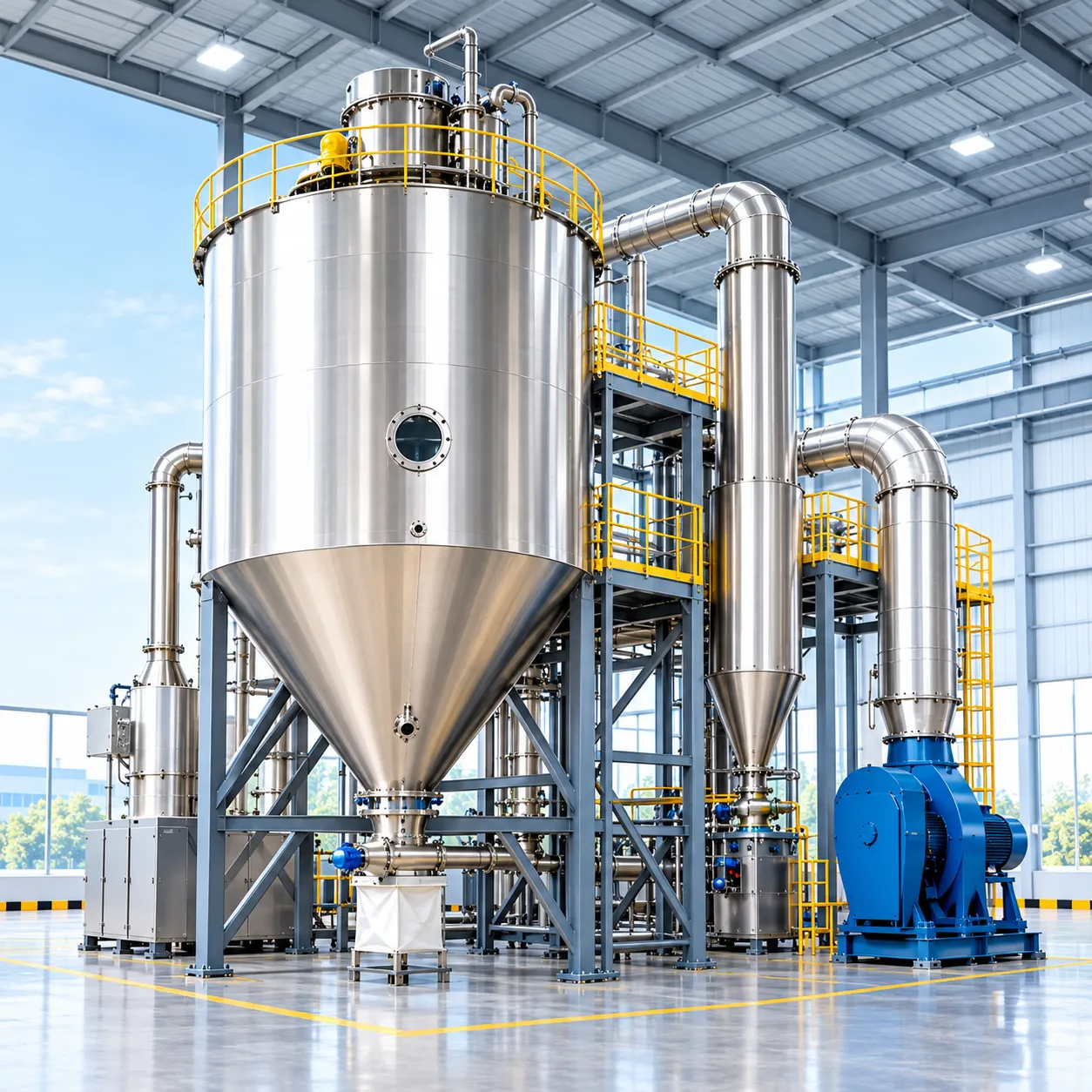
At its simplest, a spray dryer performs five jobs in sequence.
1. Prepare the feed. The liquid is mixed, filtered and often concentrated to remove part of the water before drying. Concentration reduces the energy needed in the dryer.
2. Atomize the feed. The liquid is pumped to an atomizer that breaks it into millions of tiny droplets. This dramatically increases the surface area available for drying.
3. Dry the droplets. The droplets meet hot air inside a large drying chamber. Water evaporates within seconds, leaving solid particles.
4. Separate the powder. The dry powder is separated from the air, partly at the bottom of the chamber and partly in cyclones and filters.
5. Clean the exhaust air. The air passes through dust collection equipment before being released, protecting the environment and recovering fine product.
That is the whole idea. Everything else in spray drying technology is about doing these five jobs as efficiently, safely and consistently as possible for a particular product. For a deeper technical explanation of each stage, including drying phases and flow patterns, read our article on the spray dryer working principle.
The Role of Pre-Concentration
Spray drying is an excellent way to remove the last part of the water from a product, but it is not the cheapest way to remove all of it. Evaporating water in a spray dryer uses more energy per kilogram than evaporating it in an efficient evaporator.
This is why many plants place an evaporator before the spray dryer. The evaporator concentrates the liquid, for example taking milk from around 10 to 13 percent solids up to around 45 to 50 percent, before it is sprayed. The spray dryer then only has to remove the remaining water. Aksh Engineering supplies industrial evaporators designed to work alongside spray drying systems for exactly this purpose.
Atomization: The Heart of Spray Drying
If there is one part of a spray dryer that deserves special attention, it is the atomizer. Droplet size decides particle size, drying time and many powder properties.
There are three main atomizer types:
- Rotary disc atomizers use a fast-spinning disc to throw the liquid outward as a fine spray. They handle a wide range of viscosities and are common in large plants.
- Pressure nozzles force the liquid through a small orifice at high pressure. They usually produce coarser, more uniform particles.
- Two-fluid nozzles use compressed air or gas to break up the liquid. They are popular in laboratory and pilot dryers and for very fine powders.
Aksh Engineering offers all three within our atomization technologies range. To understand which suits which application, read our guide on types of industrial spray dryers and their ideal applications.
Main Types of Spray Drying Systems
Spray dryers come in several configurations, each suited to particular products and scales.
Open-Cycle Spray Dryers
The most common type. Fresh air is heated, used once for drying and released after cleaning. Ideal for water-based feeds such as dairy, food, detergents and ceramics.
Closed-Loop Spray Dryers
The drying gas, usually nitrogen, is recirculated in a sealed loop. Evaporated solvent is condensed and recovered. These are used when the feed contains organic solvents, or when the product must not be exposed to oxygen.
Multistage Spray Dryers
The spray chamber is combined with one or more fluid beds. The powder leaves the chamber slightly moist and is finished in the fluid bed, which saves energy, protects heat-sensitive products and allows agglomeration for instant-dissolving powders. Our multistage spray dryer is widely used for dairy, infant nutrition and food powders.
Hygienic and Aseptic Spray Dryers
Designed with smooth surfaces, sanitary fittings, Clean-in-Place systems and careful air filtration for food, dairy and pharmaceutical products where contamination control is critical.
Laboratory and Pilot Spray Dryers
Small-scale units used for research, formulation development and producing sample quantities. A pilot spray dryer lets manufacturers test products and gather scale-up data before investing in full production. For the difference between these small units, see how a pilot spray dryer differs from a lab spray dryer.
Production-Scale Industrial Spray Dryers
Large systems designed for continuous, high-capacity operation, with evaporation rates ranging from hundreds to many thousands of kilograms of water per hour. Explore our range of industrial spray dryers.
Key Spray Drying Terms Every Beginner Should Know
| Term | Meaning |
|---|---|
| Feed | The liquid that is sprayed and dried |
| Feed solids | Percentage of dry matter in the feed |
| Atomization | Breaking the feed into fine droplets |
| Inlet temperature | Temperature of the hot air entering the drying chamber |
| Outlet temperature | Temperature of the air leaving the chamber; a key indicator of powder moisture |
| Evaporation capacity | Amount of water a dryer can remove per hour |
| Residence time | How long particles stay in the drying chamber |
| Co-current flow | Air and spray travel in the same direction |
| Agglomeration | Joining fine particles into larger clusters for better solubility |
| Bulk density | Mass of powder per unit volume, affecting packaging and handling |
| Powder recovery | Percentage of dried product collected rather than lost |
| CIP | Clean-in-Place, automated cleaning without dismantling |
Which Powder Properties Can Be Controlled?
One of the most powerful aspects of spray drying technology is that the powder can be engineered, not just dried. By adjusting the formulation and operating conditions, manufacturers can influence:
- Particle size and distribution, through atomizer type, speed or pressure and feed solids.
- Moisture content, mainly through outlet temperature.
- Bulk density, through feed concentration, air temperature and agglomeration.
- Solubility and wettability, through agglomeration and surface treatments such as lecithination.
- Flowability, through particle size and shape.
- Encapsulation, by drying active ingredients within a protective carrier.
- Colour, flavour and nutrient retention, through gentle temperature profiles.
Spray Drying Compared with Other Drying Methods
| Method | Feed | Drying Time | Best For |
|---|---|---|---|
| Spray drying | Pumpable liquid | Seconds | Powders from solutions, emulsions and slurries at scale |
| Freeze drying | Frozen liquid or solid | Hours to days | Very heat-sensitive, high-value products |
| Drum drying | Thick liquid or paste | Seconds to minutes | Flakes from viscous feeds |
| Flash drying | Wet solid or cake | Seconds | Fine wet solids with surface moisture |
| Fluid bed drying | Granular solid | Minutes | Granules, agglomerates and final drying |
| Rotary drying | Coarse wet solid | Minutes to an hour+ | Bulk solids, minerals and granules |
Spray drying stands out when the starting point is a liquid and the goal is a high-quality powder produced continuously and economically.
Benefits and Limitations at a Glance
Benefits
- Fast, continuous production.
- Gentle on heat-sensitive materials.
- Precise control over powder properties.
- Suitable for a very wide range of products.
- Hygienic, enclosed process.
- Proven scale-up from lab to industrial capacity.
Limitations
- Requires a pumpable liquid feed.
- Energy-intensive when the feed is dilute, so pre-concentration is important.
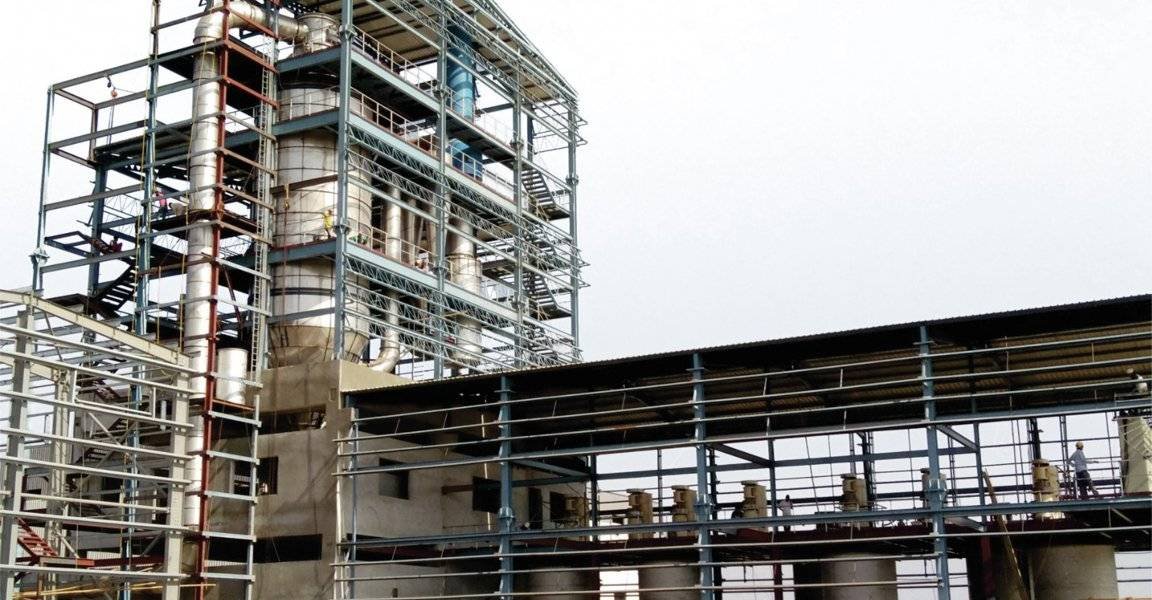
- Large chambers need significant building height and space.
- Sticky, sugar-rich products may need special formulation or chamber design.
- Fine powders need efficient recovery and, for combustible products, explosion protection.
Energy Efficiency and Modern Developments
Because spray drying involves evaporating water with hot air, energy use is a major operating cost. Modern systems reduce it through pre-concentration, multistage drying, exhaust heat recovery, better insulation and tighter process control. For practical ideas, read our energy-saving tips for industrial spray dryers.
Other developments shaping the technology include PLC and SCADA automation for consistent quality, digital monitoring and data analysis, improved hygienic design, closed-loop systems for solvent recovery, and growing use of spray drying in advanced materials such as battery components and specialty ceramics.
How to Get Started with Spray Drying
If you are considering spray drying for a new or existing product, a structured approach helps:
- Define your target powder. Particle size, moisture, density, solubility and any specific quality requirements.
- Characterise your feed. Solids content, viscosity, heat sensitivity, stickiness and whether it contains solvents.
- Run trials. Laboratory or pilot spray drying confirms feasibility and identifies the best conditions.
- Plan capacity. Estimate daily production and future growth.
- Consider the full line. Pre-concentration, powder handling, packing, CIP, dust collection and automation.
- Choose an experienced partner. A manufacturer who understands both the process and the equipment can help you avoid costly mistakes.
Why Choose Aksh Engineering Systems?
Aksh Engineering Systems Pvt. Ltd., based in Ahmedabad, Gujarat, designs and manufactures spray drying systems ranging from pilot units to full-scale industrial plants. We support customers from the earliest feasibility trials through process design, fabrication, installation, commissioning and after-sales service.
Our approach is to design each system around your product and goals, selecting the right atomizer, chamber design, heating system, powder recovery, cleaning and automation for your application.
Conclusion
Spray drying technology turns liquids into powders quickly, gently and continuously. At its heart, it is a simple process: atomize the liquid, dry the droplets in hot air and collect the powder. Around that simple idea, decades of engineering have built a highly versatile technology that serves food, dairy, pharmaceutical, chemical, ceramic and advanced material industries worldwide.
Understanding the basics, including feed preparation, atomization, drying, separation and the main system types, is the first step toward using spray drying effectively. If you are exploring spray drying for your product, contact Aksh Engineering Systems to discuss trials and system options.